%20%20--%3E%0A%3Csvg%20version%3D%221.1%22%20id%3D%22Layer_1%22%20xmlns%3D%22http%3A%2F%2Fwww.w3.org%2F2000%2Fsvg%22%20xmlns%3Axlink%3D%22http%3A%2F%2Fwww.w3.org%2F1999%2Fxlink%22%20x%3D%220px%22%20y%3D%220px%22%0A%09%20viewBox%3D%220%200%20684.6%2068.1%22%20style%3D%22enable-background%3Anew%200%200%20684.6%2068.1%3B%22%20xml%3Aspace%3D%22preserve%22%3E%0A%3Cg%3E%0A%09%3Cpath%20d%3D%22M444.1%2C29.3h-17.4v14.5h17.4V29.3z%20M36.4%2C68.1l29.3-50.8V0H50.4L32.9%2C36.8L15.5%2C0H0v68.1h16.7V45.8l12.4%2C22.3H36.4z%0A%09%09%20M49.1%2C68.1h16.6V23.4L49.1%2C52.1V68.1z%20M76.6%2C68.1h45V53.8H93.3V41.6h21V27.1h-21V14.8h28.3V0.1h-45V68.1z%20M175.6%2C68.1h17.3v-68%0A%09%09h-16.5v40.3L150%2C0.1h-17.6v68h16.7V27.7L175.6%2C68.1z%20M235.8%2C14.8h15.4V0.1h-47.4v14.7H219v53.2h16.8V14.8z%20M290.3%2C45.9h-17.1%0A%09%09l7.5-15.6h2L290.3%2C45.9z%20M298.7%2C68.1h18l-32.2-68h-5.7l-32%2C68h18l3.3-7.1h27.1L298.7%2C68.1z%20M325.2%2C68.1h46.2V53.8h-29.6V0.1h-16.7%0A%09%09V68.1z%20M423.7%2C14.8h27.2V0.1H407v68h16.7V14.8z%20M462%2C68.1h46.2V53.8h-29.6V0.1H462V68.1z%20M564.8%2C34.1c0%2C10.7-7.2%2C19.2-18.5%2C19.2%0A%09%09c-11.4%2C0-18.5-8.5-18.5-19.2s7.1-19.2%2C18.5-19.2C557.6%2C14.9%2C564.8%2C23.4%2C564.8%2C34.1%20M580.6%2C34.1c0-19-14.2-34-34.3-34%0A%09%09c-20.2%2C0-34.3%2C15-34.3%2C34c0%2C19%2C14.1%2C34%2C34.3%2C34C566.4%2C68.1%2C580.6%2C53.1%2C580.6%2C34.1%20M604.8%2C20.5c0-4.1%2C3.3-6.2%2C6.7-6.2%0A%09%09c4.4%2C0%2C6.6%2C3%2C6.6%2C6.6h14.7C631.8%2C9.1%2C625.1%2C0.1%2C611%2C0.1c-12%2C0-21.7%2C9.3-21.7%2C20.6c0%2C10.9%2C5.9%2C15.9%2C16.7%2C19.8%0A%09%09c5.2%2C1.8%2C11.5%2C3.2%2C11.5%2C8c0%2C3.3-2.4%2C5.5-6.4%2C5.5c-3.6%2C0-6.6-3-6.6-6.7h-15.2c0%2C11.5%2C7.9%2C20.8%2C21.8%2C20.8c12%2C0%2C21.6-9.3%2C21.6-20.6%0A%09%09c0-10-5.3-16.4-16.7-19.8C610.6%2C26.1%2C604.8%2C25.3%2C604.8%2C20.5%20M670%2C20.9h14.7C683.8%2C9.1%2C677.1%2C0.1%2C663%2C0.1c-12%2C0-21.7%2C9.3-21.7%2C20.6%0A%09%09c0%2C10.9%2C5.9%2C15.9%2C16.7%2C19.8c5.2%2C1.8%2C11.5%2C3.2%2C11.5%2C8c0%2C3.3-2.4%2C5.5-6.4%2C5.5c-3.6%2C0-6.6-3-6.6-6.7h-15.2c0%2C11.5%2C7.9%2C20.8%2C21.8%2C20.8%0A%09%09c12%2C0%2C21.6-9.3%2C21.6-20.6c0-10-5.3-16.4-16.7-19.8c-5.4-1.6-11.3-2.4-11.3-7.2c0-4.1%2C3.3-6.2%2C6.7-6.2C667.7%2C14.4%2C670%2C17.3%2C670%2C20.9%0A%09%09%22%2F%3E%0A%3C%2Fg%3E%0A%3C%2Fsvg%3E%0A)

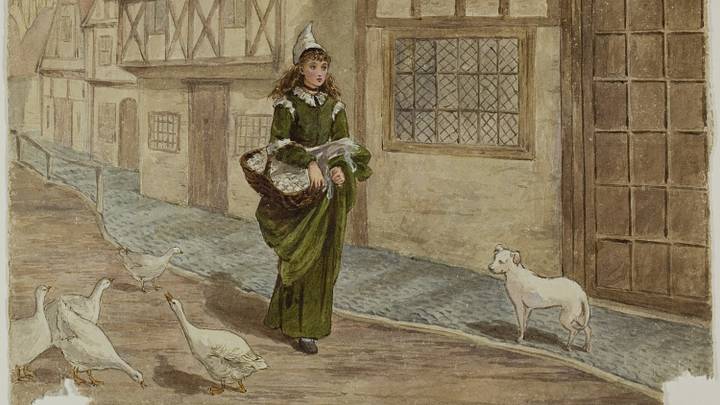
Today's kids might grumble about being asked to empty the dishwasher or clean up the yard, but they get off lightly when compared to ordinary medieval children. In those times, every member of the household was expected to pull their weight from an early age. Although conditions weren't always as bad as you might imagine, and most medieval children still enjoyed ample time to play, the chores they were tasked with involved skill, patience, and fortitude. Here are just a few examples of tasks your average medieval kid would have undertaken.
- Herding Animals
- Fishing
- Fetching Water
- Foraging
- Watching Over Younger Siblings
- Making Or Mending Clothes
- Tending the Garden
- Cooking
- Churning Butter
- Brewing Beer
Herding Animals

Flocks of geese, goats, sheep, pigs, or cows needed looking after. This could be dirty, hard work, and children were regularly employed to guide animals to fresh pastures and water sources. Duties could also include looking out for predators, identifying sick and injured animals, and possibly even helping with birthing.
Fishing

Fish made up a large portion of people’s diets in much of medieval Europe, and so assisting with fishing was an ideal chore for a parent to set any child. Rod-and-line methods similar to today's were employed by fishermen of that era, as well as nets, harpoons, and even bare hands. Coastal communities fished from boats or beaches, and children were often tasked with untangling and mending nets and setting basic fishing traps in streams, depending on their location.
Fetching Water

Forget indoor plumbing and flushing toilets. Medieval families needed water just as much as we do today. Although impressive feats of engineering, such as aqueducts and canals, existed at that time, water still typically had to be fetched from an external location. This could be a village well a few minutes' walk away, or a nearby river, which might be slightly further. Even town and city dwellers relied on wells and rivers, and it would often be the children's job to ferry heavy buckets with the day's supply.
Foraging

Foraging was a common practice in medieval times, and children would sometimes be sent out to gather resources such as firewood, fruits, nuts, or mushrooms. A medieval child would likely be very knowledgeable about what was available during each season and where to find it. Diets and mealtimes varied over time and location, but children were a valuable aid to any family looking to supplement their supplies in this manner.
Watching Over Younger Siblings

This is one chore medieval children were set that today's kids can empathize with. With parents often busy from dawn till dusk, older children were routinely tasked with supervising their younger siblings. Although the games and activities involved might have changed, the annoyance at having to look after your irritating younger brother or sister probably hasn't!
Making Or Mending Clothes

There was no popping down to the mall for a new pair of jeans and a hoodie in medieval times. For most families of this era, clothes had to be hand spun and hand woven from wool and other materials. This was a lengthy and costly process, and therefore clothing was usually not replaced until it had fallen apart. This was another area in which children could be usefully employed, and your average medieval kid would have been adept with needle and thread.
Tending the Garden
Herb and fruit gardens were vital resources for many medieval families, and children made ideal helpmates in tending them, whether that meant planting, pruning, or harvesting. Larger, grander gardens belonging to monasteries or the gentry might contain all manner of things and be cultivated as much for display as for practicality. Plants in everyday families’ gardens often included lettuce, sage, fennel, mint, carrots, and parsnips.
Cooking

With no blenders or microwaves, cooking in medieval times could be an intense and time-consuming process. Children, especially girls, would certainly have been expected to help in meal preparation, gathering ingredients, chopping, peeling, stirring the pot, and watching the fire.
Churning Butter

Butter has been around for thousands of years, with some theorizing that its discovery may have accidentally occurred when raw milk carried in bags by nomads became bumped and swished during travel. By the medieval period, butter was a common source of nourishment, and it would be made using a churn—a basic piece of equipment typically consisting of a pole and open wooden barrel. Guess whose job it would have been to agitate the cream until it became buttery?
Brewing Beer

Beer is a commodity that has been known to humankind for millennia, and it was an important part of the medieval diet. In fact, in medieval Europe, beer may have been safer to drink than water, as harmful bacteria would be killed off during the boiling process. Many households brewed beer, and this was often the job of women, but children would certainly have been occasionally roped in to lend a hand.