%20%20--%3E%0A%3Csvg%20version%3D%221.1%22%20id%3D%22Layer_1%22%20xmlns%3D%22http%3A%2F%2Fwww.w3.org%2F2000%2Fsvg%22%20xmlns%3Axlink%3D%22http%3A%2F%2Fwww.w3.org%2F1999%2Fxlink%22%20x%3D%220px%22%20y%3D%220px%22%0A%09%20viewBox%3D%220%200%20684.6%2068.1%22%20style%3D%22enable-background%3Anew%200%200%20684.6%2068.1%3B%22%20xml%3Aspace%3D%22preserve%22%3E%0A%3Cg%3E%0A%09%3Cpath%20d%3D%22M444.1%2C29.3h-17.4v14.5h17.4V29.3z%20M36.4%2C68.1l29.3-50.8V0H50.4L32.9%2C36.8L15.5%2C0H0v68.1h16.7V45.8l12.4%2C22.3H36.4z%0A%09%09%20M49.1%2C68.1h16.6V23.4L49.1%2C52.1V68.1z%20M76.6%2C68.1h45V53.8H93.3V41.6h21V27.1h-21V14.8h28.3V0.1h-45V68.1z%20M175.6%2C68.1h17.3v-68%0A%09%09h-16.5v40.3L150%2C0.1h-17.6v68h16.7V27.7L175.6%2C68.1z%20M235.8%2C14.8h15.4V0.1h-47.4v14.7H219v53.2h16.8V14.8z%20M290.3%2C45.9h-17.1%0A%09%09l7.5-15.6h2L290.3%2C45.9z%20M298.7%2C68.1h18l-32.2-68h-5.7l-32%2C68h18l3.3-7.1h27.1L298.7%2C68.1z%20M325.2%2C68.1h46.2V53.8h-29.6V0.1h-16.7%0A%09%09V68.1z%20M423.7%2C14.8h27.2V0.1H407v68h16.7V14.8z%20M462%2C68.1h46.2V53.8h-29.6V0.1H462V68.1z%20M564.8%2C34.1c0%2C10.7-7.2%2C19.2-18.5%2C19.2%0A%09%09c-11.4%2C0-18.5-8.5-18.5-19.2s7.1-19.2%2C18.5-19.2C557.6%2C14.9%2C564.8%2C23.4%2C564.8%2C34.1%20M580.6%2C34.1c0-19-14.2-34-34.3-34%0A%09%09c-20.2%2C0-34.3%2C15-34.3%2C34c0%2C19%2C14.1%2C34%2C34.3%2C34C566.4%2C68.1%2C580.6%2C53.1%2C580.6%2C34.1%20M604.8%2C20.5c0-4.1%2C3.3-6.2%2C6.7-6.2%0A%09%09c4.4%2C0%2C6.6%2C3%2C6.6%2C6.6h14.7C631.8%2C9.1%2C625.1%2C0.1%2C611%2C0.1c-12%2C0-21.7%2C9.3-21.7%2C20.6c0%2C10.9%2C5.9%2C15.9%2C16.7%2C19.8%0A%09%09c5.2%2C1.8%2C11.5%2C3.2%2C11.5%2C8c0%2C3.3-2.4%2C5.5-6.4%2C5.5c-3.6%2C0-6.6-3-6.6-6.7h-15.2c0%2C11.5%2C7.9%2C20.8%2C21.8%2C20.8c12%2C0%2C21.6-9.3%2C21.6-20.6%0A%09%09c0-10-5.3-16.4-16.7-19.8C610.6%2C26.1%2C604.8%2C25.3%2C604.8%2C20.5%20M670%2C20.9h14.7C683.8%2C9.1%2C677.1%2C0.1%2C663%2C0.1c-12%2C0-21.7%2C9.3-21.7%2C20.6%0A%09%09c0%2C10.9%2C5.9%2C15.9%2C16.7%2C19.8c5.2%2C1.8%2C11.5%2C3.2%2C11.5%2C8c0%2C3.3-2.4%2C5.5-6.4%2C5.5c-3.6%2C0-6.6-3-6.6-6.7h-15.2c0%2C11.5%2C7.9%2C20.8%2C21.8%2C20.8%0A%09%09c12%2C0%2C21.6-9.3%2C21.6-20.6c0-10-5.3-16.4-16.7-19.8c-5.4-1.6-11.3-2.4-11.3-7.2c0-4.1%2C3.3-6.2%2C6.7-6.2C667.7%2C14.4%2C670%2C17.3%2C670%2C20.9%0A%09%09%22%2F%3E%0A%3C%2Fg%3E%0A%3C%2Fsvg%3E%0A)

Dark magic, sorcery, and deals with the devil were once common explanations for happenings people could not understand. For centuries, fear of the unknown had people suspecting their neighbors of evil deeds by way of witchcraft. Rather than actually dabbling in the mystic arts, the accused were often targeted for political or religious reasons.
For the vast majority of accused witches, their names are only known to us because of witch hunts and trials. But there are some figures in history whose contributions to the world made them suspicious to people who kept the status quo. Whether they were teaching new ideas or preaching doctrine not sanctioned by the Catholic Church, these historical figures were thought of as witches.
- Gerbert of Aurillac
- Jacques de Molay
- Joan of Arc
- Elizabeth Woodville
- Mother Shipton
- Katharina Kepler
- Elizabeth Báthory

Gerbert of Aurillac
Before becoming Pope Sylvester II in 999, Gerbert of Aurillac was a French friar with a love of science and math. People of the 10th century, however, were not so welcoming of those subjects, especially when they involved Arabic numerals instead of Roman numerals. Gerbert studied logic, mathematics, and astronomy during his travels, and his knowledge led him to tutor several members of royalty from France and the Holy Roman Empire.
As he gained influence, Gerbert also began to accumulate political rivals who disliked how quickly he was rising in the Catholic Church. To discredit him before and after his death, rumors that his studies were actually sorcery began to flourish. Legend also told that Gerbert had a mechanical head that told the future, given to him by the devil. By the 11th century, Gerbert, or Pope Sylvester II, was known as a heretical holy man.

Jacques de Molay
Myths and legends surround the Knights Templar, thanks to ancient historians and Dan Brown's The Da Vinci Code. But the knights were originally an order of devout Christians who protected pilgrims to the Holy Land. They also set up a very profitable banking system, which would be a key to their downfall.
Jacques de Molay was the final grand master of the Knights Templar, and he was accused of witchcraft and devil worship after denying a loan to the heavily indebted King Phillip IV of France. Molay and his knights were tortured until they confessed to the false charges, and were burned at the stake.

Joan of Arc
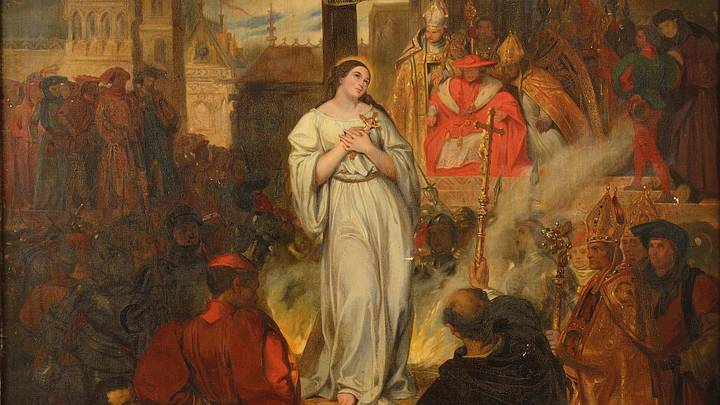
Joan of Arc is probably the most famous historical figure on this list, and like many others here, she got on the wrong side of the Catholic Church. Her claims of visions and revelations from God and a number of saints went against the standard theology of the time, and a prominent group within the church sided with the English during the Hundred Years' War.
Joan became a threat, both politically and religiously, after pledging her loyalty to King Charles VII of France and zealously speaking as God's messenger. Though she never confessed to witchcraft or heresy, Joan was burned at the stake on May 30, 1431. Her sentence was posthumously annulled in 1455, and the church canonized her as a saint in 1920.

Elizabeth Woodville
If you’re a history buff or have simply seen the BBC's The White Queen, you'll know that Elizabeth Woodville was the queen of England after marrying King Edward IV in 1464. She was not of royal blood, and her family was of Lancastrian descent. During the War of the Roses between the House of Lancaster and the House of York, this made Elizabeth an enemy of Edward's court.
The nobles thought that there was no way Edward had willingly fallen in love with Elizabeth, and began to claim that she and her mother had used love potions and spells to seduce and enchant the king. The hatred and fear towards her enabled Richard, Duke of Gloucester, to easily usurp the throne after Edward IV died. The accusations of witchcraft did not end her life, but it destroyed all that she held dear, including her two sons, the "Princes in the Tower."

Mother Shipton
Mother Shipton was born Ursula Sonthiel in 1488 and was considered a witch even from infancy. That's because her mother, Agatha, refused to name Ursula's father, leading to speculations that she was the literal spawn of Satan. Ursula was also considered ugly and deformed, with crooked legs and a bent back, so many thought of her as the spitting image of a witch.
Ursula lived most of her life in an English cave, but she became known throughout the country for her startlingly accurate prophecies. Known by all who came to her for guidance as Mother Shipton, she predicted the destruction of Trinity Church, the Great Fire of London in 1666, and the Spanish Armada's defeat. Even King Henry VIII knew of the "Witch from York" and her prophecies.

Katharina Kepler
Johannes Kepler is remembered as a famous German astronomer who discovered the three laws of planetary motion. But he also successfully defended his mother, Katharina, after she was accused of witchcraft. Speculations flew for years that Katharina was more than a simple herbalist, but in 1620, she was formally accused and imprisoned.
Johannes had hired lawyers who provided enough of a defense that Katharina wasn't tortured for a confession, though she was shown instruments of torture in the hopes that she would crack. Katharina remained firm, and her stubbornness, along with Johannes's 128-page statement for her defense, saw her released from prison in 1621. She then went on to sue her accusers for the legal fees.

Elizabeth Báthory
You have probably heard of Elizabeth Báthory by the titles "The Blood Countess" and "the most prolific female serial killer." She was known throughout 17th-century Hungary as both a vampire and a witch. It was said that she tortured and murdered almost 650 young virgin maids so she could bathe in their blood and thereby gain eternal youth.
Báthory was arrested for her crimes in 1609, and while three of her servants were executed, she was put on house arrest until she died in 1614. Most of today's historians believe that the gruesome stories were invented by noblemen to strip Báthory of her power and wealth, since she inherited everything from her late husband in 1604. We may never uncover the full truth, but it stands to reason Báthory could not have killed 650 people in five years, so the stories were at least exaggerated.