%20%20--%3E%0A%3Csvg%20version%3D%221.1%22%20id%3D%22Layer_1%22%20xmlns%3D%22http%3A%2F%2Fwww.w3.org%2F2000%2Fsvg%22%20xmlns%3Axlink%3D%22http%3A%2F%2Fwww.w3.org%2F1999%2Fxlink%22%20x%3D%220px%22%20y%3D%220px%22%0A%09%20viewBox%3D%220%200%20684.6%2068.1%22%20style%3D%22enable-background%3Anew%200%200%20684.6%2068.1%3B%22%20xml%3Aspace%3D%22preserve%22%3E%0A%3Cg%3E%0A%09%3Cpath%20d%3D%22M444.1%2C29.3h-17.4v14.5h17.4V29.3z%20M36.4%2C68.1l29.3-50.8V0H50.4L32.9%2C36.8L15.5%2C0H0v68.1h16.7V45.8l12.4%2C22.3H36.4z%0A%09%09%20M49.1%2C68.1h16.6V23.4L49.1%2C52.1V68.1z%20M76.6%2C68.1h45V53.8H93.3V41.6h21V27.1h-21V14.8h28.3V0.1h-45V68.1z%20M175.6%2C68.1h17.3v-68%0A%09%09h-16.5v40.3L150%2C0.1h-17.6v68h16.7V27.7L175.6%2C68.1z%20M235.8%2C14.8h15.4V0.1h-47.4v14.7H219v53.2h16.8V14.8z%20M290.3%2C45.9h-17.1%0A%09%09l7.5-15.6h2L290.3%2C45.9z%20M298.7%2C68.1h18l-32.2-68h-5.7l-32%2C68h18l3.3-7.1h27.1L298.7%2C68.1z%20M325.2%2C68.1h46.2V53.8h-29.6V0.1h-16.7%0A%09%09V68.1z%20M423.7%2C14.8h27.2V0.1H407v68h16.7V14.8z%20M462%2C68.1h46.2V53.8h-29.6V0.1H462V68.1z%20M564.8%2C34.1c0%2C10.7-7.2%2C19.2-18.5%2C19.2%0A%09%09c-11.4%2C0-18.5-8.5-18.5-19.2s7.1-19.2%2C18.5-19.2C557.6%2C14.9%2C564.8%2C23.4%2C564.8%2C34.1%20M580.6%2C34.1c0-19-14.2-34-34.3-34%0A%09%09c-20.2%2C0-34.3%2C15-34.3%2C34c0%2C19%2C14.1%2C34%2C34.3%2C34C566.4%2C68.1%2C580.6%2C53.1%2C580.6%2C34.1%20M604.8%2C20.5c0-4.1%2C3.3-6.2%2C6.7-6.2%0A%09%09c4.4%2C0%2C6.6%2C3%2C6.6%2C6.6h14.7C631.8%2C9.1%2C625.1%2C0.1%2C611%2C0.1c-12%2C0-21.7%2C9.3-21.7%2C20.6c0%2C10.9%2C5.9%2C15.9%2C16.7%2C19.8%0A%09%09c5.2%2C1.8%2C11.5%2C3.2%2C11.5%2C8c0%2C3.3-2.4%2C5.5-6.4%2C5.5c-3.6%2C0-6.6-3-6.6-6.7h-15.2c0%2C11.5%2C7.9%2C20.8%2C21.8%2C20.8c12%2C0%2C21.6-9.3%2C21.6-20.6%0A%09%09c0-10-5.3-16.4-16.7-19.8C610.6%2C26.1%2C604.8%2C25.3%2C604.8%2C20.5%20M670%2C20.9h14.7C683.8%2C9.1%2C677.1%2C0.1%2C663%2C0.1c-12%2C0-21.7%2C9.3-21.7%2C20.6%0A%09%09c0%2C10.9%2C5.9%2C15.9%2C16.7%2C19.8c5.2%2C1.8%2C11.5%2C3.2%2C11.5%2C8c0%2C3.3-2.4%2C5.5-6.4%2C5.5c-3.6%2C0-6.6-3-6.6-6.7h-15.2c0%2C11.5%2C7.9%2C20.8%2C21.8%2C20.8%0A%09%09c12%2C0%2C21.6-9.3%2C21.6-20.6c0-10-5.3-16.4-16.7-19.8c-5.4-1.6-11.3-2.4-11.3-7.2c0-4.1%2C3.3-6.2%2C6.7-6.2C667.7%2C14.4%2C670%2C17.3%2C670%2C20.9%0A%09%09%22%2F%3E%0A%3C%2Fg%3E%0A%3C%2Fsvg%3E%0A)

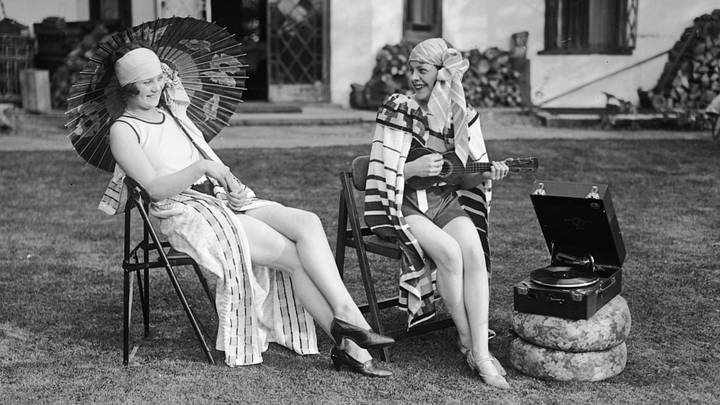
When most of us imagine the 1920s, we might think of flapper dresses and the glittery parties of The Great Gatsby. Still, amid all the upheaval and change during this decade, families were very much living out their everyday lives in America.
During the ‘20s, rapid economic growth after World War I revved up consumer culture, and many families began buying cars, lighting their homes with electricity, and purchasing stock using credit. All this economic expansion would ultimately culminate in the Great Depression, but during the ‘20s, many families found themselves with access to more economic abundance than ever before. That led to some brand-new purchases, including some of the items on this list.
Radio

The first radio broadcast aired on Christmas Eve in 1906, and the technology experienced rapid expansion in the 1920s. In 1921 there were just five radio stations in America, but there were 606 by the end of the decade. During this time, radio became a “pervading and somewhat godlike presence,” E. B. White wrote in 1933, that brought news, entertainment, music, and advertising to even the most rural locations. Gathering around the radio became a family ritual, and these machines often occupied special places in living rooms. Radio stars became household names, broadcasts became key parts of mornings, evenings, and holidays, and far-flung, disconnected communities now had access to breaking news and the day's newest music, among other cultural currents.
Phonograph

Thomas Edison invented the tin-foil phonograph in 1877, and gramophones were introduced in the late 1880s. These machines made their way into family homes throughout the early 20th century, and by the mid-1920s, the majority of family homes had some kind of record player. The typical 1920s model was hand-cranked and was generally kept in cabinets or cases in the parlor. Many of the biggest hits of the day were novelty songs, though greats like Louis Armstrong and Mamie Smith also occupied key places in many people's record collections.
Icebox

Electric refrigerators had been invented by the 1920s, but they were too expensive for the average American family at the time and did not become popular until after World War II. Instead, most families kept perishable food in iceboxes, which were wooden cabinets that held blocks of ice in their upper chambers. An ice man would deliver fresh ice to homes multiple times per week, and families would regularly clear out the melted water from a pan on the floor.
Wood Stove

In the 1920s, most houses did not have central heating or wall insulation. Instead, families relied on fireplaces, oil and coal-powered heaters, or wood-burning stoves to make it through cold winters. Wood stoves worked better than fireplaces, but still required regular maintenance and lots of firewood. Nights could get bitterly cold after the wood burned down, so many people still relied on warm clothes to stay cozy on frigid evenings.
Washboard

Many of us might complain about laundry day today, but truthfully, our experiences have absolutely nothing on what it takes to wash clothes without a machine. Electric washing machines had been invented by the 1920s and some wealthy homes had them, but the majority of 1920s families still washed clothes by hand. “Wash day” typically occurred once a week. Clothes would be scrubbed over a washboard before being rinsed and boiled in separate pots, then hung to dry. This had to be done on cold winter days as well as hot summer ones, and clothes would sometimes freeze on clotheslines. The day after was often set aside for ironing, which usually required another full day’s labor.
Band-Aids

Band-aids were invented in 1920, though at the time they were handmade strips that users had to cut. Pre-cut bandages hit shelves in 1924, and they soon became a staple in 1920s cabinets. A typical ‘20s medicine cabinet might have also included Vaseline, aspirin, safety razors, and thermometers, as well as some more experimental items—such as chlorine gas bombs, which were canisters of chlorine gas that users believed could help with colds when released into a room.
Vacuum Cleaner

The 1920s saw a boom in vacuum cleaners, which were invented in the early 20th century. Vacuums were generally marketed to middle-class women, along with promises of freedom from the challenges of housework during an era when servants and maids had become much less common. In reality, this device’s popularity led to higher standards for cleanliness at home and created more work for many women. Before vacuum cleaners, rugs had typically been brought outside and beaten just once or twice a year, but vacuums (and advertisements that emphasized the dangers of dust and particles) helped create the expectation that women were responsible for single-handedly maintaining completely spotless homes.
Automobile

Cars exploded in popularity in the 1920s, transitioning from luxury items to everyday necessities. Major companies like Ford, Chrysler, and General Motors made cars more accessible to regular people thanks to the likes of Ford's iconic Model T. In turn, cars transformed American industry, creating huge numbers of manufacturing jobs, stoking urbanization, and redefining the food industry. They altered every aspect of life for many people, making travel and leisure activities more accessible and catalyzing many cultural shifts that would define the decades to come.