%20%20--%3E%0A%3Csvg%20version%3D%221.1%22%20id%3D%22Layer_1%22%20xmlns%3D%22http%3A%2F%2Fwww.w3.org%2F2000%2Fsvg%22%20xmlns%3Axlink%3D%22http%3A%2F%2Fwww.w3.org%2F1999%2Fxlink%22%20x%3D%220px%22%20y%3D%220px%22%0A%09%20viewBox%3D%220%200%20684.6%2068.1%22%20style%3D%22enable-background%3Anew%200%200%20684.6%2068.1%3B%22%20xml%3Aspace%3D%22preserve%22%3E%0A%3Cg%3E%0A%09%3Cpath%20d%3D%22M444.1%2C29.3h-17.4v14.5h17.4V29.3z%20M36.4%2C68.1l29.3-50.8V0H50.4L32.9%2C36.8L15.5%2C0H0v68.1h16.7V45.8l12.4%2C22.3H36.4z%0A%09%09%20M49.1%2C68.1h16.6V23.4L49.1%2C52.1V68.1z%20M76.6%2C68.1h45V53.8H93.3V41.6h21V27.1h-21V14.8h28.3V0.1h-45V68.1z%20M175.6%2C68.1h17.3v-68%0A%09%09h-16.5v40.3L150%2C0.1h-17.6v68h16.7V27.7L175.6%2C68.1z%20M235.8%2C14.8h15.4V0.1h-47.4v14.7H219v53.2h16.8V14.8z%20M290.3%2C45.9h-17.1%0A%09%09l7.5-15.6h2L290.3%2C45.9z%20M298.7%2C68.1h18l-32.2-68h-5.7l-32%2C68h18l3.3-7.1h27.1L298.7%2C68.1z%20M325.2%2C68.1h46.2V53.8h-29.6V0.1h-16.7%0A%09%09V68.1z%20M423.7%2C14.8h27.2V0.1H407v68h16.7V14.8z%20M462%2C68.1h46.2V53.8h-29.6V0.1H462V68.1z%20M564.8%2C34.1c0%2C10.7-7.2%2C19.2-18.5%2C19.2%0A%09%09c-11.4%2C0-18.5-8.5-18.5-19.2s7.1-19.2%2C18.5-19.2C557.6%2C14.9%2C564.8%2C23.4%2C564.8%2C34.1%20M580.6%2C34.1c0-19-14.2-34-34.3-34%0A%09%09c-20.2%2C0-34.3%2C15-34.3%2C34c0%2C19%2C14.1%2C34%2C34.3%2C34C566.4%2C68.1%2C580.6%2C53.1%2C580.6%2C34.1%20M604.8%2C20.5c0-4.1%2C3.3-6.2%2C6.7-6.2%0A%09%09c4.4%2C0%2C6.6%2C3%2C6.6%2C6.6h14.7C631.8%2C9.1%2C625.1%2C0.1%2C611%2C0.1c-12%2C0-21.7%2C9.3-21.7%2C20.6c0%2C10.9%2C5.9%2C15.9%2C16.7%2C19.8%0A%09%09c5.2%2C1.8%2C11.5%2C3.2%2C11.5%2C8c0%2C3.3-2.4%2C5.5-6.4%2C5.5c-3.6%2C0-6.6-3-6.6-6.7h-15.2c0%2C11.5%2C7.9%2C20.8%2C21.8%2C20.8c12%2C0%2C21.6-9.3%2C21.6-20.6%0A%09%09c0-10-5.3-16.4-16.7-19.8C610.6%2C26.1%2C604.8%2C25.3%2C604.8%2C20.5%20M670%2C20.9h14.7C683.8%2C9.1%2C677.1%2C0.1%2C663%2C0.1c-12%2C0-21.7%2C9.3-21.7%2C20.6%0A%09%09c0%2C10.9%2C5.9%2C15.9%2C16.7%2C19.8c5.2%2C1.8%2C11.5%2C3.2%2C11.5%2C8c0%2C3.3-2.4%2C5.5-6.4%2C5.5c-3.6%2C0-6.6-3-6.6-6.7h-15.2c0%2C11.5%2C7.9%2C20.8%2C21.8%2C20.8%0A%09%09c12%2C0%2C21.6-9.3%2C21.6-20.6c0-10-5.3-16.4-16.7-19.8c-5.4-1.6-11.3-2.4-11.3-7.2c0-4.1%2C3.3-6.2%2C6.7-6.2C667.7%2C14.4%2C670%2C17.3%2C670%2C20.9%0A%09%09%22%2F%3E%0A%3C%2Fg%3E%0A%3C%2Fsvg%3E%0A)

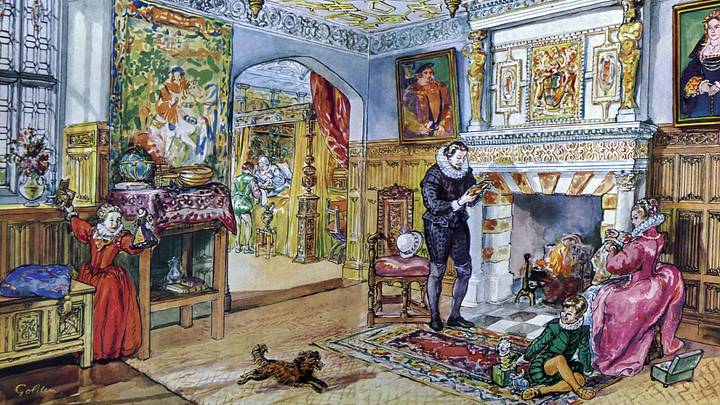
The Tudor period, which lasted in England from 1485 until 1603, conjures up images of grand adventures and sprawling opulence. Its most notable figure was Henry VIII, but five sovereigns ruled over England during this period—Henry VII, Henry VIII, Edward VI, Mary I, and finally, Elizabeth I—all from the House of Tudor.
This was a very different time in history, and it's fascinating to learn how an everyday Tudor family functioned. Learn more about typical life during this era with these nine common household items.
Warm clothing

Tudor England lived through what has since been described as a little ice age. The climate was a lot colder than today, with heavy rainfall and snow. Temperatures dropped so low during winter that the river Thames regularly froze over. So thick was this ice that temporary fairs would spring up, with shops, entertainments, and ice skating. Warm clothing was essential, including layers of fur, hats, and sturdy gloves.
Knives

We might take them for granted now, but in Tudor times, a good knife was useful for far more than just cutting food. Steel knives were used by every member of the household from a very young age. Cutting rope, shaping wood, and slicing meat were everyday tasks and, even when visiting another household, you would be expected to use your own knife for eating purposes.
Spoons

Forks were still a new-fangled foreign invention in Tudor England and were distrusted and considered unsanitary. The humble spoon, however, was a vital everyday tool, to be used alongside your steel knife for eating. Richer Tudors were crazy for silver spoons, which would often become cherished family possessions, passed down for generations.
One particularly popular design was the apostle spoon—which would contain a likeness of a religious figure carved into its handle. Unfortunately, many Tudor-era spoons were constructed of pewter, which at that time contained a high proportion of lead. As a result, lead poisoning was a common occurrence back then.
Animal Horns
We're not talking animal horns mounted on frames, but items made out of animal horn. The material has been compared to today's plastic—light and durable and easily shaped into all sorts of designs. Cups, spoons, lanterns, window-screens, and even jewelery might be constructed of animal horn.
Toys
Children have always been curious, energetic, and in need of entertainment. This was just as true for Tudor England, and even poorer families would have owned children’s toys. These might be fashioned from wood or pewter. Baby rattles were already in use, and other popular distractions included dolls, puppets, and miniature kitchen utensils. Dolls would be constructed of wood or wax. They might be home made using rags or imported from Germanic or Dutch lands.
Trenchers
Trenchers were pieces of four-day-old bread, cut into squares. Food would be placed onto these squares for eating. The word trencher derives from the French tranchier—to cut. Trenchers were served on platters or plates (wood for the poor, silver for the rich). Over time, trencher became synonymous with platter. Rich Tudors often gave away trenchers or bread to the poor as an act of charity.
Coins

The use of coins had become well established by the Tudor era. In 1489, Henry VII introduced England's first gold pound coin, which became known as a “sovereign” due to its engraved picture of the monarch himself. Each pound was worth 240 pennies—often these pennies would be literally cut in half to make half-pennies.
A farthing was worth a quarter of a penny, and 12 pennies added up to one shilling, meaning that there were twenty shillings in a pound. If that sounds confusing, spare a thought for the English—this system wasn't decimalized until 1971!
Linen

Linen is made from the flax plant. The stems of the flax are broken up into strands and then woven together as thread. Linen garments were vital to both men and women during Tudor times, for one very good reason. Indoor plumbing was not yet a thing, therefore regular bathing was not an activity. They wore linen underwear, which would have covered the entire body, and linen has a very useful property—it is very good at absorbing sweat and dirt. Changes of underwear were as a good as a soapy bath in Tudor times.
A Pantry

Like modern versions we see today, the pantry was a special, small, room in the house which served as storage for perishable food. We've already learned that the Tudor climate was relatively cold, but of course, this didn't mean that they never had to worry about food spoiling.
Poorer families, in particular, had to make sure that nothing was wasted. The pantry would be big enough to walk inside of. Food was stored inside suspended cages, to prevent rats and mice from nibbling. Air flow was key—good ventilation and cool air worked to combat the buildup of harmful bacteria.