%20%20--%3E%0A%3Csvg%20version%3D%221.1%22%20id%3D%22Layer_1%22%20xmlns%3D%22http%3A%2F%2Fwww.w3.org%2F2000%2Fsvg%22%20xmlns%3Axlink%3D%22http%3A%2F%2Fwww.w3.org%2F1999%2Fxlink%22%20x%3D%220px%22%20y%3D%220px%22%0A%09%20viewBox%3D%220%200%20684.6%2068.1%22%20style%3D%22enable-background%3Anew%200%200%20684.6%2068.1%3B%22%20xml%3Aspace%3D%22preserve%22%3E%0A%3Cg%3E%0A%09%3Cpath%20d%3D%22M444.1%2C29.3h-17.4v14.5h17.4V29.3z%20M36.4%2C68.1l29.3-50.8V0H50.4L32.9%2C36.8L15.5%2C0H0v68.1h16.7V45.8l12.4%2C22.3H36.4z%0A%09%09%20M49.1%2C68.1h16.6V23.4L49.1%2C52.1V68.1z%20M76.6%2C68.1h45V53.8H93.3V41.6h21V27.1h-21V14.8h28.3V0.1h-45V68.1z%20M175.6%2C68.1h17.3v-68%0A%09%09h-16.5v40.3L150%2C0.1h-17.6v68h16.7V27.7L175.6%2C68.1z%20M235.8%2C14.8h15.4V0.1h-47.4v14.7H219v53.2h16.8V14.8z%20M290.3%2C45.9h-17.1%0A%09%09l7.5-15.6h2L290.3%2C45.9z%20M298.7%2C68.1h18l-32.2-68h-5.7l-32%2C68h18l3.3-7.1h27.1L298.7%2C68.1z%20M325.2%2C68.1h46.2V53.8h-29.6V0.1h-16.7%0A%09%09V68.1z%20M423.7%2C14.8h27.2V0.1H407v68h16.7V14.8z%20M462%2C68.1h46.2V53.8h-29.6V0.1H462V68.1z%20M564.8%2C34.1c0%2C10.7-7.2%2C19.2-18.5%2C19.2%0A%09%09c-11.4%2C0-18.5-8.5-18.5-19.2s7.1-19.2%2C18.5-19.2C557.6%2C14.9%2C564.8%2C23.4%2C564.8%2C34.1%20M580.6%2C34.1c0-19-14.2-34-34.3-34%0A%09%09c-20.2%2C0-34.3%2C15-34.3%2C34c0%2C19%2C14.1%2C34%2C34.3%2C34C566.4%2C68.1%2C580.6%2C53.1%2C580.6%2C34.1%20M604.8%2C20.5c0-4.1%2C3.3-6.2%2C6.7-6.2%0A%09%09c4.4%2C0%2C6.6%2C3%2C6.6%2C6.6h14.7C631.8%2C9.1%2C625.1%2C0.1%2C611%2C0.1c-12%2C0-21.7%2C9.3-21.7%2C20.6c0%2C10.9%2C5.9%2C15.9%2C16.7%2C19.8%0A%09%09c5.2%2C1.8%2C11.5%2C3.2%2C11.5%2C8c0%2C3.3-2.4%2C5.5-6.4%2C5.5c-3.6%2C0-6.6-3-6.6-6.7h-15.2c0%2C11.5%2C7.9%2C20.8%2C21.8%2C20.8c12%2C0%2C21.6-9.3%2C21.6-20.6%0A%09%09c0-10-5.3-16.4-16.7-19.8C610.6%2C26.1%2C604.8%2C25.3%2C604.8%2C20.5%20M670%2C20.9h14.7C683.8%2C9.1%2C677.1%2C0.1%2C663%2C0.1c-12%2C0-21.7%2C9.3-21.7%2C20.6%0A%09%09c0%2C10.9%2C5.9%2C15.9%2C16.7%2C19.8c5.2%2C1.8%2C11.5%2C3.2%2C11.5%2C8c0%2C3.3-2.4%2C5.5-6.4%2C5.5c-3.6%2C0-6.6-3-6.6-6.7h-15.2c0%2C11.5%2C7.9%2C20.8%2C21.8%2C20.8%0A%09%09c12%2C0%2C21.6-9.3%2C21.6-20.6c0-10-5.3-16.4-16.7-19.8c-5.4-1.6-11.3-2.4-11.3-7.2c0-4.1%2C3.3-6.2%2C6.7-6.2C667.7%2C14.4%2C670%2C17.3%2C670%2C20.9%0A%09%09%22%2F%3E%0A%3C%2Fg%3E%0A%3C%2Fsvg%3E%0A)

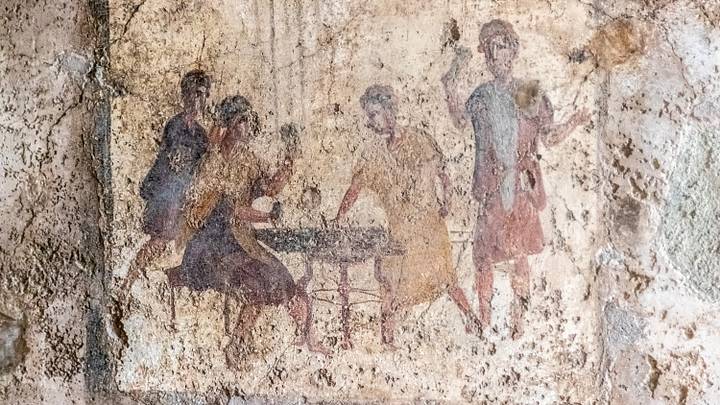
In the days leading up to Mount Vesuvius' eruption in AD 79, the people of Pompeii went about their daily routines, much as they would any other week.
Although tremors (which were not uncommon across the region given its tectonic setting) shook the coastal resort city, citizens paid little to no attention. Most ignored these warning signs and continued to frequent the taverns, main streets, and marketplaces as if nothing was amiss, until around noon on the day disaster struck.
Vesuvius sent rock and ash soaring miles into the sky. Debris blanketed the once-thriving city of Pompeii and buried residents within 24 hours. Even those who tried to escape met their unfortunate demise that day.
Let’s rewind the clock and take a closer look at what Pompeian workers were doing the morning of the eruption to better understand their culture and economy.
MOSAICIST

Mosaicists were artists who created intricate patterns with tesserae (small stones and glass pieces) set in mortar. They were hired to decorate floors and walls, and the more elaborate the pattern, the higher the cost, making many of these mosaics a luxury afforded by the wealthy.
Master mosaicists could craft stunning scenes with tesserae (about the size of dice), making the finished product all the more impressive. It wasn’t uncommon for a mosaic in Pompeii to feature a Roman god or goddess, a dog, or depict a historic event.
Other creative trades prospered as well, including ceramists, blacksmiths, marble carvers, and goldsmiths.
FARMERS

The rich volcanic soil around Pompeii supported crops such as wheat, barley, a variety of vegetables (lettuce, broccoli, basil, leeks), olives, and grapes, dotting vineyards across the region. Landowners and workers harvested wheat and barley for bread, grapes for wine, olives for oil, and onions in abundance. Farmers and herders also raised sheep for milk, meat, and wool, with wool production ranking among the city’s wealthiest and most influential trades.
Most farms were small, family-run operations, but some villas produced larger harvests, exporting their goods and strengthening the region’s well-established trade networks.
Besides harvesting, farmers also planted, preserved, and irrigated their crops to “ensure the productivity of fields and gardens,” as noted by Pompeii Online.
Note: While closely linked to agriculture, winemaking was a distinct profession.
BAKERS

Back in town, bakeries were a common sight as bread was pretty much a staple at every meal. While wealthier Pompeian households had their own ovens, bakeries (both small, neighborhood shops and larger operations with their own mills) were prevalent, especially in the town center near grain supplies.
Ancient Pompeians were inventive and intuitive, so it’s no surprise they didn’t waste time mixing dough by hand. Instead, they used specialized kneading machines. Bakers would shape the dough, stamp the bread before baking, and prepare loaves for hungry customers.
Archaeologists exploring Pompeii’s ruins have uncovered several large ovens, proving the existence of bakeries in the ancient city.
SCRIPTORES

Who better to get the word out about an election or public announcement in ancient Pompeii than a skilled scriptore? These professional writers and painters were hired to paint advertisements, notices, and campaign slogans on building exteriors.
Some of these advertisements promoted entertainment and detailed the schedule and lineup of upcoming gladiator games, while others were strictly political, urging locals to vote for specific candidates. Much like artists today, scriptores would often sign their work, taking ownership of their craft.
TAVERN WORKERS

Before Vesuvius spewed pumice over Pompeii, some residents worked behind the counters at thermopoliums, “snack bars” where people enjoyed food and drink, comparable to today’s fast-food restaurants.
Behind these street-facing counters were taverns, or cauponae, inviting patrons to sit and sip for a while. Some counters even had grooves to help owners check if coins were counterfeit.
Family members, hired staff (the women called “bar maidens”), and enslaved workers would cook, serve food, and pour wine at these popular establishments.
FULLERS

Fullers in ancient Pompeii were essentially the launderers, or, in modern terms, the dry cleaners, of their time, responsible for washing and maintaining soiled garments. They received specific instructions from clients on how to care for particular pieces. To clean clothes, fullers used detergents, including those made with urine, which acted as a bleaching agent of sorts. Beyond cleaning, they closely monitored the condition of fabrics throughout the entire process, ensuring garments were clean and cared for.
Much like workers in the wool industry, fullers were well compensated, since looking one’s best was important to Pompeians (and to ancient Romans in general) regardless of social class.
The fulling process involved several steps: cleaning, rinsing, drying, dyeing, and felting, according to World History. While the shop’s owner handled client interactions and front-facing business matters, enslaved workers typically undertook the majority of the physical labor.