%20%20--%3E%0A%3Csvg%20version%3D%221.1%22%20id%3D%22Layer_1%22%20xmlns%3D%22http%3A%2F%2Fwww.w3.org%2F2000%2Fsvg%22%20xmlns%3Axlink%3D%22http%3A%2F%2Fwww.w3.org%2F1999%2Fxlink%22%20x%3D%220px%22%20y%3D%220px%22%0A%09%20viewBox%3D%220%200%20684.6%2068.1%22%20style%3D%22enable-background%3Anew%200%200%20684.6%2068.1%3B%22%20xml%3Aspace%3D%22preserve%22%3E%0A%3Cg%3E%0A%09%3Cpath%20d%3D%22M444.1%2C29.3h-17.4v14.5h17.4V29.3z%20M36.4%2C68.1l29.3-50.8V0H50.4L32.9%2C36.8L15.5%2C0H0v68.1h16.7V45.8l12.4%2C22.3H36.4z%0A%09%09%20M49.1%2C68.1h16.6V23.4L49.1%2C52.1V68.1z%20M76.6%2C68.1h45V53.8H93.3V41.6h21V27.1h-21V14.8h28.3V0.1h-45V68.1z%20M175.6%2C68.1h17.3v-68%0A%09%09h-16.5v40.3L150%2C0.1h-17.6v68h16.7V27.7L175.6%2C68.1z%20M235.8%2C14.8h15.4V0.1h-47.4v14.7H219v53.2h16.8V14.8z%20M290.3%2C45.9h-17.1%0A%09%09l7.5-15.6h2L290.3%2C45.9z%20M298.7%2C68.1h18l-32.2-68h-5.7l-32%2C68h18l3.3-7.1h27.1L298.7%2C68.1z%20M325.2%2C68.1h46.2V53.8h-29.6V0.1h-16.7%0A%09%09V68.1z%20M423.7%2C14.8h27.2V0.1H407v68h16.7V14.8z%20M462%2C68.1h46.2V53.8h-29.6V0.1H462V68.1z%20M564.8%2C34.1c0%2C10.7-7.2%2C19.2-18.5%2C19.2%0A%09%09c-11.4%2C0-18.5-8.5-18.5-19.2s7.1-19.2%2C18.5-19.2C557.6%2C14.9%2C564.8%2C23.4%2C564.8%2C34.1%20M580.6%2C34.1c0-19-14.2-34-34.3-34%0A%09%09c-20.2%2C0-34.3%2C15-34.3%2C34c0%2C19%2C14.1%2C34%2C34.3%2C34C566.4%2C68.1%2C580.6%2C53.1%2C580.6%2C34.1%20M604.8%2C20.5c0-4.1%2C3.3-6.2%2C6.7-6.2%0A%09%09c4.4%2C0%2C6.6%2C3%2C6.6%2C6.6h14.7C631.8%2C9.1%2C625.1%2C0.1%2C611%2C0.1c-12%2C0-21.7%2C9.3-21.7%2C20.6c0%2C10.9%2C5.9%2C15.9%2C16.7%2C19.8%0A%09%09c5.2%2C1.8%2C11.5%2C3.2%2C11.5%2C8c0%2C3.3-2.4%2C5.5-6.4%2C5.5c-3.6%2C0-6.6-3-6.6-6.7h-15.2c0%2C11.5%2C7.9%2C20.8%2C21.8%2C20.8c12%2C0%2C21.6-9.3%2C21.6-20.6%0A%09%09c0-10-5.3-16.4-16.7-19.8C610.6%2C26.1%2C604.8%2C25.3%2C604.8%2C20.5%20M670%2C20.9h14.7C683.8%2C9.1%2C677.1%2C0.1%2C663%2C0.1c-12%2C0-21.7%2C9.3-21.7%2C20.6%0A%09%09c0%2C10.9%2C5.9%2C15.9%2C16.7%2C19.8c5.2%2C1.8%2C11.5%2C3.2%2C11.5%2C8c0%2C3.3-2.4%2C5.5-6.4%2C5.5c-3.6%2C0-6.6-3-6.6-6.7h-15.2c0%2C11.5%2C7.9%2C20.8%2C21.8%2C20.8%0A%09%09c12%2C0%2C21.6-9.3%2C21.6-20.6c0-10-5.3-16.4-16.7-19.8c-5.4-1.6-11.3-2.4-11.3-7.2c0-4.1%2C3.3-6.2%2C6.7-6.2C667.7%2C14.4%2C670%2C17.3%2C670%2C20.9%0A%09%09%22%2F%3E%0A%3C%2Fg%3E%0A%3C%2Fsvg%3E%0A)

Contrary to what is sometimes assumed, women in the medieval period were not confined to domestic life alone. While they had more limited opportunities to work professionally during this era (commonly defined as the period from 600 AD to 1500 AD), there were a number of jobs that they did do, and which shed more light on the nature of life in this historical period. Here’s an alphabetical look at five of the jobs which were performed by women during the Middle Ages.
Agricultural Workers

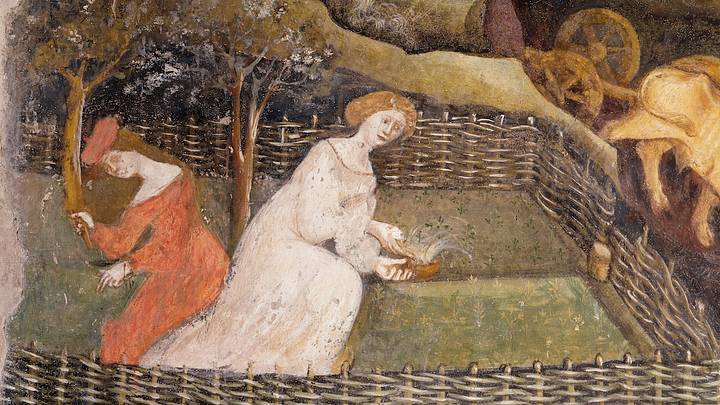
Farming was a major part of medieval life, and many women were involved in agricultural work. While some was for their own families, others also took on paid employment. Many women worked alongside men in these areas, including work in fields involving planting and harvesting crops, as well as playing a key role in activities like sheep shearing. Historical documents show that there were women who led harvesting teams too. An illustration of women engaged in agricultural work can also be found in one of the most famous medieval manuscripts, Très riches heures du Duc de Berry.
Bakers

As well as baking and cooking at home, some women also made and sold bread professionally, including at local markets. One of the most time-consuming aspects of the baking process involved the grinding of grain, which went into the making of the bread. Manuscripts from this period, known as books of hours, also include images of women bakers at work.
Businesswomen

It might sound surprising, but women had more involvement in medieval business than is sometimes thought. The case of Annabell Furner, who has been described as a “female tycoon” of medieval London, shows how it was possible for women to become wealthy and successful in this way. Other contexts in which women became involved in business included those who managed their husband’s estates while the latter were away doing other work, including traveling on crusades or pilgrimages.
Clothiers

Like baking, making clothes was something which women could do both for their families as well as in a professional area. Those who made and sold clothes were known as cloth-makers or clothiers. Cloth-making became a particularly important industry in England during the late Middle Ages, which meant there were many opportunities in this field. There are also references to clothiers in medieval literature like Geoffrey Chaucer’s The Wife of Bath’s Prologue and Tale, where the female character of the title is a cloth-maker and involved in the financial side of selling clothes.
Healers

Many medieval women were in charge of medicine and healing for their families, and others also practiced healing professionally in a number of fields; opportunities for women healers even extended to European royal courts, including that of Spain, which hired them to work in multiple areas of medical practice. Medical knowledge also circulated amongst women through informal networks, such as the Distaff Gospels in France, which are written records of information shared in this way. However, in some contexts, women healers also experienced a great deal of prejudice, with male medical practitioners sometimes seeking to undermine their work.