%20%20--%3E%0A%3Csvg%20version%3D%221.1%22%20id%3D%22Layer_1%22%20xmlns%3D%22http%3A%2F%2Fwww.w3.org%2F2000%2Fsvg%22%20xmlns%3Axlink%3D%22http%3A%2F%2Fwww.w3.org%2F1999%2Fxlink%22%20x%3D%220px%22%20y%3D%220px%22%0A%09%20viewBox%3D%220%200%20684.6%2068.1%22%20style%3D%22enable-background%3Anew%200%200%20684.6%2068.1%3B%22%20xml%3Aspace%3D%22preserve%22%3E%0A%3Cg%3E%0A%09%3Cpath%20d%3D%22M444.1%2C29.3h-17.4v14.5h17.4V29.3z%20M36.4%2C68.1l29.3-50.8V0H50.4L32.9%2C36.8L15.5%2C0H0v68.1h16.7V45.8l12.4%2C22.3H36.4z%0A%09%09%20M49.1%2C68.1h16.6V23.4L49.1%2C52.1V68.1z%20M76.6%2C68.1h45V53.8H93.3V41.6h21V27.1h-21V14.8h28.3V0.1h-45V68.1z%20M175.6%2C68.1h17.3v-68%0A%09%09h-16.5v40.3L150%2C0.1h-17.6v68h16.7V27.7L175.6%2C68.1z%20M235.8%2C14.8h15.4V0.1h-47.4v14.7H219v53.2h16.8V14.8z%20M290.3%2C45.9h-17.1%0A%09%09l7.5-15.6h2L290.3%2C45.9z%20M298.7%2C68.1h18l-32.2-68h-5.7l-32%2C68h18l3.3-7.1h27.1L298.7%2C68.1z%20M325.2%2C68.1h46.2V53.8h-29.6V0.1h-16.7%0A%09%09V68.1z%20M423.7%2C14.8h27.2V0.1H407v68h16.7V14.8z%20M462%2C68.1h46.2V53.8h-29.6V0.1H462V68.1z%20M564.8%2C34.1c0%2C10.7-7.2%2C19.2-18.5%2C19.2%0A%09%09c-11.4%2C0-18.5-8.5-18.5-19.2s7.1-19.2%2C18.5-19.2C557.6%2C14.9%2C564.8%2C23.4%2C564.8%2C34.1%20M580.6%2C34.1c0-19-14.2-34-34.3-34%0A%09%09c-20.2%2C0-34.3%2C15-34.3%2C34c0%2C19%2C14.1%2C34%2C34.3%2C34C566.4%2C68.1%2C580.6%2C53.1%2C580.6%2C34.1%20M604.8%2C20.5c0-4.1%2C3.3-6.2%2C6.7-6.2%0A%09%09c4.4%2C0%2C6.6%2C3%2C6.6%2C6.6h14.7C631.8%2C9.1%2C625.1%2C0.1%2C611%2C0.1c-12%2C0-21.7%2C9.3-21.7%2C20.6c0%2C10.9%2C5.9%2C15.9%2C16.7%2C19.8%0A%09%09c5.2%2C1.8%2C11.5%2C3.2%2C11.5%2C8c0%2C3.3-2.4%2C5.5-6.4%2C5.5c-3.6%2C0-6.6-3-6.6-6.7h-15.2c0%2C11.5%2C7.9%2C20.8%2C21.8%2C20.8c12%2C0%2C21.6-9.3%2C21.6-20.6%0A%09%09c0-10-5.3-16.4-16.7-19.8C610.6%2C26.1%2C604.8%2C25.3%2C604.8%2C20.5%20M670%2C20.9h14.7C683.8%2C9.1%2C677.1%2C0.1%2C663%2C0.1c-12%2C0-21.7%2C9.3-21.7%2C20.6%0A%09%09c0%2C10.9%2C5.9%2C15.9%2C16.7%2C19.8c5.2%2C1.8%2C11.5%2C3.2%2C11.5%2C8c0%2C3.3-2.4%2C5.5-6.4%2C5.5c-3.6%2C0-6.6-3-6.6-6.7h-15.2c0%2C11.5%2C7.9%2C20.8%2C21.8%2C20.8%0A%09%09c12%2C0%2C21.6-9.3%2C21.6-20.6c0-10-5.3-16.4-16.7-19.8c-5.4-1.6-11.3-2.4-11.3-7.2c0-4.1%2C3.3-6.2%2C6.7-6.2C667.7%2C14.4%2C670%2C17.3%2C670%2C20.9%0A%09%09%22%2F%3E%0A%3C%2Fg%3E%0A%3C%2Fsvg%3E%0A)

Picture a scene of medieval times in your mind, and chances are you might picture a knight on horseback in a full suit of shining armor, a grand king or queen sat on their throne, or a motleyed jester gamely entertaining the court. For the vast majority of people in the Middle Ages, though, life wasn’t quite as showy or as impressive as that.
The Middle Ages is the name given to the period of European history roughly lasting from the collapse of the final vestiges of the Roman Empire in the late 400s, through to the birth of the Renaissance, around 1500. In the thousand or so years in between, life in Europe changed dramatically. Towns and cities expanded, power and borders shifted continually, wars and conflicts erupted across the continent, and strict class systems began to emerge along the lines of royalty, the nobility, the clergy, and the peasant underclass. The vast majority of people, understandably, fell into this underclass—and as they did not have quite the same privileges or economic power as the social strata above them, their lives, and ultimately their jobs, were focused on far more practical duties and skills.
While today’s corporate structure hardly resembles the daily lives of medieval populations, many jobs from that era still persist in 2026, merely adapted to modern industries and technologies.
Let’s venture back to the Middle Ages, while keeping one eye on the present, to learn about five medieval jobs that never truly disappeared.
FARMING

Incredibly, as much as 80% of the population in medieval Europe were somehow employed in agriculture, and as such made their living working the land. A majority of them, moreover, would have been serfs or villeins, who did not own the land on which they worked and would pay a share of their harvest to their feudal landowner. Villeins outranked serfs, and typically had more rights and more room to negotiate the terms of their tenancy, while serfs were the most menial workers with no ownership rights and little leeway in the often rather punishing financial arrangement with the owner of their land.
CRAFTSMEN

Many larger towns and cities in the Middle Ages would have had a strong community of craftsmen—blacksmiths, wheelwrights, carpenters, weavers, shoemakers, stonemasons, tailors, and so on—whose work provided the surrounding population with the materials, equipment, and clothing they needed. Studies of medieval tax records suggest that carpenters and smiths were among the most common craft occupations, but predictably the same could not be guaranteed in all cities. A peace oath signed in Pisa in 1228, for instance, records that the largest industries behind food production in the city were shoemaking, fur-trading, and leather-working, which together accounted for just over one-fifth of the entire population.
BREWING AND WINEMAKING

We might think of wine as something of a luxury today, but back in the Middle Ages—when supplies of potable water weren’t always quite so readily available—wine and beer were central to everyday life. By the 1300s, merchant guilds of vintners and brewers had emerged all across Europe too, transforming wine production in particular into an international business, employing a great many people, from growers and harvesters to pressers and bottlers.
BUTCHERY AND FISHING

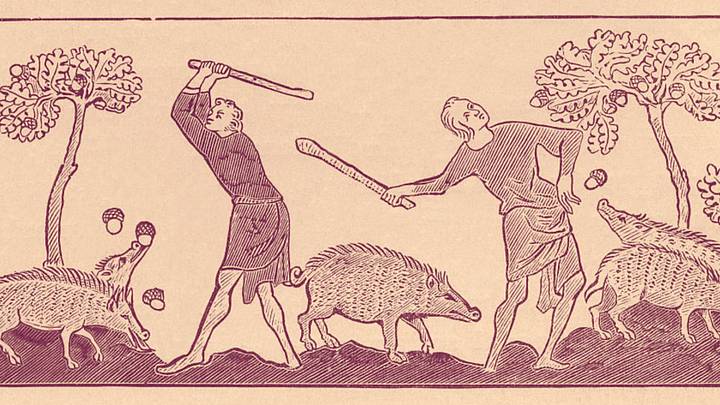
For serfs and peasants in the Middle Ages, meat wasn’t an everyday staple, but an occasional luxury. Daily diets were far more based around grains and cereals, such as barley, and root and leaf vegetables that were easily grown and harvested. Peasant families who were able to rear their own livestock typically reared pigs, as they offered the best meat yield from snout to tail, and were understandably cheap to feed—if not free, when left to forage on their own.
Wealthier families, as well as those that lived in larger towns and cities were rearing livestock wasn’t an option, however, relied on local butchers for a ready supply of meat, and as such butchery emerged as another relatively common occupation. Duty records and population surveys suggest perhaps butchers accounted for around 1 in 20 taxable workers in some European cities, with each one supplying meat to hundreds of customers.
In towns and cities along the coast, the sea provided an equally steady and reliable supply of protein-rich food, with many workers in the Middle Ages finding employment in the fishing industry. Quite how many people that was, and precisely what fish they tended to catch, understandably depended on the location and season involved; by the 1500s, for instance, the herring industry alone employed a staggering 5% of the entire male population of the Netherlands.
BAKING

Many houses in the Middle Ages were not large enough nor well equipped enough to have an oven, and as such many families—both rich and poor—relied on a local baker for a constant supply of bread. With few people besides professional bakers capable of baking bread, ultimately, the baking industry came to be fairly strictly controlled, with guilds emerging that oversaw production in larger towns and cities.