%20%20--%3E%0A%3Csvg%20version%3D%221.1%22%20id%3D%22Layer_1%22%20xmlns%3D%22http%3A%2F%2Fwww.w3.org%2F2000%2Fsvg%22%20xmlns%3Axlink%3D%22http%3A%2F%2Fwww.w3.org%2F1999%2Fxlink%22%20x%3D%220px%22%20y%3D%220px%22%0A%09%20viewBox%3D%220%200%20684.6%2068.1%22%20style%3D%22enable-background%3Anew%200%200%20684.6%2068.1%3B%22%20xml%3Aspace%3D%22preserve%22%3E%0A%3Cg%3E%0A%09%3Cpath%20d%3D%22M444.1%2C29.3h-17.4v14.5h17.4V29.3z%20M36.4%2C68.1l29.3-50.8V0H50.4L32.9%2C36.8L15.5%2C0H0v68.1h16.7V45.8l12.4%2C22.3H36.4z%0A%09%09%20M49.1%2C68.1h16.6V23.4L49.1%2C52.1V68.1z%20M76.6%2C68.1h45V53.8H93.3V41.6h21V27.1h-21V14.8h28.3V0.1h-45V68.1z%20M175.6%2C68.1h17.3v-68%0A%09%09h-16.5v40.3L150%2C0.1h-17.6v68h16.7V27.7L175.6%2C68.1z%20M235.8%2C14.8h15.4V0.1h-47.4v14.7H219v53.2h16.8V14.8z%20M290.3%2C45.9h-17.1%0A%09%09l7.5-15.6h2L290.3%2C45.9z%20M298.7%2C68.1h18l-32.2-68h-5.7l-32%2C68h18l3.3-7.1h27.1L298.7%2C68.1z%20M325.2%2C68.1h46.2V53.8h-29.6V0.1h-16.7%0A%09%09V68.1z%20M423.7%2C14.8h27.2V0.1H407v68h16.7V14.8z%20M462%2C68.1h46.2V53.8h-29.6V0.1H462V68.1z%20M564.8%2C34.1c0%2C10.7-7.2%2C19.2-18.5%2C19.2%0A%09%09c-11.4%2C0-18.5-8.5-18.5-19.2s7.1-19.2%2C18.5-19.2C557.6%2C14.9%2C564.8%2C23.4%2C564.8%2C34.1%20M580.6%2C34.1c0-19-14.2-34-34.3-34%0A%09%09c-20.2%2C0-34.3%2C15-34.3%2C34c0%2C19%2C14.1%2C34%2C34.3%2C34C566.4%2C68.1%2C580.6%2C53.1%2C580.6%2C34.1%20M604.8%2C20.5c0-4.1%2C3.3-6.2%2C6.7-6.2%0A%09%09c4.4%2C0%2C6.6%2C3%2C6.6%2C6.6h14.7C631.8%2C9.1%2C625.1%2C0.1%2C611%2C0.1c-12%2C0-21.7%2C9.3-21.7%2C20.6c0%2C10.9%2C5.9%2C15.9%2C16.7%2C19.8%0A%09%09c5.2%2C1.8%2C11.5%2C3.2%2C11.5%2C8c0%2C3.3-2.4%2C5.5-6.4%2C5.5c-3.6%2C0-6.6-3-6.6-6.7h-15.2c0%2C11.5%2C7.9%2C20.8%2C21.8%2C20.8c12%2C0%2C21.6-9.3%2C21.6-20.6%0A%09%09c0-10-5.3-16.4-16.7-19.8C610.6%2C26.1%2C604.8%2C25.3%2C604.8%2C20.5%20M670%2C20.9h14.7C683.8%2C9.1%2C677.1%2C0.1%2C663%2C0.1c-12%2C0-21.7%2C9.3-21.7%2C20.6%0A%09%09c0%2C10.9%2C5.9%2C15.9%2C16.7%2C19.8c5.2%2C1.8%2C11.5%2C3.2%2C11.5%2C8c0%2C3.3-2.4%2C5.5-6.4%2C5.5c-3.6%2C0-6.6-3-6.6-6.7h-15.2c0%2C11.5%2C7.9%2C20.8%2C21.8%2C20.8%0A%09%09c12%2C0%2C21.6-9.3%2C21.6-20.6c0-10-5.3-16.4-16.7-19.8c-5.4-1.6-11.3-2.4-11.3-7.2c0-4.1%2C3.3-6.2%2C6.7-6.2C667.7%2C14.4%2C670%2C17.3%2C670%2C20.9%0A%09%09%22%2F%3E%0A%3C%2Fg%3E%0A%3C%2Fsvg%3E%0A)

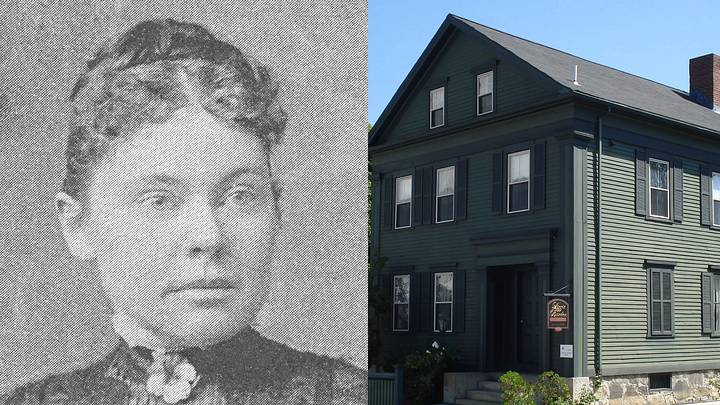
If you've heard the name Lizzie Borden, it was probably from the rhyme heard on playgrounds or at sleepovers:
Lizzie Borden took an axe,
and gave her mother 40 whacks.
When she saw what she had done,
she gave her father 41.
The grisly song or rhyme was not originally intended for children, but the story of the Borden murders spread through the nation like wildfire in the late 1890s. By the turn of the century, young and old alike believed that Lizzie Borden had hacked up her parents. However, the actual facts of the case were lost among the many retellings, and today the case has become mostly myth and legend.
All of the facts of what truly occurred on the morning of August 4, 1892, in Fall River, Massachusetts, may never be uncovered. But we do know that the rhyme and the retellings have caused many a misconception about Lizzie, the suspected murderer, and the victims, Andrew and Abby Borden. Here are a few of the most common myths about the case that many people still believe.
- Myth: Abby Borden Was Lizzie's Mother
- Myth: Abby and Andrew Borden Were Killed With an Axe
- Myth: 40 and 41 "Whacks"
- Myth: Everyone Believed Lizzie Was Guilty
- Myth: Lizzie's Motive for Murder

Myth: Abby Borden Was Lizzie's Mother
Two years after the death of his first wife, Andrew Borden married Abby Durfee Gray on June 6, 1865. Abby became the stepmother to Andrew's two daughters, Emma and Lizzie, but it’s been reported that the relationship was distant and tense.
As an adult, Lizzie stopped calling Abby "Mother," and, a few months before the murders, allegedly even told the local seamstress that Abby was a “mean good-for-nothing thing.” After the murders, the police questioned Lizzie and made mention of her mother. Lizzie abruptly and vehemently corrected them, wanting it to be very clear that Abby Borden was not her mother.
However, others who knew Lizzie claimed she did not have a bad relationship with her stepmother.

Myth: Abby and Andrew Borden Were Killed With an Axe
The Lizzie Borden rhyme claims that Lizzie was an axe murderer, but technically, Andrew and Abby Borden were killed with a hatchet. The difference might sound negligible, but the exact tool used is important when figuring out who actually killed Mr. and Mrs. Borden.
An axe, with its bigger head and longer handle, would have been heavy and difficult for a lady unused to menial work. A hatchet would be easier to use since it's smaller and lighter, plus it could be hidden easier as well. Police did find a hatchet with its handle broken off in the basement of the Borden home, but the blade was completely clean.

Myth: 40 and 41 "Whacks"
Any number of whacks to the head with a hatchet is too many, but the rhyme greatly exaggerated how many blows Andrew and Abby Borden received. Abby was killed first in a second-floor guest room she had been cleaning. She received 18 or 19 strikes to the back of the head, which was less than half of the 40 the rhyme claimed.
Andrew Borden was killed about an hour and a half after his wife, while he was napping on the sitting room sofa. He took 10 or 11 blows to the face, far fewer than 41, but still enough to leave him badly mutilated. The actual numbers didn't fit as well into the sing-song rhyme, though, and people sharing the news weren't going to let the truth get in the way of a good story.

Myth: Everyone Believed Lizzie Was Guilty
Today, we can look back at the case and think that Lizzie was the only plausible suspect, but things weren't so cut-and-dried at the time. The police never found the confirmed murder weapon, nor did they discover any blood on Lizzie or her clothes. Though her testimony had plenty of holes, this was more or less explained away because of her doctor giving her morphine to calm her shock and "hysteria."
The police investigating and the judge overseeing Lizzie's case believed she was likely the murderer, but they did not have enough evidence. Women's rights and church groups stood by Lizzie in her defense, believing that someone so active in charities and church functions could not have committed such a brutal crime. By the time Lizzie was acquitted, there were groups who believed her guilty and who defended her innocence.

Myth: Lizzie's Motive for Murder
Because Lizzie was never convicted—and neither was anyone else—we may never know the true motive behind the murders. That didn't stop people from coming up with many different theories as to why Lizzie would have wanted to kill her father and stepmother, though. Many thought that it was revenge for Andrew Borden killing the pigeons Lizzie looked after.
Another speculation was that Lizzie was tired of living like a pauper when she knew her father was very wealthy. The Bordens lived on a modest side of town, without electricity or running water, because Andrew Borden was miserly about his wealth. After being acquitted, Lizzie used her inheritance to buy a big manor and live luxuriously, so that does could’ve been a plausible motive. But without a confession or more concrete evidence, the case will remain unsolved.