%20%20--%3E%0A%3Csvg%20version%3D%221.1%22%20id%3D%22Layer_1%22%20xmlns%3D%22http%3A%2F%2Fwww.w3.org%2F2000%2Fsvg%22%20xmlns%3Axlink%3D%22http%3A%2F%2Fwww.w3.org%2F1999%2Fxlink%22%20x%3D%220px%22%20y%3D%220px%22%0A%09%20viewBox%3D%220%200%20684.6%2068.1%22%20style%3D%22enable-background%3Anew%200%200%20684.6%2068.1%3B%22%20xml%3Aspace%3D%22preserve%22%3E%0A%3Cg%3E%0A%09%3Cpath%20d%3D%22M444.1%2C29.3h-17.4v14.5h17.4V29.3z%20M36.4%2C68.1l29.3-50.8V0H50.4L32.9%2C36.8L15.5%2C0H0v68.1h16.7V45.8l12.4%2C22.3H36.4z%0A%09%09%20M49.1%2C68.1h16.6V23.4L49.1%2C52.1V68.1z%20M76.6%2C68.1h45V53.8H93.3V41.6h21V27.1h-21V14.8h28.3V0.1h-45V68.1z%20M175.6%2C68.1h17.3v-68%0A%09%09h-16.5v40.3L150%2C0.1h-17.6v68h16.7V27.7L175.6%2C68.1z%20M235.8%2C14.8h15.4V0.1h-47.4v14.7H219v53.2h16.8V14.8z%20M290.3%2C45.9h-17.1%0A%09%09l7.5-15.6h2L290.3%2C45.9z%20M298.7%2C68.1h18l-32.2-68h-5.7l-32%2C68h18l3.3-7.1h27.1L298.7%2C68.1z%20M325.2%2C68.1h46.2V53.8h-29.6V0.1h-16.7%0A%09%09V68.1z%20M423.7%2C14.8h27.2V0.1H407v68h16.7V14.8z%20M462%2C68.1h46.2V53.8h-29.6V0.1H462V68.1z%20M564.8%2C34.1c0%2C10.7-7.2%2C19.2-18.5%2C19.2%0A%09%09c-11.4%2C0-18.5-8.5-18.5-19.2s7.1-19.2%2C18.5-19.2C557.6%2C14.9%2C564.8%2C23.4%2C564.8%2C34.1%20M580.6%2C34.1c0-19-14.2-34-34.3-34%0A%09%09c-20.2%2C0-34.3%2C15-34.3%2C34c0%2C19%2C14.1%2C34%2C34.3%2C34C566.4%2C68.1%2C580.6%2C53.1%2C580.6%2C34.1%20M604.8%2C20.5c0-4.1%2C3.3-6.2%2C6.7-6.2%0A%09%09c4.4%2C0%2C6.6%2C3%2C6.6%2C6.6h14.7C631.8%2C9.1%2C625.1%2C0.1%2C611%2C0.1c-12%2C0-21.7%2C9.3-21.7%2C20.6c0%2C10.9%2C5.9%2C15.9%2C16.7%2C19.8%0A%09%09c5.2%2C1.8%2C11.5%2C3.2%2C11.5%2C8c0%2C3.3-2.4%2C5.5-6.4%2C5.5c-3.6%2C0-6.6-3-6.6-6.7h-15.2c0%2C11.5%2C7.9%2C20.8%2C21.8%2C20.8c12%2C0%2C21.6-9.3%2C21.6-20.6%0A%09%09c0-10-5.3-16.4-16.7-19.8C610.6%2C26.1%2C604.8%2C25.3%2C604.8%2C20.5%20M670%2C20.9h14.7C683.8%2C9.1%2C677.1%2C0.1%2C663%2C0.1c-12%2C0-21.7%2C9.3-21.7%2C20.6%0A%09%09c0%2C10.9%2C5.9%2C15.9%2C16.7%2C19.8c5.2%2C1.8%2C11.5%2C3.2%2C11.5%2C8c0%2C3.3-2.4%2C5.5-6.4%2C5.5c-3.6%2C0-6.6-3-6.6-6.7h-15.2c0%2C11.5%2C7.9%2C20.8%2C21.8%2C20.8%0A%09%09c12%2C0%2C21.6-9.3%2C21.6-20.6c0-10-5.3-16.4-16.7-19.8c-5.4-1.6-11.3-2.4-11.3-7.2c0-4.1%2C3.3-6.2%2C6.7-6.2C667.7%2C14.4%2C670%2C17.3%2C670%2C20.9%0A%09%09%22%2F%3E%0A%3C%2Fg%3E%0A%3C%2Fsvg%3E%0A)

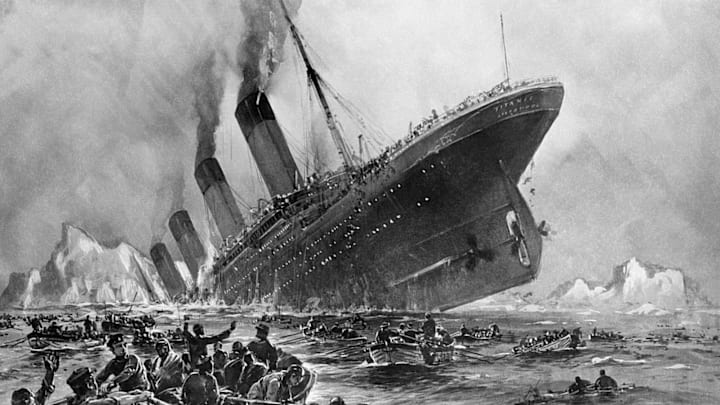
Though the 1912 sinking of the Titanic has solidified itself in both our historical and pop culture lexicon, it's certainly not the only maritime disaster that has ended in widespread tragedy. While the Titanic went down slowly in the icy waters of the Atlantic, other ships went out with a bang or a blaze, leaving passengers with almost no time to evacuate. Despite not receiving the same attention or cinematic treatment as the Titanic, these shipwrecks are nonetheless tragedies of equal or greater proportion.
The world remembers the Titanic, but has largely moved on from these harrowing disasters at sea.
SS Sultana (1865)
On April 27, 1865, a wooden commercial steamboat called the SS Sultana sank on the Mississippi River, killing more than 1,100 of its passengers. Previously utilized in the cotton trade and as a means to transport troops during the American Civil War, the Sultana exploded and sank after three of the boat’s boilers blew up following a shoddy repair effort. Though the boat was only designed to carry about 375 passengers, more than 2,000 people had been crammed onto the Sultana after its captain, James Cass Mason, agreed to transport newly released Union prisoners of war in exchange for a hefty paycheck.
After a few days traveling north, three of the ship's strained boilers exploded in the early hours of April 27, 1865, killing dozens instantly. Constructed predominantly of wood, the Sultana quickly caught fire and sank, leading to the deaths of more than 1,100 passengers either through the explosion itself, severe burns, drowning, or hypothermia.
Despite the magnitude of the tragedy, no individual was ever held accountable for the disaster, and much of the contemporary news coverage surrounding the event was largely overshadowed by the assassination of President Lincoln.
MV Wilhelm Gustloff (1945)
Measuring nearly 700 ft in length, the MV Wilhelm Gustloff was originally constructed as a recreational cruise ship for the German Labour Front (effectively a subsidiary of the Nazi Party). Named after Wilhelm Gustloff, founder of the Nazi Party’s Swiss branch, the ship operated as a cruise ship for a few years before being co-opted by the German navy and converted to a hospital ship (and later a floating barracks).
In early 1945, the MV Wilhelm Gustloff would be commissioned as part of Operation Hannibal, a large-scale naval evacuation of German troops and civilians from across eastern Europe ahead of a looming Soviet Army invasion. Departing from what is now the city of Gdynia in northern Poland, the ship was carrying an estimated 10,000 passengers, far exceeding its capacity. After the ship was spotted by a Soviet submarine, the submarine fired three torpedoes at the German ship, sinking it. Though roughly 1,200 passengers were able to make it to shore safely, the remaining 9,000 perished at sea, making the sinking of the MV Wilhelm Gustloff the single deadliest maritime disaster of World War II.
MV Goya
Another ship sank during the disastrous evacuation of Operation Hannibal. The MV Goya was a Norwegian freighter seized by Nazi forces during Germany’s occupation of Norway during the Second World War. Utilized by the Nazis for troop transport, the MV Goya was one of roughly 1,000 ships utilized in Operation Hannibal. Destined for Kiel in western Germany, the ship left the Hel Peninsula on April 16, 1945, with more than 7,000 passengers onboard, far exceeding its capacity. Just hours after departing, the MV Goya was spotted by a Soviet submarine that shot a volley of torpedoes at the ship. Catalyzing a fiery explosion, the ship sank in just minutes, killing nearly all onboard.
Ferry Neptune

On the evening of February 16, 1993, the commercial ferry Neptune sank off the coast of Miragoâne in western Haiti, leading to the deaths of roughly 1,500 passengers. While making a routine trip from Jeremie to Port-au-Prince, the heavily overcrowded ferry capsized after running into a squall. Exacerbated by the ship’s overcrowding and Haiti’s near-total lack of regulations around maritime travel, the boat contained no lifeboats or vests, leaving some 1,500 passengers to drown in the Caribbean Sea. The boat’s captain, Benjamin St. Clair, was able to make it safely to shore and told officials that the passenger’s panic during the storm heavily contributed to the boat’s sinking. Some survivors reported clinging to the carcasses of dead animals or crates of supplies for hours awaiting rescue.
MV Doña Paz
On December 20, 1987, a passenger ferry called the MV Doña Paz collided with an oil tanker while sailing through the Tablas Strait off the coast of the Philippines. Bound for Manila, the ship was carrying roughly 4,000 passengers at the time of the incident, almost triple its capacity. Following the collision, the more than 8,000 barrels of petroleum onboard the oil tanker quickly caught flame, spreading to the Doña Paz shortly after. Fully engulfed in flames within minutes, the Doña Paz sank less than half an hour after the collision, leaving fewer than 30 survivors among more than 4,300 dead.
While officials were quick to blame the Doña Paz’s overcrowding and poor safety protocol as the primary reason for the massive loss of life, an investigation into the oil tanker found multiple serious safety issues that would’ve deemed the vessel unseaworthy. Despite this, both Suplicio Lines, owners of the Doña Paz, and Caltex Philippines (the organization chartering the oil tanker) were largely able to avoid responsibility for the incident.
SS Kiangya
Operated by the Shanghai Merchants Group, the SS Kiangya was a Chinese passenger ship that was destroyed in an explosion during the Chinese Civil War in 1943. While sailing from Shanghai to Ningbo, the ship hit what is believed to have been a mine leftover from the Second World War, causing it to sink on the Huangpu River south of Shanghai. Although the ship’s official capacity was just under 1,200, the manifest listed that at least 2,100 passengers were onboard during the explosion, alongside at least 1,000 undocumented stowaways. Although around 1,000 passengers were able to make it to safety, it is estimated that between 2,700 and 4,000 died as a result of the accident.
MV Le Joola
While sailing off the coast of The Gambia in September 2002, a Senegalese ferry called the MV Le Joola capsized, killing more than 1,800 passengers, including 444 children on board. Traveling from Ziguinchor to Dakar, the Le Joola ran into a violent storm while carrying roughly four times its passenger capacity. Designed to carry about 500 passengers, the heavy passenger presence on the ship's upper deck interfered with the boat’s buoyancy, exacerbating the instability stemming from the storm. Alongside this, it was reported that life preservers were bound tightly across the ship, preventing desperate passengers from accessing them.
The Senegalese and French authorities (due to the high number of French citizens onboard) determined the accident was caused by a combination of inclement weather, poor safety practices, and the Le Joola sailing in waters further than intended. While the Senegalese government offered monetary compensation to the families of the victims, no individual has ever been prosecuted or held criminally liable for the disaster.