%20%20--%3E%0A%3Csvg%20version%3D%221.1%22%20id%3D%22Layer_1%22%20xmlns%3D%22http%3A%2F%2Fwww.w3.org%2F2000%2Fsvg%22%20xmlns%3Axlink%3D%22http%3A%2F%2Fwww.w3.org%2F1999%2Fxlink%22%20x%3D%220px%22%20y%3D%220px%22%0A%09%20viewBox%3D%220%200%20684.6%2068.1%22%20style%3D%22enable-background%3Anew%200%200%20684.6%2068.1%3B%22%20xml%3Aspace%3D%22preserve%22%3E%0A%3Cg%3E%0A%09%3Cpath%20d%3D%22M444.1%2C29.3h-17.4v14.5h17.4V29.3z%20M36.4%2C68.1l29.3-50.8V0H50.4L32.9%2C36.8L15.5%2C0H0v68.1h16.7V45.8l12.4%2C22.3H36.4z%0A%09%09%20M49.1%2C68.1h16.6V23.4L49.1%2C52.1V68.1z%20M76.6%2C68.1h45V53.8H93.3V41.6h21V27.1h-21V14.8h28.3V0.1h-45V68.1z%20M175.6%2C68.1h17.3v-68%0A%09%09h-16.5v40.3L150%2C0.1h-17.6v68h16.7V27.7L175.6%2C68.1z%20M235.8%2C14.8h15.4V0.1h-47.4v14.7H219v53.2h16.8V14.8z%20M290.3%2C45.9h-17.1%0A%09%09l7.5-15.6h2L290.3%2C45.9z%20M298.7%2C68.1h18l-32.2-68h-5.7l-32%2C68h18l3.3-7.1h27.1L298.7%2C68.1z%20M325.2%2C68.1h46.2V53.8h-29.6V0.1h-16.7%0A%09%09V68.1z%20M423.7%2C14.8h27.2V0.1H407v68h16.7V14.8z%20M462%2C68.1h46.2V53.8h-29.6V0.1H462V68.1z%20M564.8%2C34.1c0%2C10.7-7.2%2C19.2-18.5%2C19.2%0A%09%09c-11.4%2C0-18.5-8.5-18.5-19.2s7.1-19.2%2C18.5-19.2C557.6%2C14.9%2C564.8%2C23.4%2C564.8%2C34.1%20M580.6%2C34.1c0-19-14.2-34-34.3-34%0A%09%09c-20.2%2C0-34.3%2C15-34.3%2C34c0%2C19%2C14.1%2C34%2C34.3%2C34C566.4%2C68.1%2C580.6%2C53.1%2C580.6%2C34.1%20M604.8%2C20.5c0-4.1%2C3.3-6.2%2C6.7-6.2%0A%09%09c4.4%2C0%2C6.6%2C3%2C6.6%2C6.6h14.7C631.8%2C9.1%2C625.1%2C0.1%2C611%2C0.1c-12%2C0-21.7%2C9.3-21.7%2C20.6c0%2C10.9%2C5.9%2C15.9%2C16.7%2C19.8%0A%09%09c5.2%2C1.8%2C11.5%2C3.2%2C11.5%2C8c0%2C3.3-2.4%2C5.5-6.4%2C5.5c-3.6%2C0-6.6-3-6.6-6.7h-15.2c0%2C11.5%2C7.9%2C20.8%2C21.8%2C20.8c12%2C0%2C21.6-9.3%2C21.6-20.6%0A%09%09c0-10-5.3-16.4-16.7-19.8C610.6%2C26.1%2C604.8%2C25.3%2C604.8%2C20.5%20M670%2C20.9h14.7C683.8%2C9.1%2C677.1%2C0.1%2C663%2C0.1c-12%2C0-21.7%2C9.3-21.7%2C20.6%0A%09%09c0%2C10.9%2C5.9%2C15.9%2C16.7%2C19.8c5.2%2C1.8%2C11.5%2C3.2%2C11.5%2C8c0%2C3.3-2.4%2C5.5-6.4%2C5.5c-3.6%2C0-6.6-3-6.6-6.7h-15.2c0%2C11.5%2C7.9%2C20.8%2C21.8%2C20.8%0A%09%09c12%2C0%2C21.6-9.3%2C21.6-20.6c0-10-5.3-16.4-16.7-19.8c-5.4-1.6-11.3-2.4-11.3-7.2c0-4.1%2C3.3-6.2%2C6.7-6.2C667.7%2C14.4%2C670%2C17.3%2C670%2C20.9%0A%09%09%22%2F%3E%0A%3C%2Fg%3E%0A%3C%2Fsvg%3E%0A)

George R. R. Martin created a rich world for the A Song of Ice and Fire franchise, filling his stories with mystical creatures, religious orders, and political intrigue. But while much of his success can be credited to his imagination and encyclopedic worldbuilding skills, the world of Westeros also owes a lot to history. The overarching plots of both Game of Thrones and House of the Dragon are based on periods of English civil war, and many of their cultural elements come from real medieval traditions.
One element that fans might have hoped was invented is the bedding ceremony, during which the bride and groom are publicly escorted to their marriage bed to consummate their union. This featured heavily in Season 3 of Game of Thrones, when Joffrey tried to force a bedding ceremony upon Sansa and Tyrion, and Walder Frey joked that, "A sword needs a sheath, and a wedding needs a bedding."
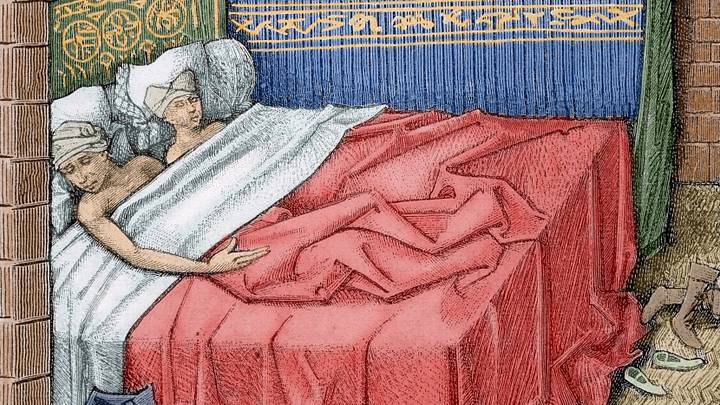
As crudely as it was presented in the fantasy franchise, however, the bedding ceremony was a real part of medieval weddings, for nobility and commoners alike. Versions of the ritual were practiced across Europe, serving an important role in welcoming newlyweds into the next stage of their lives.
Medieval Marriage

While marriage is considered a legal transaction in the modern era, it was a far looser system in the medieval period. The Catholic Church only required the two participants to freely consent to be married. Since God was the highest authority, He would witness any sincere commitments and accept them as a wedding. By that standard, however, anybody could claim to be married to anyone else. Thus, many kingdoms created their own standards of proof for weddings. While they generally weren't required for a couple to get married, they were vital if the marriage was later contested.
There seemed to be two primary methods here. The first was having a public wedding ceremony, where witnesses could be called to testify if the marriage was later questioned. The second required consummation. In Scotland, sex between two unmarried persons could constitute a wedding if the act was witnessed by a third party. In that case, someone (intentionally or not) finding the two in bed would suffice as proof of marriage.
The requirements for marriage became codified over time, but the uncertainty that had existed in the early medieval period made many young couples look for ways to prove their marriages, both to ensure the legitimacy of their children and to prevent young women from being promised a marriage and then cast aside. The bedding ceremony was one such method, and it became so common that some countries required the ceremony to take place with a certain number of witnesses in order for the marriage to be legally binding.
The Bedding Ceremony

The bedding ceremony had some variations, but the general process involved the wedding guests (or a smaller group of family and friends) escorting the bride and groom to a shared bedroom. In some traditions, they would fully undress the newlyweds, while in others, they would merely remove their external garments. Finally, the couple would be put into the bed together, with the covers generally drawn over them to symbolize the expected consummation.
Once in bed, the ritual diverged sharply, depending on the time period and culture. In the sixteenth century, a Swedish bedding ceremony might feature friends and family eating and drinking wine with the newlyweds, while a British version might involve a stocking-throwing game that appears to be a precursor to modern bouquet and garter-tossing activities.
The most intrusive version of this tradition involved the wedding guests either watching or listening to the consummation in order to prove that it happened, but there isn't much evidence of that happening often. In fact, some German sources explain that the guests would party loudly in order to give the couple more privacy.
Some couples did perform the expected activity, rejoining the party to roars of approval, but it was not a requirement. There are multiple known cases of royals not immediately consummating their marriages despite performing the bedding ceremony, including both Louis XVI of France and his father, Louis Ferdinand.
When the sanctity of the union was considered particularly important, there may be an additional part of the ceremony that would take place after the couple left the bedroom. Under the belief that virgins would bleed the first time that they had sex, some courts would display the bloodied sheets as proof of both the consummation itself and the bride's virginal status. This was especially important when the couple was expected to produce heirs as quickly as possible.
What was the purpose of this tradition?

The bedding ceremony seems like an antiquated, perverse custom today, so many people assume that it was one of those weird things that only royalty did. But there's actually evidence to suggest that both commoners and nobility practiced some version of the ceremony across Europe. With this in mind, it seems highly unlikely that they viewed it as negative or invasive.
The most overt purpose of the bedding ceremony was legal. In many cultures, a marriage was not considered binding until it was consummated. The bedding ceremony was a legally recognized proof of consummation, even if nobody witnessed the act itself. This protected the bride from being easily cast aside with an annulment, as the witnesses who were involved in the bedding ceremony could vouch for the marriage having been consummated.
A similar ritual, called yichud, takes place during Ashkenazi Jewish weddings, where the couple is given alone time together after the wedding ceremony. While this time might be used for consummation, it also demonstrates the change in status between the bride and groom. Religious custom would have prevented them from spending private time together before the wedding, so the yichud marks the transition that allows them to be alone together in the future. Similarly, the bedding ritual more broadly involved the woman's family effectively giving her permission to share a bed with a man without attracting judgment.
On a more social level, the bedding ceremony was a way for the community to show their support for the newlyweds. Priests would often bless the wedding bed and the marriage; loved ones would offer advice; and witnesses would offer the bride and groom wine to calm their nerves. By having so many people involved in the ceremony, the community effectively told the couple that they weren't on their own. This is actually a comforting perspective, given that so many modern weddings imply that the bond between the couple severs or supersedes any pre-existing relationships.
A Caveat, for Underage Marriage

While the bedding ceremony was especially important in the case of royal marriages, there were circumstances where it wouldn't be considered appropriate. Royals were often betrothed from a very young age to cement alliances, but those agreements were not ironclad. Changing political climates could drastically change an intended marriage.
As an example, Mary Tudor, eldest daughter of King Henry VIII, was betrothed to the French dauphin when she was only two years old. That engagement was then broken off so she could marry the Holy Roman Emperor. Due to both changing international alliances and her questionable legitimacy after her parents' marriage was annulled, Mary didn't end up marrying either of her childhood fiancés.
In order to prevent a political engagement from falling apart, monarchs would occasionally marry their children off before they came of age. However, it was generally considered wrong to actually consummate the marriage before the bride had at least begun menstruating. In this case, one of two systems was used. Either the wedding would feature a bedding ceremony in which nobody expected the couple to consummate, as was the case in the marriage of 9-year-old Mary Stuart and 14-year-old Willem of Orange, or the wedding would take place by proxy.
A proxy marriage could theoretically happen any time the intended bride and groom were not in the same location for the wedding, but they were particularly common when a young girl was betrothed or married to a foreign prince. She would have a full wedding ceremony with a stand-in groom, which was legally binding as a marriage to the true groom. This proxy wedding could still include all of the traditions and festivities of a standard marriage with one exception: the marriage could not be consummated.
But that didn't mean the bedding ceremony couldn't happen. Particularly in regions like Scandinavia, where the bedding ceremony eventually became a legal requirement for marriage, the bride and stand-in groom would still be brought to bed, as they would in a traditional wedding. However, the two were not expected to engage in any physical intimacy, with some depictions mentioning a sword being placed between the bride and fake-groom in bed, to symbolize that the stand-in was not married to her and had no right to touch her.
As marriages became more formalized, the bedding ceremony began to fall out of favor. In legal disputes, the validity of a marriage was determined by the existence of a contract, not by the presence or absence of consummation. At the same time, bedrooms began to be interpreted as private refuges, where a bedding ceremony would feel intrusive. Ultimately, the bedding ceremony is one of many historical traditions that seem insane to modern audiences, despite being accepted in their own time.