%20%20--%3E%0A%3Csvg%20version%3D%221.1%22%20id%3D%22Layer_1%22%20xmlns%3D%22http%3A%2F%2Fwww.w3.org%2F2000%2Fsvg%22%20xmlns%3Axlink%3D%22http%3A%2F%2Fwww.w3.org%2F1999%2Fxlink%22%20x%3D%220px%22%20y%3D%220px%22%0A%09%20viewBox%3D%220%200%20684.6%2068.1%22%20style%3D%22enable-background%3Anew%200%200%20684.6%2068.1%3B%22%20xml%3Aspace%3D%22preserve%22%3E%0A%3Cg%3E%0A%09%3Cpath%20d%3D%22M444.1%2C29.3h-17.4v14.5h17.4V29.3z%20M36.4%2C68.1l29.3-50.8V0H50.4L32.9%2C36.8L15.5%2C0H0v68.1h16.7V45.8l12.4%2C22.3H36.4z%0A%09%09%20M49.1%2C68.1h16.6V23.4L49.1%2C52.1V68.1z%20M76.6%2C68.1h45V53.8H93.3V41.6h21V27.1h-21V14.8h28.3V0.1h-45V68.1z%20M175.6%2C68.1h17.3v-68%0A%09%09h-16.5v40.3L150%2C0.1h-17.6v68h16.7V27.7L175.6%2C68.1z%20M235.8%2C14.8h15.4V0.1h-47.4v14.7H219v53.2h16.8V14.8z%20M290.3%2C45.9h-17.1%0A%09%09l7.5-15.6h2L290.3%2C45.9z%20M298.7%2C68.1h18l-32.2-68h-5.7l-32%2C68h18l3.3-7.1h27.1L298.7%2C68.1z%20M325.2%2C68.1h46.2V53.8h-29.6V0.1h-16.7%0A%09%09V68.1z%20M423.7%2C14.8h27.2V0.1H407v68h16.7V14.8z%20M462%2C68.1h46.2V53.8h-29.6V0.1H462V68.1z%20M564.8%2C34.1c0%2C10.7-7.2%2C19.2-18.5%2C19.2%0A%09%09c-11.4%2C0-18.5-8.5-18.5-19.2s7.1-19.2%2C18.5-19.2C557.6%2C14.9%2C564.8%2C23.4%2C564.8%2C34.1%20M580.6%2C34.1c0-19-14.2-34-34.3-34%0A%09%09c-20.2%2C0-34.3%2C15-34.3%2C34c0%2C19%2C14.1%2C34%2C34.3%2C34C566.4%2C68.1%2C580.6%2C53.1%2C580.6%2C34.1%20M604.8%2C20.5c0-4.1%2C3.3-6.2%2C6.7-6.2%0A%09%09c4.4%2C0%2C6.6%2C3%2C6.6%2C6.6h14.7C631.8%2C9.1%2C625.1%2C0.1%2C611%2C0.1c-12%2C0-21.7%2C9.3-21.7%2C20.6c0%2C10.9%2C5.9%2C15.9%2C16.7%2C19.8%0A%09%09c5.2%2C1.8%2C11.5%2C3.2%2C11.5%2C8c0%2C3.3-2.4%2C5.5-6.4%2C5.5c-3.6%2C0-6.6-3-6.6-6.7h-15.2c0%2C11.5%2C7.9%2C20.8%2C21.8%2C20.8c12%2C0%2C21.6-9.3%2C21.6-20.6%0A%09%09c0-10-5.3-16.4-16.7-19.8C610.6%2C26.1%2C604.8%2C25.3%2C604.8%2C20.5%20M670%2C20.9h14.7C683.8%2C9.1%2C677.1%2C0.1%2C663%2C0.1c-12%2C0-21.7%2C9.3-21.7%2C20.6%0A%09%09c0%2C10.9%2C5.9%2C15.9%2C16.7%2C19.8c5.2%2C1.8%2C11.5%2C3.2%2C11.5%2C8c0%2C3.3-2.4%2C5.5-6.4%2C5.5c-3.6%2C0-6.6-3-6.6-6.7h-15.2c0%2C11.5%2C7.9%2C20.8%2C21.8%2C20.8%0A%09%09c12%2C0%2C21.6-9.3%2C21.6-20.6c0-10-5.3-16.4-16.7-19.8c-5.4-1.6-11.3-2.4-11.3-7.2c0-4.1%2C3.3-6.2%2C6.7-6.2C667.7%2C14.4%2C670%2C17.3%2C670%2C20.9%0A%09%09%22%2F%3E%0A%3C%2Fg%3E%0A%3C%2Fsvg%3E%0A)

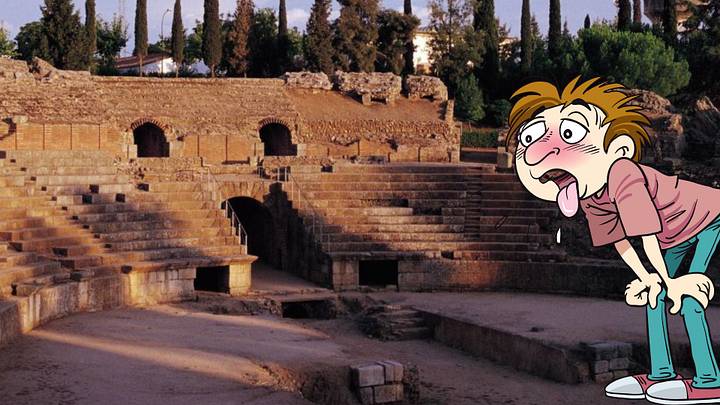
Truth be told, there are several myths about Ancient Rome, but the myth of the vomitorium is, by far, one of the most persistent and bizarre.
Pop culture frequently depicts wealthy Romans feasting on extravagant meals before retreating to a special room where they could purge their stomachs without judgment and continue eating. It’s a story that fits the stereotype of Roman excess, but historians have found that this popular belief is inaccurate.
The real purpose of a vomitorium had absolutely nothing to do with overeating or the act of vomiting.
Let's travel back to Ancient Rome to discover the actual use of a vomitorium and learn about the brilliance of Roman engineering along the way.
WHAT VOMITORIUMS ACTUALLY WERE

For years, people believed a vomitorium was a special room where diners could induce vomiting during lengthy banquets. This myth endured in part because Roman elites were famous for their elaborate feasts, which made the tale seem, well, very believable.
However, according to Scientific American, there is no concrete evidence that Romans constructed dedicated spaces for this purpose. Part of the confusion stems from the modern interpretation of the word "vomitorium." Although the term is related to the idea of something being discharged or expelled, ancient Romans used it to describe a passageway that emptied crowds from large venues.
A vomitorium was essentially an entrance or exit corridor in a theater, amphitheater, or stadium. The architectural feature allowed thousands of people to enter and leave quickly and efficiently, making it a practical feature rather than a food-related one.
WHY THE ROMANS HAD THEM AND WHAT THEY LOOKED LIKE

The Romans frequently built enormous public venues capable of holding thousands. Sporting events, theatrical performances, and other spectacles attracted major crowds, creating the need for effective crowd management, according to HowStuffWorks.
Vomitoriums solved this challenge. Architects incorporated multiple tunnels into their designs so visitors could be directed to different seating sections and leave the venue without creating congestion.
Physically, vomitoriums were arched tunnels built beneath or around seating areas. Spectators passed through these covered passageways before emerging into the stands. In large Roman amphitheaters, networks of vomitoria connected various sections of the structure to maintain an orderly flow.
Vomitoriums demonstrate the advanced planning and engineering skills of Roman architects. Their solutions to crowd movement influenced the design of large public venues for centuries.
SPEWING MYTHS

Rather than serving as a room for overindulgent eaters, the vomitorium was a practical (and, honestly, a genius) architectural innovation that helped Roman public spaces function smoothly.
So, the next time someone claims that Romans used vomitoriums to make room for another course at dinner, you can set the record straight with confidence, knowing that the only thing these structures ever spewed out was crowds of spectators.