%20%20--%3E%0A%3Csvg%20version%3D%221.1%22%20id%3D%22Layer_1%22%20xmlns%3D%22http%3A%2F%2Fwww.w3.org%2F2000%2Fsvg%22%20xmlns%3Axlink%3D%22http%3A%2F%2Fwww.w3.org%2F1999%2Fxlink%22%20x%3D%220px%22%20y%3D%220px%22%0A%09%20viewBox%3D%220%200%20684.6%2068.1%22%20style%3D%22enable-background%3Anew%200%200%20684.6%2068.1%3B%22%20xml%3Aspace%3D%22preserve%22%3E%0A%3Cg%3E%0A%09%3Cpath%20d%3D%22M444.1%2C29.3h-17.4v14.5h17.4V29.3z%20M36.4%2C68.1l29.3-50.8V0H50.4L32.9%2C36.8L15.5%2C0H0v68.1h16.7V45.8l12.4%2C22.3H36.4z%0A%09%09%20M49.1%2C68.1h16.6V23.4L49.1%2C52.1V68.1z%20M76.6%2C68.1h45V53.8H93.3V41.6h21V27.1h-21V14.8h28.3V0.1h-45V68.1z%20M175.6%2C68.1h17.3v-68%0A%09%09h-16.5v40.3L150%2C0.1h-17.6v68h16.7V27.7L175.6%2C68.1z%20M235.8%2C14.8h15.4V0.1h-47.4v14.7H219v53.2h16.8V14.8z%20M290.3%2C45.9h-17.1%0A%09%09l7.5-15.6h2L290.3%2C45.9z%20M298.7%2C68.1h18l-32.2-68h-5.7l-32%2C68h18l3.3-7.1h27.1L298.7%2C68.1z%20M325.2%2C68.1h46.2V53.8h-29.6V0.1h-16.7%0A%09%09V68.1z%20M423.7%2C14.8h27.2V0.1H407v68h16.7V14.8z%20M462%2C68.1h46.2V53.8h-29.6V0.1H462V68.1z%20M564.8%2C34.1c0%2C10.7-7.2%2C19.2-18.5%2C19.2%0A%09%09c-11.4%2C0-18.5-8.5-18.5-19.2s7.1-19.2%2C18.5-19.2C557.6%2C14.9%2C564.8%2C23.4%2C564.8%2C34.1%20M580.6%2C34.1c0-19-14.2-34-34.3-34%0A%09%09c-20.2%2C0-34.3%2C15-34.3%2C34c0%2C19%2C14.1%2C34%2C34.3%2C34C566.4%2C68.1%2C580.6%2C53.1%2C580.6%2C34.1%20M604.8%2C20.5c0-4.1%2C3.3-6.2%2C6.7-6.2%0A%09%09c4.4%2C0%2C6.6%2C3%2C6.6%2C6.6h14.7C631.8%2C9.1%2C625.1%2C0.1%2C611%2C0.1c-12%2C0-21.7%2C9.3-21.7%2C20.6c0%2C10.9%2C5.9%2C15.9%2C16.7%2C19.8%0A%09%09c5.2%2C1.8%2C11.5%2C3.2%2C11.5%2C8c0%2C3.3-2.4%2C5.5-6.4%2C5.5c-3.6%2C0-6.6-3-6.6-6.7h-15.2c0%2C11.5%2C7.9%2C20.8%2C21.8%2C20.8c12%2C0%2C21.6-9.3%2C21.6-20.6%0A%09%09c0-10-5.3-16.4-16.7-19.8C610.6%2C26.1%2C604.8%2C25.3%2C604.8%2C20.5%20M670%2C20.9h14.7C683.8%2C9.1%2C677.1%2C0.1%2C663%2C0.1c-12%2C0-21.7%2C9.3-21.7%2C20.6%0A%09%09c0%2C10.9%2C5.9%2C15.9%2C16.7%2C19.8c5.2%2C1.8%2C11.5%2C3.2%2C11.5%2C8c0%2C3.3-2.4%2C5.5-6.4%2C5.5c-3.6%2C0-6.6-3-6.6-6.7h-15.2c0%2C11.5%2C7.9%2C20.8%2C21.8%2C20.8%0A%09%09c12%2C0%2C21.6-9.3%2C21.6-20.6c0-10-5.3-16.4-16.7-19.8c-5.4-1.6-11.3-2.4-11.3-7.2c0-4.1%2C3.3-6.2%2C6.7-6.2C667.7%2C14.4%2C670%2C17.3%2C670%2C20.9%0A%09%09%22%2F%3E%0A%3C%2Fg%3E%0A%3C%2Fsvg%3E%0A)

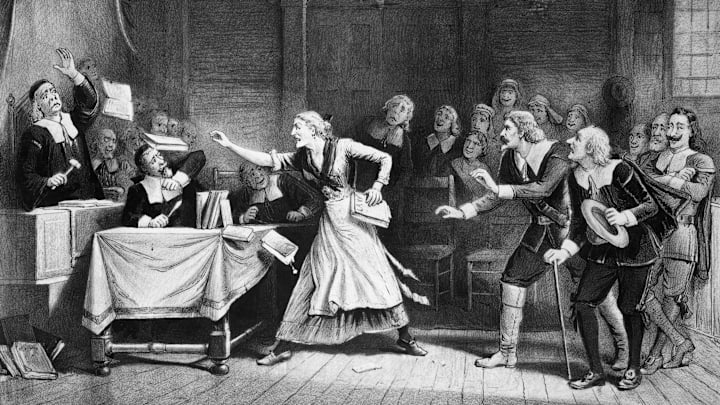
The Salem Witch Trials are one of the most infamous chapters in U.S. history. Throughout the centuries, books, movies, and plays have all tried to unearth the reasons behind the strange hysteria that gripped the Puritans of Massachusetts. As time has gone on, fact and fiction have intermingled, leaving a somewhat distorted view of the witch trials.
You might be surprised to find that some of your own knowledge about the Salem Witch Trials is not quite accurate. It's important to remember that even Arthur Miller's The Crucible is a fictionalized account, with real people's names used to create characters in a story. Here are five of the most common misconceptions about the Salem Witch Trials, most of which came about through the creative liberties of storytellers.
- Only Women Were Witches
- Only Salem Was Affected
- Burning at the Stake
- Paganism and Witchcraft
- Rotten Rye Bread
Only Women Were Witches

Today, many people connect the term "witch" with the feminine gender and use terms like "warlocks" or "wizards" for men. But in 1692, any person could be deemed a witch, regardless of gender. In fact, about 25% of those accused in the Salem Witch Trials were men. Animals were accused of witchcraft as well, and two dogs were even put to death after they were connected to some type of sorcery.
Dr. John Howard Smith, a history professor and expert in Puritanism, said that the majority of the accused witches were female because of the strong patriarchal ideology. The men of the late 17th century believed that women were "likelier to be witches because of Eve [from the Bible]." But that didn't mean that men couldn't be witches.
Only Salem Was Affected

It makes sense to think that the Salem Witch Trials occurred solely in Salem, Massachusetts. Why else would they be named after the town? However, other towns throughout Massachusetts and colonies like Connecticut were dealing with witch trials during the same period.
The witch trials that took place in the 17th-century Americas were not common, but Salem was the most unique of them all in that the panic spread the fastest there. Connecticut's witch hunts were spread out over a decade, whereas Salem and the surrounding communities executed 20 people within a year.
Burning at the Stake

People often associate witch trials with victims being burned at the stake. The Salem Witch Trials, and any other trials that took place in English-speaking countries, never used burnings, though. The penalty most commonly used in Salem was hanging.
The witch hunts of Europe, which began some 300 years before Salem, were the ones that burned people alive. This method began to be viewed as too barbaric, so the English and their colonies resorted to hangings. One man, Giles Corey, was pressed to death between two stones during the Salem Witch Trials, and at least four others died in prison before they could be hanged.
Paganism and Witchcraft

Many people today think that those accused of witchcraft practiced spiritual beliefs other than Christianity. Arthur Miller even portrayed the enslaved woman in his play, Tituba, as a practitioner of Voodoo to help explain why the townspeople would accuse her first. But there is no evidence of the real-life Tituba participating in anything other than Christian worship services.
Those accused during the Salem Witch Trials were not of different faiths like Paganism or Wicca. The Puritans chose the "witches" based on power, wealth, and rivalries between different families. The Putnams and the Porters were two feuding families that, coincidentally, were connected to both the accused and the accusers. The Salem Witch Trials didn't happen because of xenophobia or religious persecution. They were about control over the town.
Rotten Rye Bread

A popular theory for what caused the mass hysteria in Salem emerged in the 1960s. "Convulsive ergotism," or ergot poisoning, did seem to explain the symptoms of the "bewitched" girls. Contaminated wheat in rye bread can lead to hallucinations and convulsions. So, mystery solved?
Well, ergotism happened more often in the Medieval period. By the 1600s, farmers had learned what rotten wheat looked like and sorted it out from the good wheat, making this theory highly unlikely. We might still not understand why the people of Salem acted as they did, but it wasn't because they were collectively on a "bad trip."