%20%20--%3E%0A%3Csvg%20version%3D%221.1%22%20id%3D%22Layer_1%22%20xmlns%3D%22http%3A%2F%2Fwww.w3.org%2F2000%2Fsvg%22%20xmlns%3Axlink%3D%22http%3A%2F%2Fwww.w3.org%2F1999%2Fxlink%22%20x%3D%220px%22%20y%3D%220px%22%0A%09%20viewBox%3D%220%200%20684.6%2068.1%22%20style%3D%22enable-background%3Anew%200%200%20684.6%2068.1%3B%22%20xml%3Aspace%3D%22preserve%22%3E%0A%3Cg%3E%0A%09%3Cpath%20d%3D%22M444.1%2C29.3h-17.4v14.5h17.4V29.3z%20M36.4%2C68.1l29.3-50.8V0H50.4L32.9%2C36.8L15.5%2C0H0v68.1h16.7V45.8l12.4%2C22.3H36.4z%0A%09%09%20M49.1%2C68.1h16.6V23.4L49.1%2C52.1V68.1z%20M76.6%2C68.1h45V53.8H93.3V41.6h21V27.1h-21V14.8h28.3V0.1h-45V68.1z%20M175.6%2C68.1h17.3v-68%0A%09%09h-16.5v40.3L150%2C0.1h-17.6v68h16.7V27.7L175.6%2C68.1z%20M235.8%2C14.8h15.4V0.1h-47.4v14.7H219v53.2h16.8V14.8z%20M290.3%2C45.9h-17.1%0A%09%09l7.5-15.6h2L290.3%2C45.9z%20M298.7%2C68.1h18l-32.2-68h-5.7l-32%2C68h18l3.3-7.1h27.1L298.7%2C68.1z%20M325.2%2C68.1h46.2V53.8h-29.6V0.1h-16.7%0A%09%09V68.1z%20M423.7%2C14.8h27.2V0.1H407v68h16.7V14.8z%20M462%2C68.1h46.2V53.8h-29.6V0.1H462V68.1z%20M564.8%2C34.1c0%2C10.7-7.2%2C19.2-18.5%2C19.2%0A%09%09c-11.4%2C0-18.5-8.5-18.5-19.2s7.1-19.2%2C18.5-19.2C557.6%2C14.9%2C564.8%2C23.4%2C564.8%2C34.1%20M580.6%2C34.1c0-19-14.2-34-34.3-34%0A%09%09c-20.2%2C0-34.3%2C15-34.3%2C34c0%2C19%2C14.1%2C34%2C34.3%2C34C566.4%2C68.1%2C580.6%2C53.1%2C580.6%2C34.1%20M604.8%2C20.5c0-4.1%2C3.3-6.2%2C6.7-6.2%0A%09%09c4.4%2C0%2C6.6%2C3%2C6.6%2C6.6h14.7C631.8%2C9.1%2C625.1%2C0.1%2C611%2C0.1c-12%2C0-21.7%2C9.3-21.7%2C20.6c0%2C10.9%2C5.9%2C15.9%2C16.7%2C19.8%0A%09%09c5.2%2C1.8%2C11.5%2C3.2%2C11.5%2C8c0%2C3.3-2.4%2C5.5-6.4%2C5.5c-3.6%2C0-6.6-3-6.6-6.7h-15.2c0%2C11.5%2C7.9%2C20.8%2C21.8%2C20.8c12%2C0%2C21.6-9.3%2C21.6-20.6%0A%09%09c0-10-5.3-16.4-16.7-19.8C610.6%2C26.1%2C604.8%2C25.3%2C604.8%2C20.5%20M670%2C20.9h14.7C683.8%2C9.1%2C677.1%2C0.1%2C663%2C0.1c-12%2C0-21.7%2C9.3-21.7%2C20.6%0A%09%09c0%2C10.9%2C5.9%2C15.9%2C16.7%2C19.8c5.2%2C1.8%2C11.5%2C3.2%2C11.5%2C8c0%2C3.3-2.4%2C5.5-6.4%2C5.5c-3.6%2C0-6.6-3-6.6-6.7h-15.2c0%2C11.5%2C7.9%2C20.8%2C21.8%2C20.8%0A%09%09c12%2C0%2C21.6-9.3%2C21.6-20.6c0-10-5.3-16.4-16.7-19.8c-5.4-1.6-11.3-2.4-11.3-7.2c0-4.1%2C3.3-6.2%2C6.7-6.2C667.7%2C14.4%2C670%2C17.3%2C670%2C20.9%0A%09%09%22%2F%3E%0A%3C%2Fg%3E%0A%3C%2Fsvg%3E%0A)

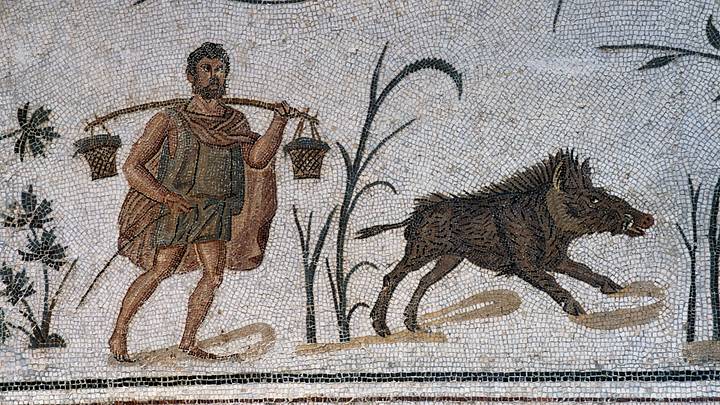
Not everyone in ancient Rome could be an emperor or a gladiator. Instead, most inhabitants of this legendary society spent their days doing the manual labor that made the gears of society turn.
Work evolved significantly over the 1,228 years between Rome’s founding in 753 BC and the fall of the Western Roman Empire in 476 AD. In ancient Rome’s earliest years, most people farmed and worked their own land. As society evolved, many farmers flocked to the cities, professions like smith, baker, and butcher became increasingly common, and social hierarchies became more regimented.
For most of ancient Rome’s existence, work was inextricably tied to social class, and the vast majority of people were lower-class laborers who spent their days in fields, markets, and shops. While some people did hold jobs in government, the arts, and the church, the average ancient Roman would most likely have held one of the following positions.
Farmer

The most common profession by far in ancient Rome involved working the fields, growing food, and taking care of livestock. Most members of Roman society worked in agriculture—some sources say up to 80-90%—and the most commonly grown crops were grain, olives, and grapes. Agriculture was generally seen as an honorable profession, and involved complex processes that began with choosing soil and included plowing, sowing, and many other steps. Most farms also kept animals including cows, which provided milk, as well as sheep and goats for wool, cheese, and meat and oxen that helped with heavy farm labor. The majority of farms were family-owned until around the 2nd century BCE, when wealthy landowners began displacing plebeian farmers in high numbers and hiring slaves to maintain their large holdings, causing many landless farmers to travel to the city.
Baker

Bread had long been a staple of the Roman diet, but it was typically made by farming families at home until around the 2nd century BCE. Around this time, baking techniques were spreading from Greece to Rome and bakeries were becoming more common in Roman cities. In Pompeii alone, archaeologists have identified a total of 35 bakeries. These operations required massive amounts of labor to function, and typically included grain mills powered by donkeys and large ovens that blazed all day long. In ancient Rome’s later years, commercial bakeries were typically run by members of the corpus pistorum, a formal guild of commercial bakers.
Shopkeeper

In the last two centuries BCE, Rome attracted huge numbers of people from around the world, and markets began to thrive in the city. Roman peddlers supposedly became known for their aggressive selling tactics, and shopkeepers sold everything from food and wine to oil, medicine, and imported goods. Typical Roman shops that opened onto the streets were known as tabernae, and these stores provided Romans of all socioeconomic classes with all of their needs. Many sold prepared food that poorer Romans would buy to avoid the laborious process of cooking at home, and others repaired shoes and clothes, packaged goods, made pottery, or sometimes offered many of these services at once. Booksellers, apothecaries, and bankers also often operated storefronts on Roman streets. Shopkeepers could be freeborn citizens, freed slaves, or even slaves working for their owners. Some elite Romans did look down on shopkeeping and commerce, favoring landownership and political and military service. But ultimately, if you weren’t a member of an elite class, selling goods was one of the more reliable ways to make money in the big city.
Builder

Rome wasn’t built in a day—and it also required many hands over the centuries. Ancient Rome is well-remembered for its amazing engineering feats, which include aqueducts, domes, arches, bridges, and of course, endless expanses of road. Each of these innovative creations relied on immense amounts of human labor. Roman building projects involved on a mix of patrons, engineers, architects, tradespeople such as stonemasons and fresco painters, hired laborers, soldiers, and slaves. Constructing structures like the Pantheon required an estimated 100 to 240 men per day, and Roman military legions of up to 5,000 men built countless roads and bridges alongside their campaign duties. Construction was undeniably one of Rome's biggest industries, and it employed a great many people (along with many unpaid workers).