%20%20--%3E%0A%3Csvg%20version%3D%221.1%22%20id%3D%22Layer_1%22%20xmlns%3D%22http%3A%2F%2Fwww.w3.org%2F2000%2Fsvg%22%20xmlns%3Axlink%3D%22http%3A%2F%2Fwww.w3.org%2F1999%2Fxlink%22%20x%3D%220px%22%20y%3D%220px%22%0A%09%20viewBox%3D%220%200%20684.6%2068.1%22%20style%3D%22enable-background%3Anew%200%200%20684.6%2068.1%3B%22%20xml%3Aspace%3D%22preserve%22%3E%0A%3Cg%3E%0A%09%3Cpath%20d%3D%22M444.1%2C29.3h-17.4v14.5h17.4V29.3z%20M36.4%2C68.1l29.3-50.8V0H50.4L32.9%2C36.8L15.5%2C0H0v68.1h16.7V45.8l12.4%2C22.3H36.4z%0A%09%09%20M49.1%2C68.1h16.6V23.4L49.1%2C52.1V68.1z%20M76.6%2C68.1h45V53.8H93.3V41.6h21V27.1h-21V14.8h28.3V0.1h-45V68.1z%20M175.6%2C68.1h17.3v-68%0A%09%09h-16.5v40.3L150%2C0.1h-17.6v68h16.7V27.7L175.6%2C68.1z%20M235.8%2C14.8h15.4V0.1h-47.4v14.7H219v53.2h16.8V14.8z%20M290.3%2C45.9h-17.1%0A%09%09l7.5-15.6h2L290.3%2C45.9z%20M298.7%2C68.1h18l-32.2-68h-5.7l-32%2C68h18l3.3-7.1h27.1L298.7%2C68.1z%20M325.2%2C68.1h46.2V53.8h-29.6V0.1h-16.7%0A%09%09V68.1z%20M423.7%2C14.8h27.2V0.1H407v68h16.7V14.8z%20M462%2C68.1h46.2V53.8h-29.6V0.1H462V68.1z%20M564.8%2C34.1c0%2C10.7-7.2%2C19.2-18.5%2C19.2%0A%09%09c-11.4%2C0-18.5-8.5-18.5-19.2s7.1-19.2%2C18.5-19.2C557.6%2C14.9%2C564.8%2C23.4%2C564.8%2C34.1%20M580.6%2C34.1c0-19-14.2-34-34.3-34%0A%09%09c-20.2%2C0-34.3%2C15-34.3%2C34c0%2C19%2C14.1%2C34%2C34.3%2C34C566.4%2C68.1%2C580.6%2C53.1%2C580.6%2C34.1%20M604.8%2C20.5c0-4.1%2C3.3-6.2%2C6.7-6.2%0A%09%09c4.4%2C0%2C6.6%2C3%2C6.6%2C6.6h14.7C631.8%2C9.1%2C625.1%2C0.1%2C611%2C0.1c-12%2C0-21.7%2C9.3-21.7%2C20.6c0%2C10.9%2C5.9%2C15.9%2C16.7%2C19.8%0A%09%09c5.2%2C1.8%2C11.5%2C3.2%2C11.5%2C8c0%2C3.3-2.4%2C5.5-6.4%2C5.5c-3.6%2C0-6.6-3-6.6-6.7h-15.2c0%2C11.5%2C7.9%2C20.8%2C21.8%2C20.8c12%2C0%2C21.6-9.3%2C21.6-20.6%0A%09%09c0-10-5.3-16.4-16.7-19.8C610.6%2C26.1%2C604.8%2C25.3%2C604.8%2C20.5%20M670%2C20.9h14.7C683.8%2C9.1%2C677.1%2C0.1%2C663%2C0.1c-12%2C0-21.7%2C9.3-21.7%2C20.6%0A%09%09c0%2C10.9%2C5.9%2C15.9%2C16.7%2C19.8c5.2%2C1.8%2C11.5%2C3.2%2C11.5%2C8c0%2C3.3-2.4%2C5.5-6.4%2C5.5c-3.6%2C0-6.6-3-6.6-6.7h-15.2c0%2C11.5%2C7.9%2C20.8%2C21.8%2C20.8%0A%09%09c12%2C0%2C21.6-9.3%2C21.6-20.6c0-10-5.3-16.4-16.7-19.8c-5.4-1.6-11.3-2.4-11.3-7.2c0-4.1%2C3.3-6.2%2C6.7-6.2C667.7%2C14.4%2C670%2C17.3%2C670%2C20.9%0A%09%09%22%2F%3E%0A%3C%2Fg%3E%0A%3C%2Fsvg%3E%0A)

During the Middle Ages, from AD 500 to 1500, society was divided into strict class systems. People belonged to one of three estates: the clergy, the nobility, and the peasants, which determined not only their roles in society but also the privileges they were afforded.
As trade expanded and populations flourished, these classes shifted, making space for a working middle class of craftsmen. These skilled merchants eventually formed associations (or guilds) to manage production and control the quality and price of goods within their trades.
This structure continued for centuries until the Black Death in the mid-1300s. The massive population decline created a greater need for laborers, increasing demand for peasant workers and the middle class. As expected, their wages and living conditions improved, turning the once-established social hierarchy on its head.
Naturally, a lot changed over the 1,000 years that encompassed the Middle Ages, but for the most part, the jobs of peasants and the middle class remained consistent, with a focus on meeting basic needs within communities and kingdoms. While the hierarchy was never truly dissolved, each group contributed to society's progression in their own way.
Many of these jobs still exist today, though now with new technologies and higher production rates to meet the needs of modern populations and trends.
Let’s dust off the history book and flip to the Middle Ages to discover which jobs were the most common.
BUTCHER

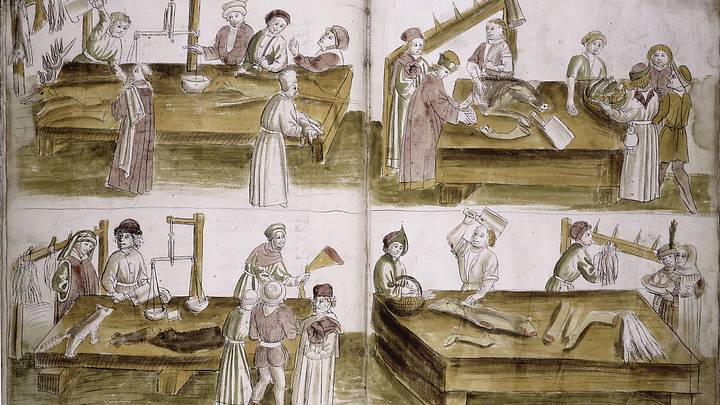
Being a butcher in the Middle Ages meant cutting, trimming, and packaging animal carcasses for the wealthy. One of the first official trades, butchers had to be extremely clean and keep their shops disinfected to prevent the spread of disease, much like they do today.
While the profession declined with the rise of factories and supermarkets, butchers have become more popular in recent years as customers seek peace of mind knowing exactly where their meat comes from.
BAKER

A baker in the Middle Ages provided bread for every class. Their strength was not to be underestimated, as they carried giant sacks of flour and kneaded large quantities of dough by hand each day. In addition to the physical demands, their bakeries were very hot due to the heat of the brick ovens. Talk about working up a sweat!
Since most households did not have the luxury of these ovens, bakers were often the only people in town making bread for the community. Unlike today, only three types of grain were available: barley, wheat, and rye.
In May of 1415, King Henry V of England ordered bakers in Southampton and Winchester to prepare rations for thousands of soldiers marching to invade France.
STONEMASON

Though it sounds strictly medieval, stonemasons are still around today.
In the Middle Ages, these craftsmen carved and inscribed stone blocks for bridges, castles, gravestones, and elaborate cathedrals. Many began as young apprentices and adjusted to life on the road, traveling wherever their skills were needed.
Their carvings, while unique, bore similarities across famous historic sites, such as Westminster Abbey and the Lincoln and Ely Cathedral quires. The more intricate the marks carved into the stone, the higher the pay for a stonemason.
WEAVER

Without weavers, people of the Middle Ages would not have enjoyed the luxury of, well, being clothed. Thread was spun on a loom and used to make everything from coats and underwear to blankets and tapestries.
New weavers made basic items from wool and linen, while expert weavers worked with luxurious silks, reserved for garments and elaborate tapestries for the nobility, as one might expect. Unlike many professions, both men and women could be weavers during the Middle Ages.
As looms grew in size and complexity, weavers began forming guilds to protect their rights. Though clothes-making technology and production techniques have evolved, the profession endures today.
WINEMAKER

Winemakers in the Middle Ages were hands-on, to say the least, overseeing and performing every step of the process from vine to glass. They tended the soil, pruned the vines, and harvested the grape clusters with a large sickle.
Do you remember the "I Love Lucy" episode where Lucy stomps grapes with their feet in a wooden basin? That’s what less well-off medieval winemakers did to extract juice. This practice was especially common when producing Port wine in Portugal. Larger farms utilized a mechanical basket press to squeeze the grapes, the most common way of making wine during the Middle Ages.
For fermentation, winemakers used wild yeasts and casks before transferring the wine to wooden barrels to age. Many wineries today still use oak barrels to soften the taste and add flavor.
FISHERMAN

Fishing in medieval times did not involve boats with sonar or fancy rods and reels. Fishermen cast giant nets and lines with hundreds of hooks into rivers, lakes, and seas to catch fish to feed both their communities and nobility. They also built grand stone structures and wove giant baskets for the same purpose.
Larger fish swimming in shallow waters would be speared. Fishermen of the Middle Ages were typically peasants and had to take on multiple jobs just to get by. Both peasants and middle-class workers had to abide by "feudal dues," meaning that fish served to lords, monasteries, and kings had to be delivered fresh or preserved by salting and drying, especially for religious ceremonies.
Today, fishermen still cast large nets and monitor hundreds of lines in the open sea, but modern fish hatcheries allow for controlled species management and mass production.
FARMER

Farmers in the Middle Ages (peasants being the majority) and those in modern times have the same basic role, though their tools differ. In the Middle Ages, farmers raised and maintained livestock, grew crops, and kept the homestead running smoothly for their families and fellow villagers.
To accomplish this, farmers plowed fields with oxen and iron plows, pulled weeds by hand rather than applying synthetic chemical sprays, reaped and harvested crops, slaughtered animals, gathered firewood, tended the soil, and prioritized repairs around the homestead.
Today, farmers grow a wide variety of crops, from corn and beans to cotton and potatoes. In Medieval Britain, however, peasant farmers primarily harvested oats, wheat, barley, and rye. By the 13th century, they also grew peas and beans.