%20%20--%3E%0A%3Csvg%20version%3D%221.1%22%20id%3D%22Layer_1%22%20xmlns%3D%22http%3A%2F%2Fwww.w3.org%2F2000%2Fsvg%22%20xmlns%3Axlink%3D%22http%3A%2F%2Fwww.w3.org%2F1999%2Fxlink%22%20x%3D%220px%22%20y%3D%220px%22%0A%09%20viewBox%3D%220%200%20684.6%2068.1%22%20style%3D%22enable-background%3Anew%200%200%20684.6%2068.1%3B%22%20xml%3Aspace%3D%22preserve%22%3E%0A%3Cg%3E%0A%09%3Cpath%20d%3D%22M444.1%2C29.3h-17.4v14.5h17.4V29.3z%20M36.4%2C68.1l29.3-50.8V0H50.4L32.9%2C36.8L15.5%2C0H0v68.1h16.7V45.8l12.4%2C22.3H36.4z%0A%09%09%20M49.1%2C68.1h16.6V23.4L49.1%2C52.1V68.1z%20M76.6%2C68.1h45V53.8H93.3V41.6h21V27.1h-21V14.8h28.3V0.1h-45V68.1z%20M175.6%2C68.1h17.3v-68%0A%09%09h-16.5v40.3L150%2C0.1h-17.6v68h16.7V27.7L175.6%2C68.1z%20M235.8%2C14.8h15.4V0.1h-47.4v14.7H219v53.2h16.8V14.8z%20M290.3%2C45.9h-17.1%0A%09%09l7.5-15.6h2L290.3%2C45.9z%20M298.7%2C68.1h18l-32.2-68h-5.7l-32%2C68h18l3.3-7.1h27.1L298.7%2C68.1z%20M325.2%2C68.1h46.2V53.8h-29.6V0.1h-16.7%0A%09%09V68.1z%20M423.7%2C14.8h27.2V0.1H407v68h16.7V14.8z%20M462%2C68.1h46.2V53.8h-29.6V0.1H462V68.1z%20M564.8%2C34.1c0%2C10.7-7.2%2C19.2-18.5%2C19.2%0A%09%09c-11.4%2C0-18.5-8.5-18.5-19.2s7.1-19.2%2C18.5-19.2C557.6%2C14.9%2C564.8%2C23.4%2C564.8%2C34.1%20M580.6%2C34.1c0-19-14.2-34-34.3-34%0A%09%09c-20.2%2C0-34.3%2C15-34.3%2C34c0%2C19%2C14.1%2C34%2C34.3%2C34C566.4%2C68.1%2C580.6%2C53.1%2C580.6%2C34.1%20M604.8%2C20.5c0-4.1%2C3.3-6.2%2C6.7-6.2%0A%09%09c4.4%2C0%2C6.6%2C3%2C6.6%2C6.6h14.7C631.8%2C9.1%2C625.1%2C0.1%2C611%2C0.1c-12%2C0-21.7%2C9.3-21.7%2C20.6c0%2C10.9%2C5.9%2C15.9%2C16.7%2C19.8%0A%09%09c5.2%2C1.8%2C11.5%2C3.2%2C11.5%2C8c0%2C3.3-2.4%2C5.5-6.4%2C5.5c-3.6%2C0-6.6-3-6.6-6.7h-15.2c0%2C11.5%2C7.9%2C20.8%2C21.8%2C20.8c12%2C0%2C21.6-9.3%2C21.6-20.6%0A%09%09c0-10-5.3-16.4-16.7-19.8C610.6%2C26.1%2C604.8%2C25.3%2C604.8%2C20.5%20M670%2C20.9h14.7C683.8%2C9.1%2C677.1%2C0.1%2C663%2C0.1c-12%2C0-21.7%2C9.3-21.7%2C20.6%0A%09%09c0%2C10.9%2C5.9%2C15.9%2C16.7%2C19.8c5.2%2C1.8%2C11.5%2C3.2%2C11.5%2C8c0%2C3.3-2.4%2C5.5-6.4%2C5.5c-3.6%2C0-6.6-3-6.6-6.7h-15.2c0%2C11.5%2C7.9%2C20.8%2C21.8%2C20.8%0A%09%09c12%2C0%2C21.6-9.3%2C21.6-20.6c0-10-5.3-16.4-16.7-19.8c-5.4-1.6-11.3-2.4-11.3-7.2c0-4.1%2C3.3-6.2%2C6.7-6.2C667.7%2C14.4%2C670%2C17.3%2C670%2C20.9%0A%09%09%22%2F%3E%0A%3C%2Fg%3E%0A%3C%2Fsvg%3E%0A)

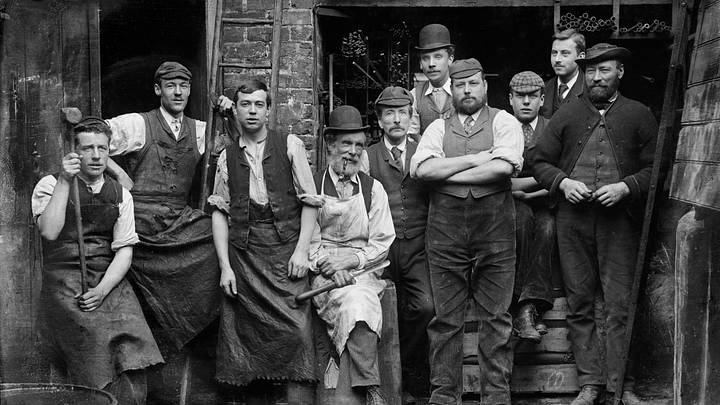
The Industrial Revolution completely changed many aspects of society, with one of the biggest changes being the types and number of jobs that existed. As technology advanced, workers were needed to build and distribute the latest gadgets and inventions. Also, essential jobs like farming gained new ways to work.
Jobs in the Victorian Era were often dangerous and dirty. It was only thanks to the working class fighting for regulations and reform that things got better. But even the safer jobs of the time were still not glamorous, since most of the population was made up of the working class.
From child laborers to poor adults, these were the most common jobs in the Victorian Era.

Mining
In the early years of Queen Victoria's reign, mines were filled with small children. They worked 12-hour days along with the adults who had to squeeze into tight spaces where they couldn't fit. In 1842, the UK passed the Mines and Collieries Bill, which prohibited women, girls, and boys under 10 from working underground.
After the bill passed, the number of miners dropped slightly, but because coal was needed for all of the new steam-powered machines, mining remained a common job for the poor. The number of mining accidents and deaths was still in the thousands until 1872. That's when the Coal Mines Regulation Act was passed, finally requiring regular safety inspections by a certified inspector.

Store Workers
With the rise of mass-produced products, shopping became a significant part of the culture. While men were the majority of the shop owners, noblewomen felt more comfortable with other women helping them, and the "shop girl" role rapidly grew.
Shop girls worked 12 to 14 hour days, and many were required to live in the back or above the store. They were treated horribly and paid so little that a number of women worked a second job as prostitutes. Just admitting to being a shop girl was enough to tarnish a reputation as a good, Christian woman, but these women were also an indispensable part of the shopping experience.

Farming
Farm work tends to be considered secure labor because we all need to eat. Most of the farming in the Victorian Era was done by tenant farmers, workers who lived on the land of a wealthier owner, sometimes a nobleman. These farmers worked from dawn till dusk to keep the landowner's farm running, but the landowner didn't always take care of his tenants.
The houses provided for tenant farmers were often crumbling, leaking cabins, and the pay was so small that sometimes the entire family had to work. Women and children often tended to the animals while men plowed the fields, but harvest time meant all hands on deck.

Domestic Servants
The Victorian Era was still rigid in the class system, so while there were the nouveau-riche, people who became wealthy due to industrialization, there was also the noble class. The homes owned by both of these groups were large and needed a team of people to care for them. Domestic servants made up those teams.
Maids, butlers, footmen, cooks, and other staff of the manors and estates of the wealthy worked long, grueling hours for little pay. They most often lived in the servants' quarters because they were needed so early in the morning and sometimes late into the night. Women were the majority in these domestic roles, especially in later years when men sought outside work.

Manufacturing
The Industrial Revolution led to many factories popping up all over to mass-produce products that before could only be created in small batches. These factories employed men, women, and children to work long hours in sometimes dangerous conditions.
Manufacturing became the most common job of the Victorian Era because, not only were there so many factories that needed workers, but it also provided enough money to go from the lower working class to the upper working class. Manufacturing jobs also came with literacy lessons, depending on the position. And during Queen Victoria's reign, the industry was regulated with several acts to keep the factories safe and provide benefits to the workers.