%20%20--%3E%0A%3Csvg%20version%3D%221.1%22%20id%3D%22Layer_1%22%20xmlns%3D%22http%3A%2F%2Fwww.w3.org%2F2000%2Fsvg%22%20xmlns%3Axlink%3D%22http%3A%2F%2Fwww.w3.org%2F1999%2Fxlink%22%20x%3D%220px%22%20y%3D%220px%22%0A%09%20viewBox%3D%220%200%20684.6%2068.1%22%20style%3D%22enable-background%3Anew%200%200%20684.6%2068.1%3B%22%20xml%3Aspace%3D%22preserve%22%3E%0A%3Cg%3E%0A%09%3Cpath%20d%3D%22M444.1%2C29.3h-17.4v14.5h17.4V29.3z%20M36.4%2C68.1l29.3-50.8V0H50.4L32.9%2C36.8L15.5%2C0H0v68.1h16.7V45.8l12.4%2C22.3H36.4z%0A%09%09%20M49.1%2C68.1h16.6V23.4L49.1%2C52.1V68.1z%20M76.6%2C68.1h45V53.8H93.3V41.6h21V27.1h-21V14.8h28.3V0.1h-45V68.1z%20M175.6%2C68.1h17.3v-68%0A%09%09h-16.5v40.3L150%2C0.1h-17.6v68h16.7V27.7L175.6%2C68.1z%20M235.8%2C14.8h15.4V0.1h-47.4v14.7H219v53.2h16.8V14.8z%20M290.3%2C45.9h-17.1%0A%09%09l7.5-15.6h2L290.3%2C45.9z%20M298.7%2C68.1h18l-32.2-68h-5.7l-32%2C68h18l3.3-7.1h27.1L298.7%2C68.1z%20M325.2%2C68.1h46.2V53.8h-29.6V0.1h-16.7%0A%09%09V68.1z%20M423.7%2C14.8h27.2V0.1H407v68h16.7V14.8z%20M462%2C68.1h46.2V53.8h-29.6V0.1H462V68.1z%20M564.8%2C34.1c0%2C10.7-7.2%2C19.2-18.5%2C19.2%0A%09%09c-11.4%2C0-18.5-8.5-18.5-19.2s7.1-19.2%2C18.5-19.2C557.6%2C14.9%2C564.8%2C23.4%2C564.8%2C34.1%20M580.6%2C34.1c0-19-14.2-34-34.3-34%0A%09%09c-20.2%2C0-34.3%2C15-34.3%2C34c0%2C19%2C14.1%2C34%2C34.3%2C34C566.4%2C68.1%2C580.6%2C53.1%2C580.6%2C34.1%20M604.8%2C20.5c0-4.1%2C3.3-6.2%2C6.7-6.2%0A%09%09c4.4%2C0%2C6.6%2C3%2C6.6%2C6.6h14.7C631.8%2C9.1%2C625.1%2C0.1%2C611%2C0.1c-12%2C0-21.7%2C9.3-21.7%2C20.6c0%2C10.9%2C5.9%2C15.9%2C16.7%2C19.8%0A%09%09c5.2%2C1.8%2C11.5%2C3.2%2C11.5%2C8c0%2C3.3-2.4%2C5.5-6.4%2C5.5c-3.6%2C0-6.6-3-6.6-6.7h-15.2c0%2C11.5%2C7.9%2C20.8%2C21.8%2C20.8c12%2C0%2C21.6-9.3%2C21.6-20.6%0A%09%09c0-10-5.3-16.4-16.7-19.8C610.6%2C26.1%2C604.8%2C25.3%2C604.8%2C20.5%20M670%2C20.9h14.7C683.8%2C9.1%2C677.1%2C0.1%2C663%2C0.1c-12%2C0-21.7%2C9.3-21.7%2C20.6%0A%09%09c0%2C10.9%2C5.9%2C15.9%2C16.7%2C19.8c5.2%2C1.8%2C11.5%2C3.2%2C11.5%2C8c0%2C3.3-2.4%2C5.5-6.4%2C5.5c-3.6%2C0-6.6-3-6.6-6.7h-15.2c0%2C11.5%2C7.9%2C20.8%2C21.8%2C20.8%0A%09%09c12%2C0%2C21.6-9.3%2C21.6-20.6c0-10-5.3-16.4-16.7-19.8c-5.4-1.6-11.3-2.4-11.3-7.2c0-4.1%2C3.3-6.2%2C6.7-6.2C667.7%2C14.4%2C670%2C17.3%2C670%2C20.9%0A%09%09%22%2F%3E%0A%3C%2Fg%3E%0A%3C%2Fsvg%3E%0A)

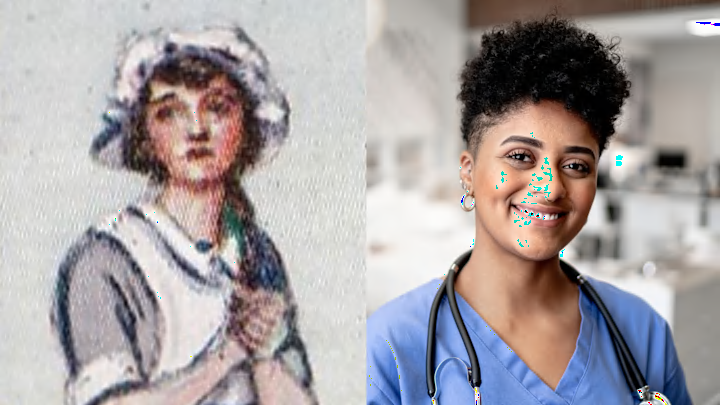
Throughout all of history, women have worked. Whether they were paid or not for their labor is a different matter. But with the Industrial Revolution and people gathering in cities, the types of jobs women worked changed. Rather than domestic or farm labor, more and more women began working in factories and offices.
The Women's Bureau division of the US Department of Labor was created in 1920 to represent this influx into the mainstream workforce. This bureau was directed, in part, to "advance [women's] opportunities for profitable employment." Thanks to the Women's Bureau, we can see how women's jobs have changed over the past century, and what has remained the same. Then, we can improve our opportunities and advancements for women in the workforce.

The Workforce of the 1920s
With the number of deaths in World War I and the Spanish Flu of 1918, many women entered the workforce in place of their late husbands, fathers, and brothers. The 1920s were also a time for more freedom of expression, where women cut their hair short and began wearing new styles of clothing that would have been seen as scandalous just a few years earlier.
White women won the right to vote in 1920, which spurred the idea of the independent working woman even further. The 1920s were a time of awakening for many women. They began to see the possibilities of freedom that come with earning their own money, even if that dream wouldn't be realized for the majority of women until much later.

The Most Common Jobs of the 1920s
According to the Women's Bureau and the US Department of Labor, the top job women held in the 1920s was that of a domestic servant. Maids or housekeepers were the most common job for women, even with the boom of factory work. Teachers came in second, and stenographers or typists came in third.
Factory work didn't even make it in the top 10 most common jobs for women, which seems surprising because of the number of women who entered the workforce with the Industrial Revolution. Farm laborers, clerks, seamstresses, and bookkeepers were all in greater numbers than factory workers. So, even though the building up of industry had led more women into jobs, the most common jobs were still ones that were seen as acceptable for women to pursue.

The Workforce of the 2020s
The biggest change to the workforce between 1920 and now is the number of fields women are allowed to work in. Medicine and other STEM careers that were often completely inaccessible to women now have plenty more opportunities. That isn't to say that there aren't still male-dominated fields, but that the glass ceiling of today was once made of cement. Women couldn't even see through to the other side.
Things have improved for women in the workforce over the last 100 years, but there is still a lot of room for improvement. According to McKinsey's 2025 Women in the Workplace Report, the number of jobs for women has increased over the past decade, but opportunities to advance have declined. In order to finally break the glass ceiling holding women back, we need to prioritize gender diversity in all fields.

The Most Common Jobs of Today
The top job for women in the 2020s is nursing. There were over 2 million registered nurses in April 2025. 100 years ago, any career in medicine was only acceptable for men, so having that many nurses today really shows how far women have come.
Teachers stayed as the second most common job for women, even after a century of change in the job landscape. The third most common job today is a manager, which was a role women could only dream of in 1920. The Women's Bureau did not specify which fields women were managers of, but lists them as managers in general.
Women are still underrepresented in all STEM fields, with computer science and mechanical engineering being some of the areas that lack women the most. That's why it's vital that we open more pathways to women in these fields and teach children that jobs are not gendered. With the right push, women could finally find equal footing in the workforce in the next 100 years.