%20%20--%3E%0A%3Csvg%20version%3D%221.1%22%20id%3D%22Layer_1%22%20xmlns%3D%22http%3A%2F%2Fwww.w3.org%2F2000%2Fsvg%22%20xmlns%3Axlink%3D%22http%3A%2F%2Fwww.w3.org%2F1999%2Fxlink%22%20x%3D%220px%22%20y%3D%220px%22%0A%09%20viewBox%3D%220%200%20684.6%2068.1%22%20style%3D%22enable-background%3Anew%200%200%20684.6%2068.1%3B%22%20xml%3Aspace%3D%22preserve%22%3E%0A%3Cg%3E%0A%09%3Cpath%20d%3D%22M444.1%2C29.3h-17.4v14.5h17.4V29.3z%20M36.4%2C68.1l29.3-50.8V0H50.4L32.9%2C36.8L15.5%2C0H0v68.1h16.7V45.8l12.4%2C22.3H36.4z%0A%09%09%20M49.1%2C68.1h16.6V23.4L49.1%2C52.1V68.1z%20M76.6%2C68.1h45V53.8H93.3V41.6h21V27.1h-21V14.8h28.3V0.1h-45V68.1z%20M175.6%2C68.1h17.3v-68%0A%09%09h-16.5v40.3L150%2C0.1h-17.6v68h16.7V27.7L175.6%2C68.1z%20M235.8%2C14.8h15.4V0.1h-47.4v14.7H219v53.2h16.8V14.8z%20M290.3%2C45.9h-17.1%0A%09%09l7.5-15.6h2L290.3%2C45.9z%20M298.7%2C68.1h18l-32.2-68h-5.7l-32%2C68h18l3.3-7.1h27.1L298.7%2C68.1z%20M325.2%2C68.1h46.2V53.8h-29.6V0.1h-16.7%0A%09%09V68.1z%20M423.7%2C14.8h27.2V0.1H407v68h16.7V14.8z%20M462%2C68.1h46.2V53.8h-29.6V0.1H462V68.1z%20M564.8%2C34.1c0%2C10.7-7.2%2C19.2-18.5%2C19.2%0A%09%09c-11.4%2C0-18.5-8.5-18.5-19.2s7.1-19.2%2C18.5-19.2C557.6%2C14.9%2C564.8%2C23.4%2C564.8%2C34.1%20M580.6%2C34.1c0-19-14.2-34-34.3-34%0A%09%09c-20.2%2C0-34.3%2C15-34.3%2C34c0%2C19%2C14.1%2C34%2C34.3%2C34C566.4%2C68.1%2C580.6%2C53.1%2C580.6%2C34.1%20M604.8%2C20.5c0-4.1%2C3.3-6.2%2C6.7-6.2%0A%09%09c4.4%2C0%2C6.6%2C3%2C6.6%2C6.6h14.7C631.8%2C9.1%2C625.1%2C0.1%2C611%2C0.1c-12%2C0-21.7%2C9.3-21.7%2C20.6c0%2C10.9%2C5.9%2C15.9%2C16.7%2C19.8%0A%09%09c5.2%2C1.8%2C11.5%2C3.2%2C11.5%2C8c0%2C3.3-2.4%2C5.5-6.4%2C5.5c-3.6%2C0-6.6-3-6.6-6.7h-15.2c0%2C11.5%2C7.9%2C20.8%2C21.8%2C20.8c12%2C0%2C21.6-9.3%2C21.6-20.6%0A%09%09c0-10-5.3-16.4-16.7-19.8C610.6%2C26.1%2C604.8%2C25.3%2C604.8%2C20.5%20M670%2C20.9h14.7C683.8%2C9.1%2C677.1%2C0.1%2C663%2C0.1c-12%2C0-21.7%2C9.3-21.7%2C20.6%0A%09%09c0%2C10.9%2C5.9%2C15.9%2C16.7%2C19.8c5.2%2C1.8%2C11.5%2C3.2%2C11.5%2C8c0%2C3.3-2.4%2C5.5-6.4%2C5.5c-3.6%2C0-6.6-3-6.6-6.7h-15.2c0%2C11.5%2C7.9%2C20.8%2C21.8%2C20.8%0A%09%09c12%2C0%2C21.6-9.3%2C21.6-20.6c0-10-5.3-16.4-16.7-19.8c-5.4-1.6-11.3-2.4-11.3-7.2c0-4.1%2C3.3-6.2%2C6.7-6.2C667.7%2C14.4%2C670%2C17.3%2C670%2C20.9%0A%09%09%22%2F%3E%0A%3C%2Fg%3E%0A%3C%2Fsvg%3E%0A)

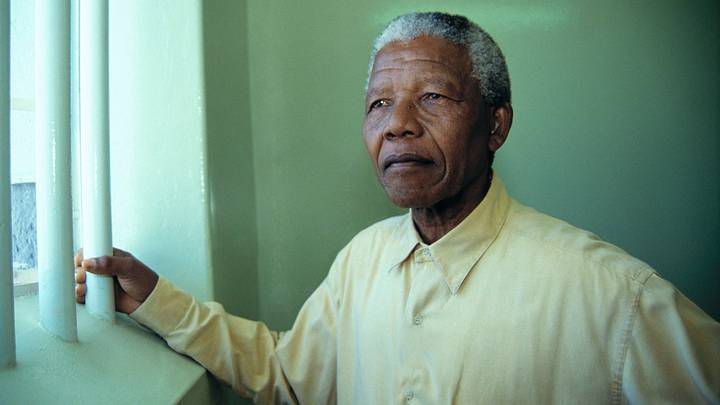
During his 27 years in prison, Nelson Mandela’s most powerful tools were a pen and paper. Well before he became South Africa's first Black president in 1994, Mandela was leading the fight against apartheid from an 8-by-7-foot cell on Robben Island. His 18 years on the island—and remaining nine in Pollsmoor and Victor Verster prisons—were preserved in a series of strongly worded prison letters.
While history remembers Mandela as a revolutionary leader, The Prison Letters of Nelson Mandela reveals a more personal side. The collection features 255 letters he wrote while imprisoned between 1962 and 1990, capturing almost every stage of his time behind bars. From letters to his separated family to his philosophies on freedom, each line he inked exudes the optimism that carried him through captivity.
Small Room, Big Ideas

As a lawyer and activist, much of what Mandela wrote in his letters naturally centered on human rights. Sleeping naked on a cold floor in a cell so small he could reach both walls while lying down, Mandela's cramped surroundings only reinforced his belief that every person deserved basic dignity.
Even from jail, Mandela continued fighting the apartheid government’s abuses. He pushed for basic rights for his fellow inmates, including better food, warmer clothing, and access to educational materials. In 1976, he sent a more than 20-page letter to the commissioner of prisons describing the degrading conditions Black prisoners endured on Robben Island. "It is a mean type of cowardice to wreak vengeance on defenseless men who cannot hit back," he wrote.
Father, Husband, Prisoner

As a lover and father, Mandela poured his heart out in letters to his wife, Winnie, and their daughters, Zenani and Zindzi. Fighting for equality meant missing many of his family's biggest milestones. His words were one of the few ways he could stay involved in his daughters’ lives, from asking about schoolwork to sending birthday wishes.
His 1969 letters were among his most harrowing, written in the wake of losing both his mother and his eldest son, Thembi, who died in a car crash that same year. Denied permission by prison authorities to attend either funeral, a grieving Mandela could only offer his loved ones whatever solace fit on a single sheet of paper. When Winnie was also jailed in 1969, he wrote a blunt letter to his girls warning them that they would have to live like "orphans," with "no birthday or Christmas parties, no presents or new dresses, no shoes or toys."
On a more tender note, his love letters to Winnie were tinged with longing. After an agonizing period of silence during her imprisonment in 1976, he wrote: "Letters from you and the family are like the arrival of summer rains and spring that liven my life and make it enjoyable."
Finding Purpose in Prison

Through all the grief and stolen mail, Mandela resisted rage. Even in isolation, he remained stubbornly hopeful. In a 1975 note, he reflected on solitude as a chance to look inward, calling prison "an ideal place to learn to know yourself" and arguing that deprivation could help a person "overcome the bad and develop whatever is good in you." He pored over Norman Vincent Peale’s The Power of Positive Thinking and found a connection to the outside world through the pages of an Oxford Atlas.
Mandela even sought common ground with his captors, writing that he hoped to "fight over principles and ideas" without hard feelings, so he could one day "proudly shake hands with you because I felt I have fought an upright and worthy opponent."