%20%20--%3E%0A%3Csvg%20version%3D%221.1%22%20id%3D%22Layer_1%22%20xmlns%3D%22http%3A%2F%2Fwww.w3.org%2F2000%2Fsvg%22%20xmlns%3Axlink%3D%22http%3A%2F%2Fwww.w3.org%2F1999%2Fxlink%22%20x%3D%220px%22%20y%3D%220px%22%0A%09%20viewBox%3D%220%200%20684.6%2068.1%22%20style%3D%22enable-background%3Anew%200%200%20684.6%2068.1%3B%22%20xml%3Aspace%3D%22preserve%22%3E%0A%3Cg%3E%0A%09%3Cpath%20d%3D%22M444.1%2C29.3h-17.4v14.5h17.4V29.3z%20M36.4%2C68.1l29.3-50.8V0H50.4L32.9%2C36.8L15.5%2C0H0v68.1h16.7V45.8l12.4%2C22.3H36.4z%0A%09%09%20M49.1%2C68.1h16.6V23.4L49.1%2C52.1V68.1z%20M76.6%2C68.1h45V53.8H93.3V41.6h21V27.1h-21V14.8h28.3V0.1h-45V68.1z%20M175.6%2C68.1h17.3v-68%0A%09%09h-16.5v40.3L150%2C0.1h-17.6v68h16.7V27.7L175.6%2C68.1z%20M235.8%2C14.8h15.4V0.1h-47.4v14.7H219v53.2h16.8V14.8z%20M290.3%2C45.9h-17.1%0A%09%09l7.5-15.6h2L290.3%2C45.9z%20M298.7%2C68.1h18l-32.2-68h-5.7l-32%2C68h18l3.3-7.1h27.1L298.7%2C68.1z%20M325.2%2C68.1h46.2V53.8h-29.6V0.1h-16.7%0A%09%09V68.1z%20M423.7%2C14.8h27.2V0.1H407v68h16.7V14.8z%20M462%2C68.1h46.2V53.8h-29.6V0.1H462V68.1z%20M564.8%2C34.1c0%2C10.7-7.2%2C19.2-18.5%2C19.2%0A%09%09c-11.4%2C0-18.5-8.5-18.5-19.2s7.1-19.2%2C18.5-19.2C557.6%2C14.9%2C564.8%2C23.4%2C564.8%2C34.1%20M580.6%2C34.1c0-19-14.2-34-34.3-34%0A%09%09c-20.2%2C0-34.3%2C15-34.3%2C34c0%2C19%2C14.1%2C34%2C34.3%2C34C566.4%2C68.1%2C580.6%2C53.1%2C580.6%2C34.1%20M604.8%2C20.5c0-4.1%2C3.3-6.2%2C6.7-6.2%0A%09%09c4.4%2C0%2C6.6%2C3%2C6.6%2C6.6h14.7C631.8%2C9.1%2C625.1%2C0.1%2C611%2C0.1c-12%2C0-21.7%2C9.3-21.7%2C20.6c0%2C10.9%2C5.9%2C15.9%2C16.7%2C19.8%0A%09%09c5.2%2C1.8%2C11.5%2C3.2%2C11.5%2C8c0%2C3.3-2.4%2C5.5-6.4%2C5.5c-3.6%2C0-6.6-3-6.6-6.7h-15.2c0%2C11.5%2C7.9%2C20.8%2C21.8%2C20.8c12%2C0%2C21.6-9.3%2C21.6-20.6%0A%09%09c0-10-5.3-16.4-16.7-19.8C610.6%2C26.1%2C604.8%2C25.3%2C604.8%2C20.5%20M670%2C20.9h14.7C683.8%2C9.1%2C677.1%2C0.1%2C663%2C0.1c-12%2C0-21.7%2C9.3-21.7%2C20.6%0A%09%09c0%2C10.9%2C5.9%2C15.9%2C16.7%2C19.8c5.2%2C1.8%2C11.5%2C3.2%2C11.5%2C8c0%2C3.3-2.4%2C5.5-6.4%2C5.5c-3.6%2C0-6.6-3-6.6-6.7h-15.2c0%2C11.5%2C7.9%2C20.8%2C21.8%2C20.8%0A%09%09c12%2C0%2C21.6-9.3%2C21.6-20.6c0-10-5.3-16.4-16.7-19.8c-5.4-1.6-11.3-2.4-11.3-7.2c0-4.1%2C3.3-6.2%2C6.7-6.2C667.7%2C14.4%2C670%2C17.3%2C670%2C20.9%0A%09%09%22%2F%3E%0A%3C%2Fg%3E%0A%3C%2Fsvg%3E%0A)

Plagues and pestilence have always existed, and with them have come many myths and misconceptions. People have tried for millennia to explain why these sicknesses appeared and what could be causing them. Even in modern times, we may sometimes view historical plagues through lenses tinted by unreliable records of the past.
We can also fall into similar false beliefs with the diseases of our day, though we may not want to admit it. Humanity, whether past or present, often falls prey to myths in the search to explain the unexplainable. These are a few of the myths that have continued to spread about the different plagues in history.

Causes of Plagues
Long before medical technology and science could explain what caused plagues, people believed that it was a consequence sent by the divine. The ancient Greeks thought that they had just gotten on the bad side of one of the gods, and Judeo-Christian peoples thought that God was punishing them for their sins.
Medieval times brought new theories for the causes of plagues, like astrological interference. Yes, some scientists believed the plague was created because Mercury was in retrograde. Well, it was actually when Jupiter, Saturn, and Mars aligned. Others believed that these illnesses came because of "miasma," or bad air. They thought that if the air smelled bad, it was carrying sickness. They were on the right track when it came to airborne illnesses, but they still had a long way to go for real answers.

Only the Poor Were Affected
A common myth during many plagues, but most specifically the bubonic plague, was that only the poor got sick and died. This classist ideology had people believing for centuries that the wealthy were immune to illness because they were cleaner or that they were blessed by God.
But the fact is, germs and bacteria don't care how much money you have, and many of the upper classes also succumbed to the plagues of their eras.

How the Black Death Got Its Name
A myth that has spread throughout the years is that the bubonic plague was named the "Black Death" because it caused the victims' skin to blacken. While the plague did sometimes leave black areas on the bodies of the dead, the name was not used for 200 years.
Translators of the 1500s were working on a poem contemporary with the plague. The poem was written by Simon de Covinus, titled "mors atra." This title could have meant either "black death" or "terrible death." The translators chose what they thought was the most likely translation, and the name stuck.

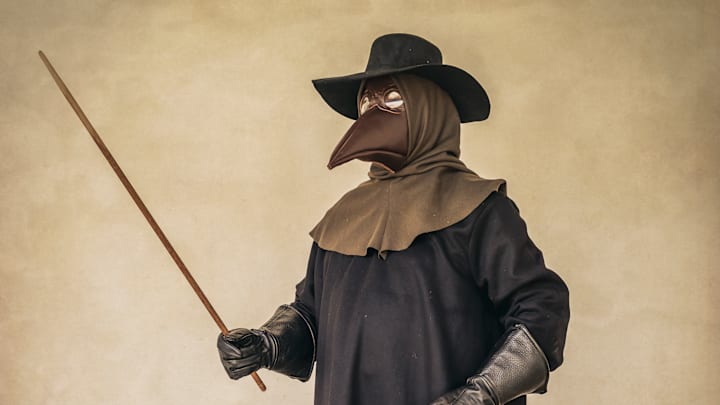
Plague Doctor Outfits
Another common myth is of an anachronistic nature: the plague doctor outfit did not exist in the 1300s, during the time of the Black Death. The beaked mask and oil-slick robes were not used until at least the 1600s, and were not regularly used by all physicians treating plagues.
The Black Death of the 1300s was not the only outbreak of the bubonic plague, and doctors were still treating cases 300 years later, such as during the Great Plague of London, which is where the collective mental link may have come from.

"Ring-a-Round the Rosie"
A dark myth that you might have heard or believe is that the nursery rhyme, "Ring-a-Round the Rosie," is about the Great Plague of London in 1665. Many people have dissected the words, claiming that the "pocket full of posies" was flowers added to corpses to mask the smell of death. And, "we all fall down" is supposed to refer to death. But this is just not accurate.
"Ring-a-Round the Rosie" actually has several versions to it, with a few of them talking about standing back up. Unless there was a zombie infestation in 1666, these lyrics wouldn't make sense. Also, the posies aren't always in pockets, but sometimes in vases or pots. The nursery rhyme, though thought to be about plague, is simply just a silly children's courtship or dancing game.

Milkmaid Myth
A story often told about the creation of the smallpox vaccine is that the physician, Edward Jenner, noticed how milkmaids were unblemished by pock marks. He determined that something about working with cows was making these women immune to smallpox, and was able to invent the vaccine after researching the milkmaids. As it turns out, this was just a pretty tale written by Jenner's biographer to make him sound more interesting.
Inoculations for smallpox had been around for decades before Edward Jenner.
Jenner actually heard about another physician, John Fewster, who had learned that a farmer had contracted cowpox and was now immune to smallpox. Jenner used this knowledge to conduct his famous 1796 experiment, in which he applied pus from a cowpox patient to a small cut on an eight-year-old boy. And now, he gets all the credit for the first smallpox vaccine.

The Source of the Spanish Flu
A myth that seems to spread more in recent times than it did during the plague it covers is that the Spanish Flu of 1918 started in Spain. While it would make sense, considering the name, that isn't the case.
It's still unclear where this deadly influenza started, but it received its moniker when, during World War I, many countries tried to downplay the impact of the illness. Spain, however, was more transparent about their numbers of dead and infected. So, the lack of data from other countries made it seem as if the Spanish people were far more susceptible and dying in larger numbers.

Plagues Are a Thing of the Past
Maybe more misconception than actual myth, many people hear the word "plague" and automatically think of ancient times. But there have been plenty of illnesses still in existence today that would have received the plague label in the past.
Epidemics and pandemics are the words we use now to describe the terrible illnesses that spread through different populations. Ebola, swine flu, cholera, tuberculosis, HIV/AIDS, and COVID-19 are all more modern diseases that would still fall under the category of a plague.
While science and medicine have advanced, we still make up myths about the unknown parts of these diseases, like how they spread.
The fear of plagues has never really faded, and that fear is what allows these myths to pop up and spread so quickly. The best way to protect yourself against the plagues of today is to research facts from academic sources and follow the advice of medical professionals.