%20%20--%3E%0A%3Csvg%20version%3D%221.1%22%20id%3D%22Layer_1%22%20xmlns%3D%22http%3A%2F%2Fwww.w3.org%2F2000%2Fsvg%22%20xmlns%3Axlink%3D%22http%3A%2F%2Fwww.w3.org%2F1999%2Fxlink%22%20x%3D%220px%22%20y%3D%220px%22%0A%09%20viewBox%3D%220%200%20684.6%2068.1%22%20style%3D%22enable-background%3Anew%200%200%20684.6%2068.1%3B%22%20xml%3Aspace%3D%22preserve%22%3E%0A%3Cg%3E%0A%09%3Cpath%20d%3D%22M444.1%2C29.3h-17.4v14.5h17.4V29.3z%20M36.4%2C68.1l29.3-50.8V0H50.4L32.9%2C36.8L15.5%2C0H0v68.1h16.7V45.8l12.4%2C22.3H36.4z%0A%09%09%20M49.1%2C68.1h16.6V23.4L49.1%2C52.1V68.1z%20M76.6%2C68.1h45V53.8H93.3V41.6h21V27.1h-21V14.8h28.3V0.1h-45V68.1z%20M175.6%2C68.1h17.3v-68%0A%09%09h-16.5v40.3L150%2C0.1h-17.6v68h16.7V27.7L175.6%2C68.1z%20M235.8%2C14.8h15.4V0.1h-47.4v14.7H219v53.2h16.8V14.8z%20M290.3%2C45.9h-17.1%0A%09%09l7.5-15.6h2L290.3%2C45.9z%20M298.7%2C68.1h18l-32.2-68h-5.7l-32%2C68h18l3.3-7.1h27.1L298.7%2C68.1z%20M325.2%2C68.1h46.2V53.8h-29.6V0.1h-16.7%0A%09%09V68.1z%20M423.7%2C14.8h27.2V0.1H407v68h16.7V14.8z%20M462%2C68.1h46.2V53.8h-29.6V0.1H462V68.1z%20M564.8%2C34.1c0%2C10.7-7.2%2C19.2-18.5%2C19.2%0A%09%09c-11.4%2C0-18.5-8.5-18.5-19.2s7.1-19.2%2C18.5-19.2C557.6%2C14.9%2C564.8%2C23.4%2C564.8%2C34.1%20M580.6%2C34.1c0-19-14.2-34-34.3-34%0A%09%09c-20.2%2C0-34.3%2C15-34.3%2C34c0%2C19%2C14.1%2C34%2C34.3%2C34C566.4%2C68.1%2C580.6%2C53.1%2C580.6%2C34.1%20M604.8%2C20.5c0-4.1%2C3.3-6.2%2C6.7-6.2%0A%09%09c4.4%2C0%2C6.6%2C3%2C6.6%2C6.6h14.7C631.8%2C9.1%2C625.1%2C0.1%2C611%2C0.1c-12%2C0-21.7%2C9.3-21.7%2C20.6c0%2C10.9%2C5.9%2C15.9%2C16.7%2C19.8%0A%09%09c5.2%2C1.8%2C11.5%2C3.2%2C11.5%2C8c0%2C3.3-2.4%2C5.5-6.4%2C5.5c-3.6%2C0-6.6-3-6.6-6.7h-15.2c0%2C11.5%2C7.9%2C20.8%2C21.8%2C20.8c12%2C0%2C21.6-9.3%2C21.6-20.6%0A%09%09c0-10-5.3-16.4-16.7-19.8C610.6%2C26.1%2C604.8%2C25.3%2C604.8%2C20.5%20M670%2C20.9h14.7C683.8%2C9.1%2C677.1%2C0.1%2C663%2C0.1c-12%2C0-21.7%2C9.3-21.7%2C20.6%0A%09%09c0%2C10.9%2C5.9%2C15.9%2C16.7%2C19.8c5.2%2C1.8%2C11.5%2C3.2%2C11.5%2C8c0%2C3.3-2.4%2C5.5-6.4%2C5.5c-3.6%2C0-6.6-3-6.6-6.7h-15.2c0%2C11.5%2C7.9%2C20.8%2C21.8%2C20.8%0A%09%09c12%2C0%2C21.6-9.3%2C21.6-20.6c0-10-5.3-16.4-16.7-19.8c-5.4-1.6-11.3-2.4-11.3-7.2c0-4.1%2C3.3-6.2%2C6.7-6.2C667.7%2C14.4%2C670%2C17.3%2C670%2C20.9%0A%09%09%22%2F%3E%0A%3C%2Fg%3E%0A%3C%2Fsvg%3E%0A)

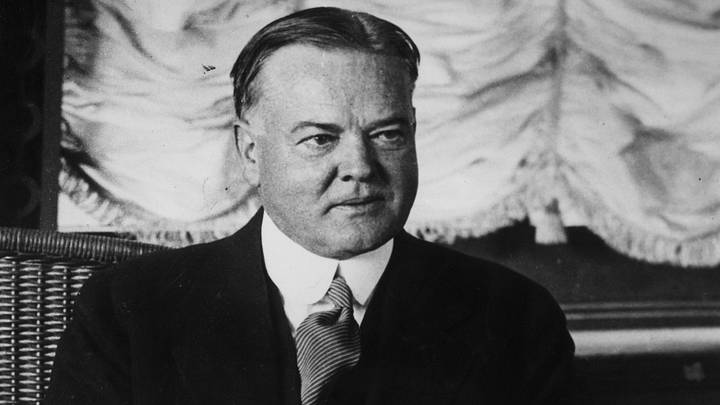
On August 10, 1874, a boy was born to a blacksmith and a seamstress in West Branch, Iowa, a boy who would one day become the 31st president of the United States. Yet, the path he took to the Oval Office was anything but typical for a head of state.
But we’re getting ahead of ourselves.
Let’s trace Herbert Hoover’s path to the presidency, one milestone at a time, and see how the Chief went from Midwest orphan to guiding the nation through the onset of the Great Depression (or at least attempting to) as POTUS.
BEFORE THE PRESIDENCY

Hoover was orphaned at just nine years old. By 11, he moved to Oregon to live with his uncle, and by 14, he quit school to work in his uncle’s real estate business. At age 17, he was admitted to Stanford University, where he met his future wife, Lou Henry, and studied mining engineering.
For nearly two decades after graduating, Hoover worked as an international mining engineer and financier, earning a “fortune” (around $4 million), according to the National Archives, while based in London. When World War I began, he organized efforts to provide food relief and help American travelers escape war zones.
In 1917, Hoover returned to the U.S., where President Woodrow Wilson appointed him to lead the new U.S. Food Administration. His effective leadership won over the American people, and in 1920, Wilson personally chose Hoover as Secretary of Commerce. In this role, Hoover raised manufacturing standards and helped promote advancements in radio and aviation. He continued under President Calvin Coolidge, fronting major relief efforts during the Mississippi River floods and earning the nickname “Master of Emergencies,” a title that, unfortunately, would not stick with him through his four years in the Oval Office.
DURING THE PRESIDENCY

Thanks to his sterling reputation and government service, Hoover ran for president in 1928 and won “in a landslide.” Inspired by Theodore Roosevelt, the self-made millionaire-turned-president aimed to reform the economy and push for both social and environmental initiatives.
But in October 1929, the stock market crashed, and the Great Depression was imminent. Hoover persuaded business leaders to maintain workers’ wages, and he tried to combat panic by accelerating construction projects and creating new jobs.
While he proposed a $169 million tax cut and doubled public works spending, he did not “provide direct federal relief to the unemployed.” Still, his efforts led to some economic improvement, at least until 1931.
Layoffs continued, and Americans grew resentful of what they considered wasteful spending and ineffective programs that didn’t help the unemployed. By 1932, 10 million people were out of work. Hoover responded by establishing Federal Home Loan Banks to assist homeowners and the Reconstruction Finance Corporation to offer emergency loans to struggling businesses.
Although the economy saw decent improvement, it wasn’t enough for Hoover to win reelection. The following year, Franklin D. Roosevelt took office, and Hoover left the White House, redirecting his talents as a writer, speaker, and chairman of several charities and non-profit groups.
AFTER THE PRESIDENCY

After Roosevelt died in 1945, Hoover returned to public service, assisting President Harry S. Truman with post–World War II food relief efforts in Europe. He also played a large role in establishing Boys Clubs of America and funded a research campus at Stanford, his alma mater, years prior.
Hoover went on to write more than 40 books and oversaw the creation of a “Presidential Library” in his hometown of West Branch. He passed away on October 20, 1964, and was buried near his birthplace.
From Midwest orphan to self-made millionaire to President to author, Herbert Hoover’s journey was, without a doubt, one of the most unique in the history of the American presidents.