%20%20--%3E%0A%3Csvg%20version%3D%221.1%22%20id%3D%22Layer_1%22%20xmlns%3D%22http%3A%2F%2Fwww.w3.org%2F2000%2Fsvg%22%20xmlns%3Axlink%3D%22http%3A%2F%2Fwww.w3.org%2F1999%2Fxlink%22%20x%3D%220px%22%20y%3D%220px%22%0A%09%20viewBox%3D%220%200%20684.6%2068.1%22%20style%3D%22enable-background%3Anew%200%200%20684.6%2068.1%3B%22%20xml%3Aspace%3D%22preserve%22%3E%0A%3Cg%3E%0A%09%3Cpath%20d%3D%22M444.1%2C29.3h-17.4v14.5h17.4V29.3z%20M36.4%2C68.1l29.3-50.8V0H50.4L32.9%2C36.8L15.5%2C0H0v68.1h16.7V45.8l12.4%2C22.3H36.4z%0A%09%09%20M49.1%2C68.1h16.6V23.4L49.1%2C52.1V68.1z%20M76.6%2C68.1h45V53.8H93.3V41.6h21V27.1h-21V14.8h28.3V0.1h-45V68.1z%20M175.6%2C68.1h17.3v-68%0A%09%09h-16.5v40.3L150%2C0.1h-17.6v68h16.7V27.7L175.6%2C68.1z%20M235.8%2C14.8h15.4V0.1h-47.4v14.7H219v53.2h16.8V14.8z%20M290.3%2C45.9h-17.1%0A%09%09l7.5-15.6h2L290.3%2C45.9z%20M298.7%2C68.1h18l-32.2-68h-5.7l-32%2C68h18l3.3-7.1h27.1L298.7%2C68.1z%20M325.2%2C68.1h46.2V53.8h-29.6V0.1h-16.7%0A%09%09V68.1z%20M423.7%2C14.8h27.2V0.1H407v68h16.7V14.8z%20M462%2C68.1h46.2V53.8h-29.6V0.1H462V68.1z%20M564.8%2C34.1c0%2C10.7-7.2%2C19.2-18.5%2C19.2%0A%09%09c-11.4%2C0-18.5-8.5-18.5-19.2s7.1-19.2%2C18.5-19.2C557.6%2C14.9%2C564.8%2C23.4%2C564.8%2C34.1%20M580.6%2C34.1c0-19-14.2-34-34.3-34%0A%09%09c-20.2%2C0-34.3%2C15-34.3%2C34c0%2C19%2C14.1%2C34%2C34.3%2C34C566.4%2C68.1%2C580.6%2C53.1%2C580.6%2C34.1%20M604.8%2C20.5c0-4.1%2C3.3-6.2%2C6.7-6.2%0A%09%09c4.4%2C0%2C6.6%2C3%2C6.6%2C6.6h14.7C631.8%2C9.1%2C625.1%2C0.1%2C611%2C0.1c-12%2C0-21.7%2C9.3-21.7%2C20.6c0%2C10.9%2C5.9%2C15.9%2C16.7%2C19.8%0A%09%09c5.2%2C1.8%2C11.5%2C3.2%2C11.5%2C8c0%2C3.3-2.4%2C5.5-6.4%2C5.5c-3.6%2C0-6.6-3-6.6-6.7h-15.2c0%2C11.5%2C7.9%2C20.8%2C21.8%2C20.8c12%2C0%2C21.6-9.3%2C21.6-20.6%0A%09%09c0-10-5.3-16.4-16.7-19.8C610.6%2C26.1%2C604.8%2C25.3%2C604.8%2C20.5%20M670%2C20.9h14.7C683.8%2C9.1%2C677.1%2C0.1%2C663%2C0.1c-12%2C0-21.7%2C9.3-21.7%2C20.6%0A%09%09c0%2C10.9%2C5.9%2C15.9%2C16.7%2C19.8c5.2%2C1.8%2C11.5%2C3.2%2C11.5%2C8c0%2C3.3-2.4%2C5.5-6.4%2C5.5c-3.6%2C0-6.6-3-6.6-6.7h-15.2c0%2C11.5%2C7.9%2C20.8%2C21.8%2C20.8%0A%09%09c12%2C0%2C21.6-9.3%2C21.6-20.6c0-10-5.3-16.4-16.7-19.8c-5.4-1.6-11.3-2.4-11.3-7.2c0-4.1%2C3.3-6.2%2C6.7-6.2C667.7%2C14.4%2C670%2C17.3%2C670%2C20.9%0A%09%09%22%2F%3E%0A%3C%2Fg%3E%0A%3C%2Fsvg%3E%0A)

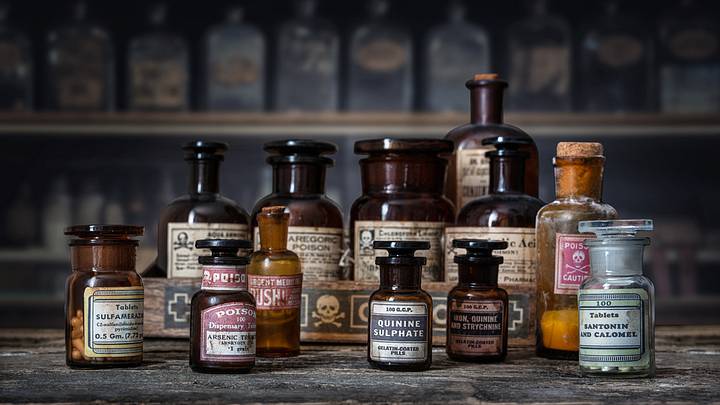
Life on the American frontier was definitely not all exciting adventures and cozy cabins. While families sometimes could live peacefully with the land, they often faced dangerous illnesses and injuries, and had few resources to deal with them. Cholera, smallpox, and infections were all serious risks, and physicians were few and far between and often lacked training.
Laura Ingalls Wilder’s Little House on the Prairie showcases some of the health risks faced by settlers and the cures and treatments they used, though it also does not fully convey the extent of the brutality of frontier life. Ahead are some very real medical treatments that families of the era and the physicians who treated them used to address many of the health issues that could arise on the prairie and beyond.
- Quinine
- Alcohol
- Opium and Other Drug-Based Tinctures
- Midwives
- Traveling Physicians
- Amputation
- Medicinal Plants
Quinine

In 1870, Wilder and her family really did catch malaria and were treated by Dr. George Tan, a Black practitioner of eclectic medicine who gave them quinine, which saved their lives.
Quinine is an alkaloid made from cinchona bark. Originally used by the Quechua people of Peru, it was brought back to Europe by Jesuit priests. For centuries, it was the only available treatment for malaria, and it remains a somewhat uncommon yet viable treatment for the disease today.
Alcohol

People have been using alcohol for medicinal reasons since ancient times. Alcohol was also a common cure for frontier families, especially when doctors were unreachable—which was often in those days.
Alcohol used to be prescribed by doctors for everything from snake bites to stomachaches and various diseases, and was commonly used as a painkiller. Though it fell out of fashion among advanced medical practitioners by the late 19th century, it remains a folk remedy for various aches and pains.
Opium and Other Drug-Based Tinctures

Opium became popular on the American frontier in the early 1800s. By the mid-1800s, it was common to see so-called “snake oil salesmen” traveling across the American West and selling tinctures made with opium, morphine, and other drugs we know to be highly addictive and dangerous today.
One particularly popular tincture was laudanum, a mixture made from opium and alcohol. This mixture was often prescribed for everything from sleeplessness to fever, headache, bladder issues, and much more. Eventually, opium addiction became a huge problem among Civil War veterans and many Americans in the 19th century.
Midwives

Women of the frontier almost always gave birth at home. Other women typically helped with the birthing process, using folk knowledge and wisdom passed down through generations.
Midwives of the frontier would often ride miles on horseback to assist with births. They would also use natural remedies—sometimes including superstitions and folk rituals—to help with the birthing process. One ritual involved placing an ax under the bed, which was thought to reduce pain during labor.
Traveling Physicians

Though some settlements had resident doctors, the only doctors available to the average early frontier family were often traveling physicians, who moved about from settlement to settlement on horseback. Many of these doctors were entirely unschooled, and either apprenticed with other doctors or were self-taught.
These doctors often relied on narcotics or purgatives, such as the vomit-inducing ipecac. Another popular yet dubious medicine was calomel, an extremely toxic compound containing mercury that was used as a laxative. Doctors would also often use folk cures like cold baths, bloodletting, strict and unusual diets, and other experimental tactics.
Even many of the more traditional doctors of the early frontier era went by the mantra “bleed, blister, and purge.” Unsurprisingly, many pioneer folk were more afraid of doctors than disease and chose to treat their ailments by themselves at home.
Amputation

Early doctors would often amputate people with no anesthetic at all. They would often use filthy tools and wouldn’t properly clean the wounds, meaning infections like sepsis were rampant.
By the time of the Civil War in 1861, ether and chloroform were both popular anesthetics that could somewhat reduce the trauma of amputations. Before that, surgeries were often done on patients who were entirely lucid—yet another reason why many settlers avoided doctors until they had absolutely no other choice.
Medicinal Plants

Native Americans of the frontier era had extensive knowledge of medicinal plants, which they used to treat a wide range of ailments. Sometimes, they even shared their knowledge with settlers, giving them remedies that were vital to their survival on the frontier. Settlers also sometimes capitalized on Native American knowledge, peddling and exploiting it through various means.
Many pioneer families relied heavily on natural cures learned from Native Americans as well as folk remedies brought from Europe. One such remedy included the plant mullein, which was used to treat respiratory issues. Another popular one was willow bark, which was used for blood and organ ailments. Salicin, the active ingredient in willow bark, was later instrumental to the creation of the modern painkiller aspirin.
Native Americans also used sophisticated natural anesthetics like Jimson weed. Stoneseed was also used as a natural oral contraceptive. Many tribes practiced suturing and surgery. They also emphasized hygiene, introducing European settlers to some dental hygiene practices and encouraging daily bathing, and many of the practices and cures they used helped save settler lives on the prairie and informed medical practices still used today.