%20%20--%3E%0A%3Csvg%20version%3D%221.1%22%20id%3D%22Layer_1%22%20xmlns%3D%22http%3A%2F%2Fwww.w3.org%2F2000%2Fsvg%22%20xmlns%3Axlink%3D%22http%3A%2F%2Fwww.w3.org%2F1999%2Fxlink%22%20x%3D%220px%22%20y%3D%220px%22%0A%09%20viewBox%3D%220%200%20684.6%2068.1%22%20style%3D%22enable-background%3Anew%200%200%20684.6%2068.1%3B%22%20xml%3Aspace%3D%22preserve%22%3E%0A%3Cg%3E%0A%09%3Cpath%20d%3D%22M444.1%2C29.3h-17.4v14.5h17.4V29.3z%20M36.4%2C68.1l29.3-50.8V0H50.4L32.9%2C36.8L15.5%2C0H0v68.1h16.7V45.8l12.4%2C22.3H36.4z%0A%09%09%20M49.1%2C68.1h16.6V23.4L49.1%2C52.1V68.1z%20M76.6%2C68.1h45V53.8H93.3V41.6h21V27.1h-21V14.8h28.3V0.1h-45V68.1z%20M175.6%2C68.1h17.3v-68%0A%09%09h-16.5v40.3L150%2C0.1h-17.6v68h16.7V27.7L175.6%2C68.1z%20M235.8%2C14.8h15.4V0.1h-47.4v14.7H219v53.2h16.8V14.8z%20M290.3%2C45.9h-17.1%0A%09%09l7.5-15.6h2L290.3%2C45.9z%20M298.7%2C68.1h18l-32.2-68h-5.7l-32%2C68h18l3.3-7.1h27.1L298.7%2C68.1z%20M325.2%2C68.1h46.2V53.8h-29.6V0.1h-16.7%0A%09%09V68.1z%20M423.7%2C14.8h27.2V0.1H407v68h16.7V14.8z%20M462%2C68.1h46.2V53.8h-29.6V0.1H462V68.1z%20M564.8%2C34.1c0%2C10.7-7.2%2C19.2-18.5%2C19.2%0A%09%09c-11.4%2C0-18.5-8.5-18.5-19.2s7.1-19.2%2C18.5-19.2C557.6%2C14.9%2C564.8%2C23.4%2C564.8%2C34.1%20M580.6%2C34.1c0-19-14.2-34-34.3-34%0A%09%09c-20.2%2C0-34.3%2C15-34.3%2C34c0%2C19%2C14.1%2C34%2C34.3%2C34C566.4%2C68.1%2C580.6%2C53.1%2C580.6%2C34.1%20M604.8%2C20.5c0-4.1%2C3.3-6.2%2C6.7-6.2%0A%09%09c4.4%2C0%2C6.6%2C3%2C6.6%2C6.6h14.7C631.8%2C9.1%2C625.1%2C0.1%2C611%2C0.1c-12%2C0-21.7%2C9.3-21.7%2C20.6c0%2C10.9%2C5.9%2C15.9%2C16.7%2C19.8%0A%09%09c5.2%2C1.8%2C11.5%2C3.2%2C11.5%2C8c0%2C3.3-2.4%2C5.5-6.4%2C5.5c-3.6%2C0-6.6-3-6.6-6.7h-15.2c0%2C11.5%2C7.9%2C20.8%2C21.8%2C20.8c12%2C0%2C21.6-9.3%2C21.6-20.6%0A%09%09c0-10-5.3-16.4-16.7-19.8C610.6%2C26.1%2C604.8%2C25.3%2C604.8%2C20.5%20M670%2C20.9h14.7C683.8%2C9.1%2C677.1%2C0.1%2C663%2C0.1c-12%2C0-21.7%2C9.3-21.7%2C20.6%0A%09%09c0%2C10.9%2C5.9%2C15.9%2C16.7%2C19.8c5.2%2C1.8%2C11.5%2C3.2%2C11.5%2C8c0%2C3.3-2.4%2C5.5-6.4%2C5.5c-3.6%2C0-6.6-3-6.6-6.7h-15.2c0%2C11.5%2C7.9%2C20.8%2C21.8%2C20.8%0A%09%09c12%2C0%2C21.6-9.3%2C21.6-20.6c0-10-5.3-16.4-16.7-19.8c-5.4-1.6-11.3-2.4-11.3-7.2c0-4.1%2C3.3-6.2%2C6.7-6.2C667.7%2C14.4%2C670%2C17.3%2C670%2C20.9%0A%09%09%22%2F%3E%0A%3C%2Fg%3E%0A%3C%2Fsvg%3E%0A)

With its fourth season releasing its second batch of episodes on February 26, Netflix’s Bridgerton has given 21st-century audiences a whole new appreciation for the romantic lives and escapades of people in Georgian Regency England.
It’s easy to assume that people of this era were just as (if not even more) strait-laced than the notorious prim and proper Victorians that would follow them just a decade or so later. But in truth, just below the surface of Regency England, were some historical scandals that would make the Bridgerton plotlines seem tame.
THE BIGAMIST PRINCE REGENT

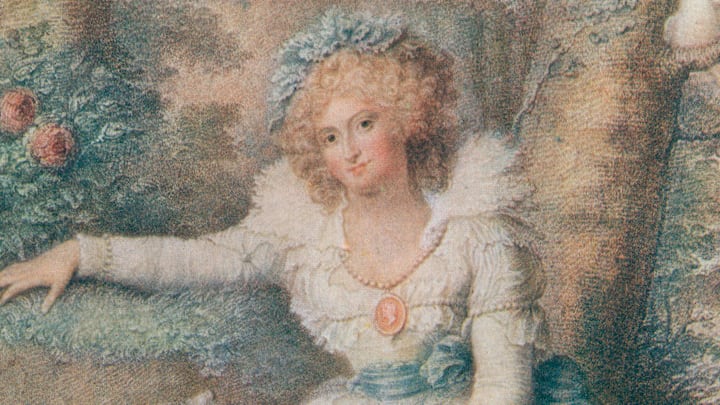
Maria Fitzherbert was born in the county of Hampshire, on England’s south coast, in 1756. By the age of 25, she had already been married twice: her first husband, whom she wed at just 19, died within a year, while her second died within three.
As a result, she had inherited a considerable fortune and promptly been transformed into one of the wealthiest, most beautiful, and most desirable young women of Regency London. And the Prince of Wales—the future King George IV—was quick to notice her.
Before long, the Prince Regent was Fitzherbert’s third husband. But as she was a commoner, a widow, and a Catholic, the couple were understandably forced to wed in secret and keep their marriage under cover.
After seven tumultuous years together, however, the prince abruptly ended their relationship in 1794, amid countless dalliances with other women—and the not insignificant problem of his upcoming public marriage to Princess Caroline of Brunswick. They wed the following year, despite his marriage to Fitzherbert still standing.
For her part, Fitzherbert was not going to leave quietly, and instead she petitioned the pope, who duly confirmed that she and the prince were still legally married in the eyes of the church. As luck would have it, though, the prince’s marriage to Caroline was turning into a shambles; they had a child in 1796, but were ill-suited to one another and separated thereafter, leaving the prince free to pursue Fitzherbert once again.
Their relationship faltered once again in the early 1800s, however, and after the prince ascended the throne in 1820 as George IV—with the now Queen Caroline at his side—they understandably drifted apart. Nonetheless, when the king died 10 years later, Maria’s portrait was found around his neck.
THE REGENCY THROUPLE
Born in 1758, Seymour Dorothy Fleming was the daughter of an Irish-English baronet and a distant descendant of Henry VIII’s third wife, Jane Seymour (hence her somewhat unusual first name). At the age of just 17, she married Sir Richard Worsley, seventh Baronet of Appuldurcombe House, a grand estate on the Isle of Wight, off England’s south coast, and she became Lady Worsley—the name and title by which she would go on to be remembered for centuries to come.
Lady Worsley and her husband were not a good match, and their marriage soon began to fail—not least because she apparently embarked on a string of affairs, and Sir Richard was more focused on plans to defend England’s south coast from the threat of a French invasion. To assist him, Sir Richard hired a local Scottish-born baron named George Bisset as a captain in his militia, who promptly caught his wife’s eye. Before long, the trio were broiled in a love triangle.
The entire affair would likely have remained a secret had Lady Worsley and Bisset not decided to elope in 1781. In response, Sir Richard sued Bisset for £20,000 (equivalent to over $4.5 million) on a charge of “criminal conversation” (essentially akin to adultery) in an attempt to ruin him financially. The case, however, gave Lady Worsley a platform on which to air all her private grievances with her husband, and her revelations scandalized England.
Sir Richard was revealed to be a voyeur who preferred to watch (and reportedly even encouraged) his wife’s dalliances with other men rather than be with her himself. In one particularly damaging episode, Lady Worsley revealed that Sir Richard had even hoisted Bisset up on his shoulders so he could watch her bathe and dress at a local bathhouse. The court had heard enough: Sir Richard was awarded just one shilling in damages.
THE DUCHESS AND THE FOOTMAN
In 1793, William Montagu, the fifth Duke of Manchester, married Lady Susan Gordon, the third daughter of the nobleman Alexander Gordon, the fourth Duke of Gordon in Moray, Scotland. Lady Susan consequently became Susan Montagu, Duchess of Manchester, and she and her husband went on to have eight children (including the future Conservative Member of Parliament, George Montagu, sixth Duke of Manchester).
If all this sounds rather tame for a Regency scandal, that’s because it wasn’t until two years after the Montagus’ eighth child was born that the cracks began to show in their marriage, and the scandal became public.
In 1808, the duke was made Governor of Jamaica and posted to the Caribbean; the duchess, however, chose to remain at home in England. Her decision might have at least been grounded on her not wanting to take eight children (all aged between 14 and 2) to the other side of the Atlantic Ocean, understandably, but it also soon emerged that the duke had been a notorious philanderer, who had had a long string of infidelities throughout their marriage.
But with him now all but permanently 4,000 miles away, of course, the duchess was free to indulge in a little extramarital fun of her own—and she had soon embarked on a love affair with one of her husband’s footmen.
Unfortunately, it was her affair, rather than her husband’s, that became the biggest cause celebre in Regency society. A negotiated end to their relationship was brokered, and the duchess quietly left the family home in return for a financial settlement. She died in 1828, at the age of 54.
THE DRAMATIST’S DUEL

The playwright and statesman Richard Brinsley Sheridan—known for plays such as The Rivals and A School for Scandal—was one of Georgian and Regency England’s most notorious characters and philanderers.
Even before he burst into the London theatre world with a string of successes at Covent Garden in the 1770s, Sheridan had already made something of a name for himself while still only an aspiring 19-year-old playwright, by courting a young soprano named Elizabeth Ann Linley.
At that time, Linley was also seeing off the unwanted advances of a Welsh squire, Captain Thomas Mathews. When she fled England for France in a clandestine attempt to escape his clutches, Sheridan went with her, and together they settled in Lille. Mathews, in response, published a scathing takedown of Sheridan in the local press, and in 1772, he returned to England to fight him in a duel and demand an apology.
The duel was a messy disaster, with sprawling crowds and onlookers forcing them to relocate it from Hyde Park to a nearby tavern, and then Mathews losing his sword and—according to Sheridan, at least—begging for his life without a single strike from his blade.
When Sheridan began circulating the story of Mathews’ apparently humiliating defeat, however, he, in return, challenged Sheridan to a second duel that was far more bloody and decisive than the last.
This time, fought near the city of Bath, the two men’s swords shattered to pieced, leaving them tussling and bludgeoning one another on the ground. Sheridan was terribly wounded in the fight—barely surviving his injuries—yet still had to be hauled away from the fray, while Mathews fled.