%20%20--%3E%0A%3Csvg%20version%3D%221.1%22%20id%3D%22Layer_1%22%20xmlns%3D%22http%3A%2F%2Fwww.w3.org%2F2000%2Fsvg%22%20xmlns%3Axlink%3D%22http%3A%2F%2Fwww.w3.org%2F1999%2Fxlink%22%20x%3D%220px%22%20y%3D%220px%22%0A%09%20viewBox%3D%220%200%20684.6%2068.1%22%20style%3D%22enable-background%3Anew%200%200%20684.6%2068.1%3B%22%20xml%3Aspace%3D%22preserve%22%3E%0A%3Cg%3E%0A%09%3Cpath%20d%3D%22M444.1%2C29.3h-17.4v14.5h17.4V29.3z%20M36.4%2C68.1l29.3-50.8V0H50.4L32.9%2C36.8L15.5%2C0H0v68.1h16.7V45.8l12.4%2C22.3H36.4z%0A%09%09%20M49.1%2C68.1h16.6V23.4L49.1%2C52.1V68.1z%20M76.6%2C68.1h45V53.8H93.3V41.6h21V27.1h-21V14.8h28.3V0.1h-45V68.1z%20M175.6%2C68.1h17.3v-68%0A%09%09h-16.5v40.3L150%2C0.1h-17.6v68h16.7V27.7L175.6%2C68.1z%20M235.8%2C14.8h15.4V0.1h-47.4v14.7H219v53.2h16.8V14.8z%20M290.3%2C45.9h-17.1%0A%09%09l7.5-15.6h2L290.3%2C45.9z%20M298.7%2C68.1h18l-32.2-68h-5.7l-32%2C68h18l3.3-7.1h27.1L298.7%2C68.1z%20M325.2%2C68.1h46.2V53.8h-29.6V0.1h-16.7%0A%09%09V68.1z%20M423.7%2C14.8h27.2V0.1H407v68h16.7V14.8z%20M462%2C68.1h46.2V53.8h-29.6V0.1H462V68.1z%20M564.8%2C34.1c0%2C10.7-7.2%2C19.2-18.5%2C19.2%0A%09%09c-11.4%2C0-18.5-8.5-18.5-19.2s7.1-19.2%2C18.5-19.2C557.6%2C14.9%2C564.8%2C23.4%2C564.8%2C34.1%20M580.6%2C34.1c0-19-14.2-34-34.3-34%0A%09%09c-20.2%2C0-34.3%2C15-34.3%2C34c0%2C19%2C14.1%2C34%2C34.3%2C34C566.4%2C68.1%2C580.6%2C53.1%2C580.6%2C34.1%20M604.8%2C20.5c0-4.1%2C3.3-6.2%2C6.7-6.2%0A%09%09c4.4%2C0%2C6.6%2C3%2C6.6%2C6.6h14.7C631.8%2C9.1%2C625.1%2C0.1%2C611%2C0.1c-12%2C0-21.7%2C9.3-21.7%2C20.6c0%2C10.9%2C5.9%2C15.9%2C16.7%2C19.8%0A%09%09c5.2%2C1.8%2C11.5%2C3.2%2C11.5%2C8c0%2C3.3-2.4%2C5.5-6.4%2C5.5c-3.6%2C0-6.6-3-6.6-6.7h-15.2c0%2C11.5%2C7.9%2C20.8%2C21.8%2C20.8c12%2C0%2C21.6-9.3%2C21.6-20.6%0A%09%09c0-10-5.3-16.4-16.7-19.8C610.6%2C26.1%2C604.8%2C25.3%2C604.8%2C20.5%20M670%2C20.9h14.7C683.8%2C9.1%2C677.1%2C0.1%2C663%2C0.1c-12%2C0-21.7%2C9.3-21.7%2C20.6%0A%09%09c0%2C10.9%2C5.9%2C15.9%2C16.7%2C19.8c5.2%2C1.8%2C11.5%2C3.2%2C11.5%2C8c0%2C3.3-2.4%2C5.5-6.4%2C5.5c-3.6%2C0-6.6-3-6.6-6.7h-15.2c0%2C11.5%2C7.9%2C20.8%2C21.8%2C20.8%0A%09%09c12%2C0%2C21.6-9.3%2C21.6-20.6c0-10-5.3-16.4-16.7-19.8c-5.4-1.6-11.3-2.4-11.3-7.2c0-4.1%2C3.3-6.2%2C6.7-6.2C667.7%2C14.4%2C670%2C17.3%2C670%2C20.9%0A%09%09%22%2F%3E%0A%3C%2Fg%3E%0A%3C%2Fsvg%3E%0A)

The Victorian era was a notable period for kitchen innovations, and saw a number of developments which were designed to make cooking, baking, and other household tasks easier, quicker, and more hygienic. Here is an alphabetical look at some of the various things you could have expected to find in the vast majority of Victorian kitchens.
- Cast Iron Range
- Codd Bottles and Bottle Openers
- Hand-Operated Mixer
- Ice Molds
- Pale Blue Painted Walls
- Sugar Cutters
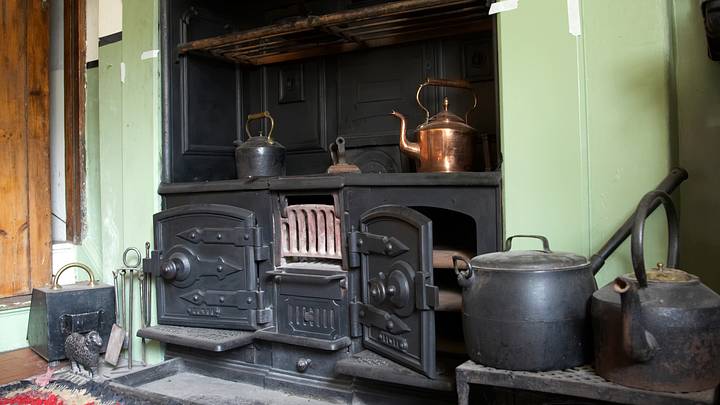
Cast Iron Range
A central feature in most Victorian kitchens was the cast iron range cooker, which has sometimes been described as the heart of many Victorian homes. The first half of the 19th century saw what were known as open ranges (where the fire faced openly onto the room), which eventually transitioned to the later Victorian innovation of closed ranges (where the fire was sealed behind an iron box).
They are symbolic of a traditionally Victorian style of kitchen equipment, and surviving examples of these cast iron ranges have even ended up in museums.
Codd Bottles and Bottle Openers
Carbonated drinks became popular in the Victorian age, but it was more difficult to manufacture and store them than today. One of the key things which changed this was the invention of glass bottles which were sturdy enough to maintain the pressure needed to keep the drink inside fizzy.
One of the innovations in this field was a type of glass bottle known as a Codd Bottle, named after its creator Hiram Codd, which used a marble within the bottle to help hold the carbonation in place. The success of Codd Bottles naturally led to the need for bottle openers which could open these types of containers, and many were therefore manufactured for this purpose, mostly in wood and occasionally in glass.
Hand-Operated Mixer
The need to mix and blend different ingredients saw the rise of devices which would assist people with this task. While electric mixers would not become common until the 20th century, hand-operated mixers were introduced during the Victorian period, and would have been a common feature in almost all kitchens. Mixers were also sometimes produced for the purpose of creating a specific item, such as home cake maker mixers.
Ice Molds
The Victorians were great enthusiasts for ices, chocolates, and other forms of desserts. Hundreds of different varieties of ice molds, jelly molds, and chocolate molds were created in Victorian Britain, some made of materials like pewter, as can be seen in many surviving examples of these forms.
This also led to a taste for more unexpected shapes, which even included asparagus-shaped molds, for those who might want vegetable-shaped ice.
Pale Blue Painted Walls
Most kitchens were decorated in a minimal way, but one thing which was common to find was walls which had been painted in a shade of pale blue, also known as “laundry blue.” However, this was not done for purely aesthetic reasons. It was because it was believed that flies were repelled by this color and would therefore be less likely to linger in the kitchen and around the meals being made.
In addition to this, it was felt that a pale blue shade added a sense of coolness to a room which otherwise had a tendency to get very warm while cooking was in progress.
Sugar Cutters
The production of sugar increased dramatically during the Victorian period, but it was not as easy to consume as it is today. Sugar was a hard substance and sold in the shape of cones, not in bags from which it could easily be taken. Devices were therefore created to make the practice of severing off segments of sugar easier, leading to the invention of metal sugar cutters designed for this purpose, including strong blades to cut off pieces,