%20%20--%3E%0A%3Csvg%20version%3D%221.1%22%20id%3D%22Layer_1%22%20xmlns%3D%22http%3A%2F%2Fwww.w3.org%2F2000%2Fsvg%22%20xmlns%3Axlink%3D%22http%3A%2F%2Fwww.w3.org%2F1999%2Fxlink%22%20x%3D%220px%22%20y%3D%220px%22%0A%09%20viewBox%3D%220%200%20684.6%2068.1%22%20style%3D%22enable-background%3Anew%200%200%20684.6%2068.1%3B%22%20xml%3Aspace%3D%22preserve%22%3E%0A%3Cg%3E%0A%09%3Cpath%20d%3D%22M444.1%2C29.3h-17.4v14.5h17.4V29.3z%20M36.4%2C68.1l29.3-50.8V0H50.4L32.9%2C36.8L15.5%2C0H0v68.1h16.7V45.8l12.4%2C22.3H36.4z%0A%09%09%20M49.1%2C68.1h16.6V23.4L49.1%2C52.1V68.1z%20M76.6%2C68.1h45V53.8H93.3V41.6h21V27.1h-21V14.8h28.3V0.1h-45V68.1z%20M175.6%2C68.1h17.3v-68%0A%09%09h-16.5v40.3L150%2C0.1h-17.6v68h16.7V27.7L175.6%2C68.1z%20M235.8%2C14.8h15.4V0.1h-47.4v14.7H219v53.2h16.8V14.8z%20M290.3%2C45.9h-17.1%0A%09%09l7.5-15.6h2L290.3%2C45.9z%20M298.7%2C68.1h18l-32.2-68h-5.7l-32%2C68h18l3.3-7.1h27.1L298.7%2C68.1z%20M325.2%2C68.1h46.2V53.8h-29.6V0.1h-16.7%0A%09%09V68.1z%20M423.7%2C14.8h27.2V0.1H407v68h16.7V14.8z%20M462%2C68.1h46.2V53.8h-29.6V0.1H462V68.1z%20M564.8%2C34.1c0%2C10.7-7.2%2C19.2-18.5%2C19.2%0A%09%09c-11.4%2C0-18.5-8.5-18.5-19.2s7.1-19.2%2C18.5-19.2C557.6%2C14.9%2C564.8%2C23.4%2C564.8%2C34.1%20M580.6%2C34.1c0-19-14.2-34-34.3-34%0A%09%09c-20.2%2C0-34.3%2C15-34.3%2C34c0%2C19%2C14.1%2C34%2C34.3%2C34C566.4%2C68.1%2C580.6%2C53.1%2C580.6%2C34.1%20M604.8%2C20.5c0-4.1%2C3.3-6.2%2C6.7-6.2%0A%09%09c4.4%2C0%2C6.6%2C3%2C6.6%2C6.6h14.7C631.8%2C9.1%2C625.1%2C0.1%2C611%2C0.1c-12%2C0-21.7%2C9.3-21.7%2C20.6c0%2C10.9%2C5.9%2C15.9%2C16.7%2C19.8%0A%09%09c5.2%2C1.8%2C11.5%2C3.2%2C11.5%2C8c0%2C3.3-2.4%2C5.5-6.4%2C5.5c-3.6%2C0-6.6-3-6.6-6.7h-15.2c0%2C11.5%2C7.9%2C20.8%2C21.8%2C20.8c12%2C0%2C21.6-9.3%2C21.6-20.6%0A%09%09c0-10-5.3-16.4-16.7-19.8C610.6%2C26.1%2C604.8%2C25.3%2C604.8%2C20.5%20M670%2C20.9h14.7C683.8%2C9.1%2C677.1%2C0.1%2C663%2C0.1c-12%2C0-21.7%2C9.3-21.7%2C20.6%0A%09%09c0%2C10.9%2C5.9%2C15.9%2C16.7%2C19.8c5.2%2C1.8%2C11.5%2C3.2%2C11.5%2C8c0%2C3.3-2.4%2C5.5-6.4%2C5.5c-3.6%2C0-6.6-3-6.6-6.7h-15.2c0%2C11.5%2C7.9%2C20.8%2C21.8%2C20.8%0A%09%09c12%2C0%2C21.6-9.3%2C21.6-20.6c0-10-5.3-16.4-16.7-19.8c-5.4-1.6-11.3-2.4-11.3-7.2c0-4.1%2C3.3-6.2%2C6.7-6.2C667.7%2C14.4%2C670%2C17.3%2C670%2C20.9%0A%09%09%22%2F%3E%0A%3C%2Fg%3E%0A%3C%2Fsvg%3E%0A)

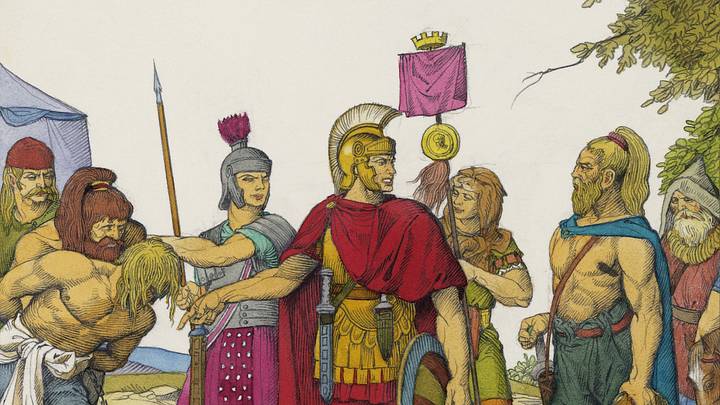
Today, Gaius Marius is most famous for being Julius Caesar’s uncle by marriage. Back in his own day, however, he was known for many other things as well, including mandating the use of backpacks at a critical moment in Roman military history.
Who Was Gaius Marius?

Born in a small Italian town outside Rome, he was a provincial of unremarkable birth who climbed to senatorial rank, making him a so-called “new man” (or novus homo). He was also the first person to serve as consul—the highest office in the Republic—for a total of seven terms, including five consecutive ones.
Along the way, he supported veterans demanding retirement land and fellow Italians who campaigned for citizenship rights, deepening the rift between Roman aristocrats and their subjects.
Above all, though, Marius was known for revolutionizing the Roman military. Over the course of his many campaigns, he implemented sweeping reforms that were instrumental in Rome’s transition from republic to empire.
The most significant of these had to do with recruitment. Before Marius, Rome’s military consisted of land-owning conscripts. Opposed to the aristocracy—and in need of manpower—Marius created a professional, salaried army featuring soldiers from all over Italy.
How Gaius Marius Brought Backpacks to the Romans

Marius also overhauled the Roman military’s logistics. Previously, supplies and weaponry were carried around in slow-moving carts that often got stuck on uneven and muddy terrain.
To speed things up, Marius introduced the furca—a knapsack containing each soldier’s armor, weapons, and provisions, tied to a wooden pole and carried over their shoulders as they marched.
At first, the furca—Latin for “fork”—was incredibly unpopular. Soldiers serving in military units not under Marius’s control, and therefore unaffected by his reforms, derisively referred to their burdened brethren as muli Mariani—“Marius’s mules.”
However, ridicule quickly gave way to awe as the furca system revealed its potential during a battle against the Teutons and Ambrones, migrating tribes that were headed for Gaul and the Italian heartland.
After giving the tribes a head start, Marius’s mobile troops caught up much more quickly than their enemies anticipated thanks to not having to wait for a baggage train. Using this surprise to their advantage, they achieved one of the biggest military victories in Roman history at the Battle of Aquae Sextiae, which resulted in the reported deaths of more than 100,000 people.
After defeating the tribes, Marius returned to Rome in triumph and went on to win yet more consular elections. But while he was hailed as the “Third Founder of Rome,” Marius’s career ended in chaos and turmoil. Before his reforms, soldiers were loyal to the Republic. Now, their allegiance was to the general who paid them.
As a result, political power in Rome went from one strongman to another: first Marius, then his longtime rival Lucius Cornelius Sulla, and ultimately to Julius Caesar—in whom Sulla said he saw “more than one Marius”—and his adopted son Octavian, the future emperor Augustus.