%20%20--%3E%0A%3Csvg%20version%3D%221.1%22%20id%3D%22Layer_1%22%20xmlns%3D%22http%3A%2F%2Fwww.w3.org%2F2000%2Fsvg%22%20xmlns%3Axlink%3D%22http%3A%2F%2Fwww.w3.org%2F1999%2Fxlink%22%20x%3D%220px%22%20y%3D%220px%22%0A%09%20viewBox%3D%220%200%20684.6%2068.1%22%20style%3D%22enable-background%3Anew%200%200%20684.6%2068.1%3B%22%20xml%3Aspace%3D%22preserve%22%3E%0A%3Cg%3E%0A%09%3Cpath%20d%3D%22M444.1%2C29.3h-17.4v14.5h17.4V29.3z%20M36.4%2C68.1l29.3-50.8V0H50.4L32.9%2C36.8L15.5%2C0H0v68.1h16.7V45.8l12.4%2C22.3H36.4z%0A%09%09%20M49.1%2C68.1h16.6V23.4L49.1%2C52.1V68.1z%20M76.6%2C68.1h45V53.8H93.3V41.6h21V27.1h-21V14.8h28.3V0.1h-45V68.1z%20M175.6%2C68.1h17.3v-68%0A%09%09h-16.5v40.3L150%2C0.1h-17.6v68h16.7V27.7L175.6%2C68.1z%20M235.8%2C14.8h15.4V0.1h-47.4v14.7H219v53.2h16.8V14.8z%20M290.3%2C45.9h-17.1%0A%09%09l7.5-15.6h2L290.3%2C45.9z%20M298.7%2C68.1h18l-32.2-68h-5.7l-32%2C68h18l3.3-7.1h27.1L298.7%2C68.1z%20M325.2%2C68.1h46.2V53.8h-29.6V0.1h-16.7%0A%09%09V68.1z%20M423.7%2C14.8h27.2V0.1H407v68h16.7V14.8z%20M462%2C68.1h46.2V53.8h-29.6V0.1H462V68.1z%20M564.8%2C34.1c0%2C10.7-7.2%2C19.2-18.5%2C19.2%0A%09%09c-11.4%2C0-18.5-8.5-18.5-19.2s7.1-19.2%2C18.5-19.2C557.6%2C14.9%2C564.8%2C23.4%2C564.8%2C34.1%20M580.6%2C34.1c0-19-14.2-34-34.3-34%0A%09%09c-20.2%2C0-34.3%2C15-34.3%2C34c0%2C19%2C14.1%2C34%2C34.3%2C34C566.4%2C68.1%2C580.6%2C53.1%2C580.6%2C34.1%20M604.8%2C20.5c0-4.1%2C3.3-6.2%2C6.7-6.2%0A%09%09c4.4%2C0%2C6.6%2C3%2C6.6%2C6.6h14.7C631.8%2C9.1%2C625.1%2C0.1%2C611%2C0.1c-12%2C0-21.7%2C9.3-21.7%2C20.6c0%2C10.9%2C5.9%2C15.9%2C16.7%2C19.8%0A%09%09c5.2%2C1.8%2C11.5%2C3.2%2C11.5%2C8c0%2C3.3-2.4%2C5.5-6.4%2C5.5c-3.6%2C0-6.6-3-6.6-6.7h-15.2c0%2C11.5%2C7.9%2C20.8%2C21.8%2C20.8c12%2C0%2C21.6-9.3%2C21.6-20.6%0A%09%09c0-10-5.3-16.4-16.7-19.8C610.6%2C26.1%2C604.8%2C25.3%2C604.8%2C20.5%20M670%2C20.9h14.7C683.8%2C9.1%2C677.1%2C0.1%2C663%2C0.1c-12%2C0-21.7%2C9.3-21.7%2C20.6%0A%09%09c0%2C10.9%2C5.9%2C15.9%2C16.7%2C19.8c5.2%2C1.8%2C11.5%2C3.2%2C11.5%2C8c0%2C3.3-2.4%2C5.5-6.4%2C5.5c-3.6%2C0-6.6-3-6.6-6.7h-15.2c0%2C11.5%2C7.9%2C20.8%2C21.8%2C20.8%0A%09%09c12%2C0%2C21.6-9.3%2C21.6-20.6c0-10-5.3-16.4-16.7-19.8c-5.4-1.6-11.3-2.4-11.3-7.2c0-4.1%2C3.3-6.2%2C6.7-6.2C667.7%2C14.4%2C670%2C17.3%2C670%2C20.9%0A%09%09%22%2F%3E%0A%3C%2Fg%3E%0A%3C%2Fsvg%3E%0A)

History books often overlook the contributions of women on battlefields, yet many accounts reveal their significant roles as warriors, supporters, healers, strategists, and spies. Over centuries, women have entered wars, sometimes disguised as men, to fight for their beliefs.
Their motivations varied between patriotism, survival, and, in many circumstances, the desire for the same authority afforded to their male counterparts. Whatever their reasoning, these extraordinary women risked their lives, challenged uncompromising social expectations, and went to great lengths to pursue a higher purpose, drawing attention to the profound impact gender roles had on who could access power and responsibilities.
In many societies, formal military service was not an option for women. Enlisting openly could lead to punishment and social disgrace, despite armies being in constant need of new recruits. Determined females adapted by cutting their hair, lowering their voices, and claiming entirely new identities in order to fight alongside men. Some were discovered, while others managed to keep their secret for months, sometimes even years, earning their respect as soldiers before the truth about their identities emerged.
Let's venture beyond the traditional pages of history and shine a light on the lesser-known stories of 10 remarkable women who put their lives on the line by fighting wars disguised as men.
- Hatshepsut
- Joan of Arc
- Kit Cavanaugh
- Anne Bonny and Mary Read
- Hannah Snell
- Deborah Sampson
- Sarah Emma Edmonds
- Frances L. Clayton
- Dorothy Lawrence
Hatshepsut

Hatshepsut ruled Egypt from 1497 to 1458 B.C.E., becoming one of the earliest female Pharaohs in ancient history. To strengthen her authority in a role previously held by men (following the death of her husband, who reigned before her), she sometimes appeared in male royal attire. Although Hatshepsut’s nearly 20-year reign was mostly peaceful, she commanded military campaigns (particularly to Nubia, an ancient African region) and expanded Egypt’s trade networks. Statues in her honor often portray her wearing the traditional garb of Egyptian kings.
Joan of Arc

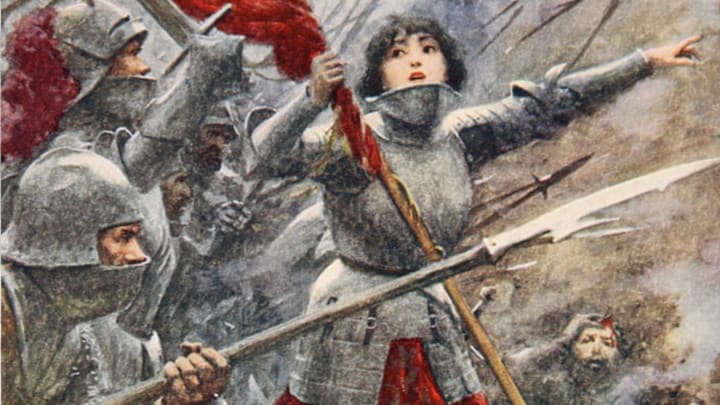
In 1429, brave teenage peasant Joan of Arc cut her hair and donned men's clothing and armor to lead French forces during the Hundred Years' War. Convinced of her divine mission to save France, she played a pivotal role in lifting the Siege of Orléans and inspired a series of victories that culminated in Charles VII’s coronation. She was captured and executed in 1431 when she was just 19 years old. In 1920, Pope Benedict XV declared Joan a saint, and she was later named the patron saint of France.
Kit Cavanaugh

Kit Cavanaugh, born Christian Davies in 1667, disguised herself as a man and joined the British army in 1693 to search for her husband, who had been drafted. Serving as a dragoon under the Duke of Marlborough, she fought the French for years, until a battle won in 1706 revealed her identity. She was discharged as an army member but stayed with the dragoons as the officers' cook until her husband was killed on the battlefield. After 19 years of service, she retired from the military and, upon her death, was honored with a military burial.
Anne Bonny and Mary Read

Anne Bonny and Mary Read (who previously served in the Army of Flanders) sailed as pirates in the Caribbean in the early 1700s, both dressing in men's clothing while serving aboard the ship of pirate captain Calico Jack Rackham. Despite differing paths of love and hardship leading them to a life of piracy, Anne eventually discovered Mary’s secret, and the two formed a close friendship. According to historical accounts, they fought alongside the crew and took part in pirate raids until their ship was captured by British authorities in 1720.
Hannah Snell

Hannah Snell disguised herself as her brother-in-law, James Gray, and enlisted with the British Royal Marines, following the death of her child in 1745. She served in the military for several years, including campaigns in India, before revealing her identity in 1750, when she later received a pension for her service. Snell went to great lengths to conceal her identity, including operating on herself after being wounded in the groin. After her time with the Marines, she opened a pub in London called "The Female Warrior."
Deborah Sampson

Deborah Sampson, who was very interested in politics, assumed the identity of Robert Shurtliff to serve in the Continental Army in 1782 during the American Revolutionary War. She held her position for over a year, taking part in military campaigns, before her identity was discovered following an illness that required medical treatment. Like Snell, she often took care of her own injuries when she was wounded to avoid her identity being discovered. After her discharge, Sampson married and started a family. Her tombstone, at her final resting place in Sharon, Massachusetts, reads, "Deborah Sampson Gannett, Robert Shurtleff, The Female Soldier: 1781-1783."
Sarah Emma Edmonds

After fleeing Canada to escape an abusive father and arranged marriage, Sarah Emma Edmonds disguised herself as a man named Franklin Thompson and enlisted in the Union Army in 1861 during the American Civil War, along with hundreds of brave women. She took on roles as a soldier, nurse, and spy, participating in both combat and reconnaissance missions before contracting malaria in 1863. Because of her deteriorating health, Edmonds chose to desert and, after seeing a ‘Wanted’ poster with her likeness, permanently abandoned her male disguise. Later, she published a memoir recounting her experiences as a Union spy.
Frances L. Clayton

Frances L. Clayton also joined the Union Army during the American Civil War in 1862, dressed as a man. Serving alongside her husband, she fought in battles and endured the hardships of military life until her identity as a woman was eventually revealed, highlighting her courage and determination on the battlefield. After witnessing her husband’s death at the Battle of Stones River, she relinquished her disguise and was promptly discharged.
Dorothy Lawrence
Dorothy Lawrence disguised herself as a male soldier, Denis Smith, in 1915 to report from the front lines of World War I. She lived alongside British troops in France, experiencing battle conditions firsthand until her true identity was revealed and she was sent home. Upon turning herself in, she was detained as a suspected spy in a French convent and instructed not to disclose to the public that she had successfully passed as a woman in war. When she returned, however, she revealed everything in her memoir and published multiple accounts of her experience.