%20%20--%3E%0A%3Csvg%20version%3D%221.1%22%20id%3D%22Layer_1%22%20xmlns%3D%22http%3A%2F%2Fwww.w3.org%2F2000%2Fsvg%22%20xmlns%3Axlink%3D%22http%3A%2F%2Fwww.w3.org%2F1999%2Fxlink%22%20x%3D%220px%22%20y%3D%220px%22%0A%09%20viewBox%3D%220%200%20684.6%2068.1%22%20style%3D%22enable-background%3Anew%200%200%20684.6%2068.1%3B%22%20xml%3Aspace%3D%22preserve%22%3E%0A%3Cg%3E%0A%09%3Cpath%20d%3D%22M444.1%2C29.3h-17.4v14.5h17.4V29.3z%20M36.4%2C68.1l29.3-50.8V0H50.4L32.9%2C36.8L15.5%2C0H0v68.1h16.7V45.8l12.4%2C22.3H36.4z%0A%09%09%20M49.1%2C68.1h16.6V23.4L49.1%2C52.1V68.1z%20M76.6%2C68.1h45V53.8H93.3V41.6h21V27.1h-21V14.8h28.3V0.1h-45V68.1z%20M175.6%2C68.1h17.3v-68%0A%09%09h-16.5v40.3L150%2C0.1h-17.6v68h16.7V27.7L175.6%2C68.1z%20M235.8%2C14.8h15.4V0.1h-47.4v14.7H219v53.2h16.8V14.8z%20M290.3%2C45.9h-17.1%0A%09%09l7.5-15.6h2L290.3%2C45.9z%20M298.7%2C68.1h18l-32.2-68h-5.7l-32%2C68h18l3.3-7.1h27.1L298.7%2C68.1z%20M325.2%2C68.1h46.2V53.8h-29.6V0.1h-16.7%0A%09%09V68.1z%20M423.7%2C14.8h27.2V0.1H407v68h16.7V14.8z%20M462%2C68.1h46.2V53.8h-29.6V0.1H462V68.1z%20M564.8%2C34.1c0%2C10.7-7.2%2C19.2-18.5%2C19.2%0A%09%09c-11.4%2C0-18.5-8.5-18.5-19.2s7.1-19.2%2C18.5-19.2C557.6%2C14.9%2C564.8%2C23.4%2C564.8%2C34.1%20M580.6%2C34.1c0-19-14.2-34-34.3-34%0A%09%09c-20.2%2C0-34.3%2C15-34.3%2C34c0%2C19%2C14.1%2C34%2C34.3%2C34C566.4%2C68.1%2C580.6%2C53.1%2C580.6%2C34.1%20M604.8%2C20.5c0-4.1%2C3.3-6.2%2C6.7-6.2%0A%09%09c4.4%2C0%2C6.6%2C3%2C6.6%2C6.6h14.7C631.8%2C9.1%2C625.1%2C0.1%2C611%2C0.1c-12%2C0-21.7%2C9.3-21.7%2C20.6c0%2C10.9%2C5.9%2C15.9%2C16.7%2C19.8%0A%09%09c5.2%2C1.8%2C11.5%2C3.2%2C11.5%2C8c0%2C3.3-2.4%2C5.5-6.4%2C5.5c-3.6%2C0-6.6-3-6.6-6.7h-15.2c0%2C11.5%2C7.9%2C20.8%2C21.8%2C20.8c12%2C0%2C21.6-9.3%2C21.6-20.6%0A%09%09c0-10-5.3-16.4-16.7-19.8C610.6%2C26.1%2C604.8%2C25.3%2C604.8%2C20.5%20M670%2C20.9h14.7C683.8%2C9.1%2C677.1%2C0.1%2C663%2C0.1c-12%2C0-21.7%2C9.3-21.7%2C20.6%0A%09%09c0%2C10.9%2C5.9%2C15.9%2C16.7%2C19.8c5.2%2C1.8%2C11.5%2C3.2%2C11.5%2C8c0%2C3.3-2.4%2C5.5-6.4%2C5.5c-3.6%2C0-6.6-3-6.6-6.7h-15.2c0%2C11.5%2C7.9%2C20.8%2C21.8%2C20.8%0A%09%09c12%2C0%2C21.6-9.3%2C21.6-20.6c0-10-5.3-16.4-16.7-19.8c-5.4-1.6-11.3-2.4-11.3-7.2c0-4.1%2C3.3-6.2%2C6.7-6.2C667.7%2C14.4%2C670%2C17.3%2C670%2C20.9%0A%09%09%22%2F%3E%0A%3C%2Fg%3E%0A%3C%2Fsvg%3E%0A)

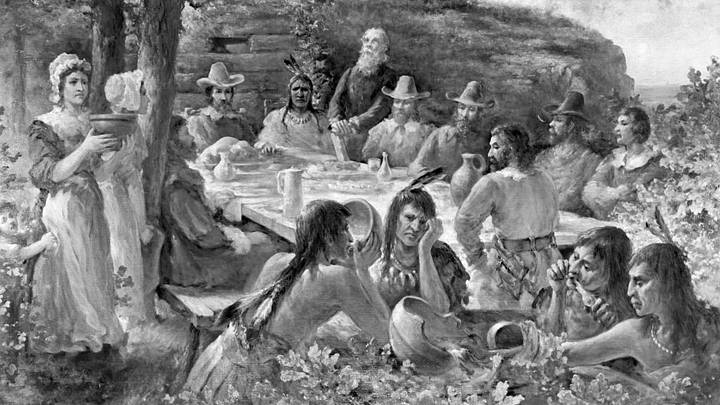
In the fall of 1621, members of the Wampanoag tribe and several English colonists gathered for a feast in Plymouth, then part of the Plymouth Colony in Massachusetts.
Neither Native Americans nor the Pilgrims could have predicted that this one-off meal, celebrating an abundant harvest and a brief alliance, would be printed in history books as the first Thanksgiving. Yet, the occasion was much more historically significant than a spread of food and a side of gratitude.
In 2026, Thanksgiving is a federal holiday: a time to reflect, give thanks, and gather with family over turkey, stuffing, pumpkin pie, and other holiday confections.
But what was the first Thanksgiving really like? And what did they eat?
The First Thanksgiving

According to the National Archives, the Pilgrims survived the Mayflower’s journey from England and "came ashore on Wampanoag land." The Wampanoag, having already had contact with Europeans before the Pilgrims arrived (contact that resulted in diseases and the enslavement of some tribe members like Squanto), spoke English by the time of the feast.
To give thanks for a bountiful harvest and their first peace treaty, signed earlier that year (despite hesitation from tribal leaders), both groups sat down for a meal together, made possible by the hunting and planting techniques the Wampanoag shared with the Pilgrims, which greatly alleviated food shortages.
According to historical records cited by Smithsonian Magazine, the feast lasted for three days.
"Many of the Indians coming amongst us, and among the rest their greatest king Massasoit, with some 90 men, whom for three days we entertained and feasted," English leader Edward Winslow wrote of the occasion.
Although the gathering itself was friendly, the alliance did not last. Just 54 years after the first Thanksgiving, the treaty dissolved, sparking King Philip's War (led by Massasoit's son), in which the English defeated the Native Americans. The battle resulted in mass casualties, and the Wampanoag lost their land and freedoms.
Both settlers and Native American tribes held feasts to commemorate significant events, but this Thanksgiving feast did not become an annual tradition. In fact, it all but faded from memory until Abraham Lincoln proclaimed it a national holiday during the Civil War in 1863.
The Menu

While the treaty and the feast weren’t enough to sustain civility and respect between the groups, the food provided moments of connection and respite, as shared meals do.
Today, our plates (and growling stomachs) are filled with turkey, stuffing, mashed potatoes, green bean casserole, cranberry sauce, dinner rolls, and, of course, pumpkin pie.
In 1621, however, the menu looked very different.
Winslow wrote: "Our governor sent four men on fowling, that so we might after a special manner rejoice together after we had gathered the fruit of our labors. They four in one day killed as much fowl as, with a little help beside, served the company almost a week."
Based on historical records, Plimoth Patuxet’s Kathleen Walls believes wild fowl (not turkey) was the main course, even though wild turkeys roamed the region. We also know (from Winslow's account) that Native Americans provided corn and venison.
Swans, pigeons, and waterfowl likely decorated the table during the three-day feast, along with geese and ducks. Other foods probably included cornbread, eels, lobsters, clams, mussels, and fish, thanks to Plymouth's proximity to the ocean, as well as farmed produce (beans, pumpkins, and squashes) and forest foods like nuts and berries.
After learning to plant crops from the Wampanoag, the settlers harvested turnips, carrots, and garlic, among other vegetables (which might’ve also been served at the first Thanksgiving).
The Preparation

According to Walls, the Pilgrims had no butter, flour, or sugar, so they did not bake fancy pies or pastries like their relatives in England. They didn't have potatoes, and they hadn’t learned to boil cranberries for sauce.
Instead, they stuffed birds with "chunks of onion and herbs" before spit-roasting or boiling them, depending on the bird’s size. Some birds were stuffed with shelled chestnuts. Then, the remains were "thrown in a pot and boiled up to make broth the next day," a recipe called "pottage,” and the fish was smoked.