%20%20--%3E%0A%3Csvg%20version%3D%221.1%22%20id%3D%22Layer_1%22%20xmlns%3D%22http%3A%2F%2Fwww.w3.org%2F2000%2Fsvg%22%20xmlns%3Axlink%3D%22http%3A%2F%2Fwww.w3.org%2F1999%2Fxlink%22%20x%3D%220px%22%20y%3D%220px%22%0A%09%20viewBox%3D%220%200%20684.6%2068.1%22%20style%3D%22enable-background%3Anew%200%200%20684.6%2068.1%3B%22%20xml%3Aspace%3D%22preserve%22%3E%0A%3Cg%3E%0A%09%3Cpath%20d%3D%22M444.1%2C29.3h-17.4v14.5h17.4V29.3z%20M36.4%2C68.1l29.3-50.8V0H50.4L32.9%2C36.8L15.5%2C0H0v68.1h16.7V45.8l12.4%2C22.3H36.4z%0A%09%09%20M49.1%2C68.1h16.6V23.4L49.1%2C52.1V68.1z%20M76.6%2C68.1h45V53.8H93.3V41.6h21V27.1h-21V14.8h28.3V0.1h-45V68.1z%20M175.6%2C68.1h17.3v-68%0A%09%09h-16.5v40.3L150%2C0.1h-17.6v68h16.7V27.7L175.6%2C68.1z%20M235.8%2C14.8h15.4V0.1h-47.4v14.7H219v53.2h16.8V14.8z%20M290.3%2C45.9h-17.1%0A%09%09l7.5-15.6h2L290.3%2C45.9z%20M298.7%2C68.1h18l-32.2-68h-5.7l-32%2C68h18l3.3-7.1h27.1L298.7%2C68.1z%20M325.2%2C68.1h46.2V53.8h-29.6V0.1h-16.7%0A%09%09V68.1z%20M423.7%2C14.8h27.2V0.1H407v68h16.7V14.8z%20M462%2C68.1h46.2V53.8h-29.6V0.1H462V68.1z%20M564.8%2C34.1c0%2C10.7-7.2%2C19.2-18.5%2C19.2%0A%09%09c-11.4%2C0-18.5-8.5-18.5-19.2s7.1-19.2%2C18.5-19.2C557.6%2C14.9%2C564.8%2C23.4%2C564.8%2C34.1%20M580.6%2C34.1c0-19-14.2-34-34.3-34%0A%09%09c-20.2%2C0-34.3%2C15-34.3%2C34c0%2C19%2C14.1%2C34%2C34.3%2C34C566.4%2C68.1%2C580.6%2C53.1%2C580.6%2C34.1%20M604.8%2C20.5c0-4.1%2C3.3-6.2%2C6.7-6.2%0A%09%09c4.4%2C0%2C6.6%2C3%2C6.6%2C6.6h14.7C631.8%2C9.1%2C625.1%2C0.1%2C611%2C0.1c-12%2C0-21.7%2C9.3-21.7%2C20.6c0%2C10.9%2C5.9%2C15.9%2C16.7%2C19.8%0A%09%09c5.2%2C1.8%2C11.5%2C3.2%2C11.5%2C8c0%2C3.3-2.4%2C5.5-6.4%2C5.5c-3.6%2C0-6.6-3-6.6-6.7h-15.2c0%2C11.5%2C7.9%2C20.8%2C21.8%2C20.8c12%2C0%2C21.6-9.3%2C21.6-20.6%0A%09%09c0-10-5.3-16.4-16.7-19.8C610.6%2C26.1%2C604.8%2C25.3%2C604.8%2C20.5%20M670%2C20.9h14.7C683.8%2C9.1%2C677.1%2C0.1%2C663%2C0.1c-12%2C0-21.7%2C9.3-21.7%2C20.6%0A%09%09c0%2C10.9%2C5.9%2C15.9%2C16.7%2C19.8c5.2%2C1.8%2C11.5%2C3.2%2C11.5%2C8c0%2C3.3-2.4%2C5.5-6.4%2C5.5c-3.6%2C0-6.6-3-6.6-6.7h-15.2c0%2C11.5%2C7.9%2C20.8%2C21.8%2C20.8%0A%09%09c12%2C0%2C21.6-9.3%2C21.6-20.6c0-10-5.3-16.4-16.7-19.8c-5.4-1.6-11.3-2.4-11.3-7.2c0-4.1%2C3.3-6.2%2C6.7-6.2C667.7%2C14.4%2C670%2C17.3%2C670%2C20.9%0A%09%09%22%2F%3E%0A%3C%2Fg%3E%0A%3C%2Fsvg%3E%0A)

Every country has its own unique local Christmas traditions—some of which can sometimes seem bizarre to people celebrating elsewhere.
Krampus, the Christmas demon, for instance, might seem horrifying outside of the Alpine countries where he is said to punish naughty children. In the UK, Christmas wouldn’t be Christmas without a family trip to see the local pantomime, or “panto”—a chaotic stage version of a well-known fairy tale, featuring songs and jokes performed by a cast of minor celebrities and a traditional “pantomime dame” (i.e. a man in drag).
And Christmas dinner looks a little different in Japan, where Kentucky Fried Chicken has become the order of the day for many people on December 25.
The History of Christmas Carp

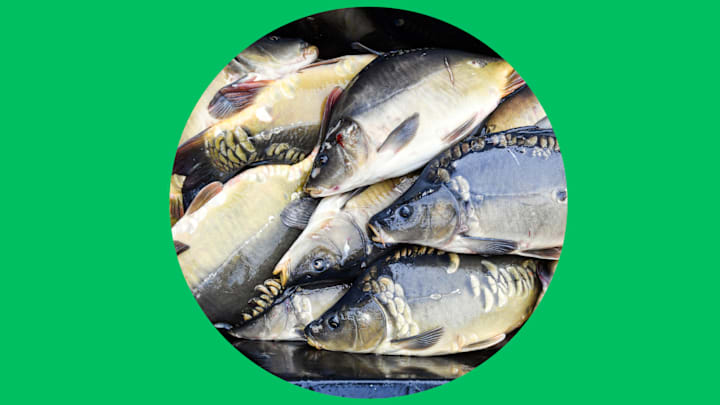
Over in Poland, as well as neighboring Czechia and Slovakia, meanwhile, the annual Christmas feast isn’t eaten on Christmas Day, but rather on Christmas Eve, or “Generous Day.” And here too, it’s not a roast turkey or goose that is the centerpiece of the traditional festive meal, but rather a freshwater carp—and, in particular, a carp that has been kept alive in the household bathtub for a day or two before preparing it for cooking. But why carp? And why keep it in the bath?
Well, for one thing, Poland is a predominantly Catholic country, and in the Catholic Church, the pre-Christmas Advent season has long been considered a period of abstinence and humility (much like Lent is at Eastertime). Although different factions of the church observe different rules dictating what is and is not permissible during the Advent fast, fish has emerged as a traditional meat-free dish to serve at a grand family feast on the evening of Christmas Eve, celebrating this long period of fasting coming to an end.
In Poland, this feast is known as the Wigilia supper, and begins with the sighting of the first evening star in the Christmas Eve sky. Traditionally, it is served on a table spread with hay under the tablecloth (as a reminder that Jesus was born in a stable), while in the spirit of hospitality, an empty chair is left at the table in case an unexpected guest drops by.
More Like This:
Add Mental Floss as a preferred news source!
The meal itself consists of twelve different courses, each said to represent one of the 12 Apostles; it is also considered good luck to try a little bit of every course of the meal, to ensure your luck holds out throughout all twelve months of the upcoming new year. And last and most important of all of these dozen Wigilia courses is a traditional dish of lightly sautéed or breaded carp.
Freshwater Fish Are Easy to Come by
Along with other freshwater fish, like pike and trout, carp have long been popular in Polish cuisine because more than three-quarters of the country is located far inland in continental Europe, away from Poland’s Baltic Sea coast. As a result, for many Polish people, fish are more readily obtained from inland ponds, lakes, and streams than from the sea, making freshwater fish a more obvious choice than their saltwater equivalents.
In an era long before domestic refrigeration, however, keeping a fish fresh long enough to last until Wigilia understandably posed something of a problem. The solution, however, was a simple one: keep the captured carp alive until the time comes to cook it. And for many Polish households, that meant keeping it in the bathtub, often for several days at a time.
Some Polish cooks will tell you that this practice also helps to clean out the fish, cleansing and flushing mud from its digestive tract. Others will tell you that, despite the historical associations (carp are known to have been eaten in Poland since the 13th century) this particular tradition is far from an ancient one, and instead emerged only in an impoverished postwar Poland, when sea fishing collapsed and the Polish government shifted instead to inexpensive carp farming, ensuring that “every Polish table shall have a carp.”
Whatever its purpose or its origins, however, keeping a live carp in the bath has emerged as just another part of the festive celebrations in Poland and its surrounding countries, with no signs of this festive favorite disappearing from the Wigilia table any time soon: a staggering 90% of all the carp purchased in Polish shops are bought in the two weeks before Christmas Eve.