%20%20--%3E%0A%3Csvg%20version%3D%221.1%22%20id%3D%22Layer_1%22%20xmlns%3D%22http%3A%2F%2Fwww.w3.org%2F2000%2Fsvg%22%20xmlns%3Axlink%3D%22http%3A%2F%2Fwww.w3.org%2F1999%2Fxlink%22%20x%3D%220px%22%20y%3D%220px%22%0A%09%20viewBox%3D%220%200%20684.6%2068.1%22%20style%3D%22enable-background%3Anew%200%200%20684.6%2068.1%3B%22%20xml%3Aspace%3D%22preserve%22%3E%0A%3Cg%3E%0A%09%3Cpath%20d%3D%22M444.1%2C29.3h-17.4v14.5h17.4V29.3z%20M36.4%2C68.1l29.3-50.8V0H50.4L32.9%2C36.8L15.5%2C0H0v68.1h16.7V45.8l12.4%2C22.3H36.4z%0A%09%09%20M49.1%2C68.1h16.6V23.4L49.1%2C52.1V68.1z%20M76.6%2C68.1h45V53.8H93.3V41.6h21V27.1h-21V14.8h28.3V0.1h-45V68.1z%20M175.6%2C68.1h17.3v-68%0A%09%09h-16.5v40.3L150%2C0.1h-17.6v68h16.7V27.7L175.6%2C68.1z%20M235.8%2C14.8h15.4V0.1h-47.4v14.7H219v53.2h16.8V14.8z%20M290.3%2C45.9h-17.1%0A%09%09l7.5-15.6h2L290.3%2C45.9z%20M298.7%2C68.1h18l-32.2-68h-5.7l-32%2C68h18l3.3-7.1h27.1L298.7%2C68.1z%20M325.2%2C68.1h46.2V53.8h-29.6V0.1h-16.7%0A%09%09V68.1z%20M423.7%2C14.8h27.2V0.1H407v68h16.7V14.8z%20M462%2C68.1h46.2V53.8h-29.6V0.1H462V68.1z%20M564.8%2C34.1c0%2C10.7-7.2%2C19.2-18.5%2C19.2%0A%09%09c-11.4%2C0-18.5-8.5-18.5-19.2s7.1-19.2%2C18.5-19.2C557.6%2C14.9%2C564.8%2C23.4%2C564.8%2C34.1%20M580.6%2C34.1c0-19-14.2-34-34.3-34%0A%09%09c-20.2%2C0-34.3%2C15-34.3%2C34c0%2C19%2C14.1%2C34%2C34.3%2C34C566.4%2C68.1%2C580.6%2C53.1%2C580.6%2C34.1%20M604.8%2C20.5c0-4.1%2C3.3-6.2%2C6.7-6.2%0A%09%09c4.4%2C0%2C6.6%2C3%2C6.6%2C6.6h14.7C631.8%2C9.1%2C625.1%2C0.1%2C611%2C0.1c-12%2C0-21.7%2C9.3-21.7%2C20.6c0%2C10.9%2C5.9%2C15.9%2C16.7%2C19.8%0A%09%09c5.2%2C1.8%2C11.5%2C3.2%2C11.5%2C8c0%2C3.3-2.4%2C5.5-6.4%2C5.5c-3.6%2C0-6.6-3-6.6-6.7h-15.2c0%2C11.5%2C7.9%2C20.8%2C21.8%2C20.8c12%2C0%2C21.6-9.3%2C21.6-20.6%0A%09%09c0-10-5.3-16.4-16.7-19.8C610.6%2C26.1%2C604.8%2C25.3%2C604.8%2C20.5%20M670%2C20.9h14.7C683.8%2C9.1%2C677.1%2C0.1%2C663%2C0.1c-12%2C0-21.7%2C9.3-21.7%2C20.6%0A%09%09c0%2C10.9%2C5.9%2C15.9%2C16.7%2C19.8c5.2%2C1.8%2C11.5%2C3.2%2C11.5%2C8c0%2C3.3-2.4%2C5.5-6.4%2C5.5c-3.6%2C0-6.6-3-6.6-6.7h-15.2c0%2C11.5%2C7.9%2C20.8%2C21.8%2C20.8%0A%09%09c12%2C0%2C21.6-9.3%2C21.6-20.6c0-10-5.3-16.4-16.7-19.8c-5.4-1.6-11.3-2.4-11.3-7.2c0-4.1%2C3.3-6.2%2C6.7-6.2C667.7%2C14.4%2C670%2C17.3%2C670%2C20.9%0A%09%09%22%2F%3E%0A%3C%2Fg%3E%0A%3C%2Fsvg%3E%0A)

New Year’s Eve is a time for celebration, and many take this holiday as an opportunity to indulge—sometimes, that includes lawbreaking. When everyone’s distracted, that’s when the careful criminal may make their move, either because they have a good eye for opportunities or because they’re truly evil.
Here are five examples of just that.
- The Manhattan Jewelry Heist
- The Union Hit
- The Amazon Cash Grab
- The New Orleans Spree
- The Bomb Gone Wrong
The Manhattan Jewelry Heist
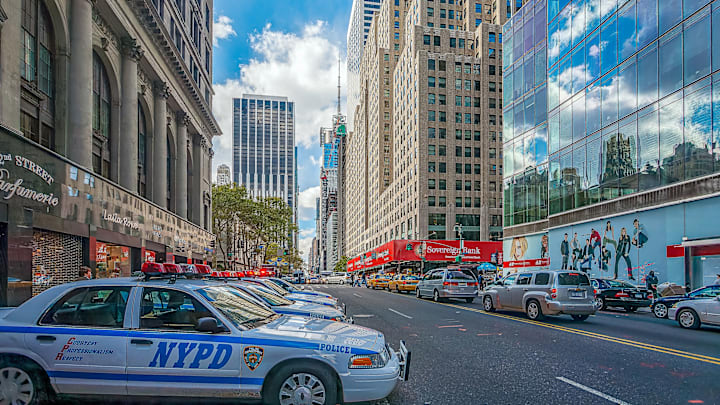
We would not recommend attempting any kind of stealthy crime in Times Square on New Year’s Eve. You’ll be surrounded by tens of thousands of people carrying cameras (a million people, by some estimates). Plus, you’ll run into a fair number of police officers. On New Year’s Eve 2016, for example, nearly 7,000 cops were stationed at Times Square.
However, those officers have no ability or desire to monitor the area a few blocks away. So, in 2016, a team of thieves took the opportunity to break into a nearby jewelry wholesaler, Gregg Ruth, stealing $6 million of pink and yellow diamonds. They managed to get away just fine, despite the building’s security cameras clearly capturing their faces.
Two years passed without authorities catching those responsible. Then police arrested Bronx man Damir Pejcinovic, not because they traced him to this one break-in but because they found he was the man behind a whole series of jewel heists spanning a decade.
In 2021, they sentenced him to eight years in prison. That’s not such a harsh punishment, considering they linked him to 16 different thefts, in multiple countries, involving jewels worth over $24 million.
The Union Hit
Three gunmen broke into a Pennsylvania home on New Year’s Eve 1969 and killed an entire family of three. This was not a burglary. This was an assassination, performed on Joseph Yablonski, a labor leader working for a coal mining union. Someone had hired the men to kill Yablonski, and the decision to also kill the target’s wife and daughter revealed the hit men to be not just vile but also incompetent.
Yablonski had been using his position in the United Mine Workers union to advocate for miners, so you might guess that this hit had been ordered by someone high up at the mine. You’d be partly right in that. But you still might not have guessed that this higher-up was the president of the union, Tony Boyle. Yablonski had run against Boyle for the role of president in the recent union election, and Boyle killed his rival to maintain his power.
Boyle had waited till after the election (which he won) to order Yablonski killed. As a maneuver to avoid suspicion, this had limited success. For starters, after the election, Yablonski accused him of winning through fraud and pushed for an investigation, so Boyle’s motive for killing him remained as clear as ever. Also, Boyle embezzled union funds to hire these hit men, and an investigation into that embezzlement led authorities to link him to the murders.
Boyle ended up dying in prison. A year after that, Wilford Brimley played him in a TV movie about Yablonski’s death called Act of Vengeance.
The Amazon Cash Grab
Former workers at an Amazon warehouse near New Delhi knew two reasons that one night two years ago might be a good time to rob the place. First, it was New Year’s Eve (or technically New Year’s Day, as they hit the place a few hours after midnight). Second, 2:00 AM was when guards took breaks for snacks.
The burglars knew this, as they used to be guards at the site themselves. Still, they brought guns with them and ended up using them to order the current guards around. The trio managed to get away with a safe full of cash.
This was another group of thieves who got taped by security cameras, and police easily caught them. Still, there’s an important lesson here. Apparently, Amazon warehouses have safes full of cash, rather than just handling all payments electronically, which is something we’d never have expected.
The New Orleans Spree
On December 31, 1972, New Orleans man Mark Essex wanted to kill some people. He did not have specific targets in mind, but he decided they must be white, as retaliation against unrelated white people he’d known during his time in the Navy.
He shot one 19-year-old police officer, and though another officer witnessed this, Essex managed to get away by throwing down firecrackers to cover his trail. He broke into a building, perhaps in search of his next target, and this set off an alarm that attracted two more officers. Essex shot one of them, creating a wound that would ultimately kill the guy a few months later.
Though the other managed to shoot Essex in response, and though dozens of additional officers now arrived in response to calls for backup, Essex managed to successfully flee this scene as well.
Police launched a manhunt in the neighborhood. Their aggressive measures, which involved kicking doors in, soon had residents responding by firing guns of their own—not at the officers but at streetlights to scare police away. The officers now took the extraordinary step of calling the area manhunt off, within a day of Essex’s attack.
The police did find Essex eventually and killed him in a standoff. This happened because Essex reemerged a week after his first attack and killed seven more people.
The Bomb Gone Wrong
In the 2010s, Russia suffered a series of attacks carried out by the terrorist group known as the Caucasus Emirate. Often, the group used suicide bombers, and often, these bombers were women. In March 2010, bombers at two metro stations killed 38 people, and in January 2011, a bomber killed 37 people at an airport near Moscow.
The Caucasus Emirate had its biggest attack of all planned for December 31, 2010. The target was Moscow’s Red Square, where some 120,000 people would gather. The crowd would be packed together as tightly as the revelers in New York’s Times Square, so a large blast would easily hit scores of victims. The bomber would wear an explosive belt, and her handler (whom sources identified as Zeinat Suyunova) would trigger the explosive by calling the bomber’s phone, which was connected to a detonator.
The bomber never made it to Red Square. The explosives went off prematurely, killing only her, while she was in a safe house with two other members of her team.
Usually, there is little chance of the phones in these operations setting off detonators early. These are “burner phones,” never once used before the day in question, and no one has their number other than the handler. But when authorities poked through the wreckage and pieced together what had happened, they discovered the message that set the phone off had been a text from the phone company.
It had been an automated text wishing the customer Happy New Year.
You May Also Like:
Add Mental Floss as a preferred news source!