%20%20--%3E%0A%3Csvg%20version%3D%221.1%22%20id%3D%22Layer_1%22%20xmlns%3D%22http%3A%2F%2Fwww.w3.org%2F2000%2Fsvg%22%20xmlns%3Axlink%3D%22http%3A%2F%2Fwww.w3.org%2F1999%2Fxlink%22%20x%3D%220px%22%20y%3D%220px%22%0A%09%20viewBox%3D%220%200%20684.6%2068.1%22%20style%3D%22enable-background%3Anew%200%200%20684.6%2068.1%3B%22%20xml%3Aspace%3D%22preserve%22%3E%0A%3Cg%3E%0A%09%3Cpath%20d%3D%22M444.1%2C29.3h-17.4v14.5h17.4V29.3z%20M36.4%2C68.1l29.3-50.8V0H50.4L32.9%2C36.8L15.5%2C0H0v68.1h16.7V45.8l12.4%2C22.3H36.4z%0A%09%09%20M49.1%2C68.1h16.6V23.4L49.1%2C52.1V68.1z%20M76.6%2C68.1h45V53.8H93.3V41.6h21V27.1h-21V14.8h28.3V0.1h-45V68.1z%20M175.6%2C68.1h17.3v-68%0A%09%09h-16.5v40.3L150%2C0.1h-17.6v68h16.7V27.7L175.6%2C68.1z%20M235.8%2C14.8h15.4V0.1h-47.4v14.7H219v53.2h16.8V14.8z%20M290.3%2C45.9h-17.1%0A%09%09l7.5-15.6h2L290.3%2C45.9z%20M298.7%2C68.1h18l-32.2-68h-5.7l-32%2C68h18l3.3-7.1h27.1L298.7%2C68.1z%20M325.2%2C68.1h46.2V53.8h-29.6V0.1h-16.7%0A%09%09V68.1z%20M423.7%2C14.8h27.2V0.1H407v68h16.7V14.8z%20M462%2C68.1h46.2V53.8h-29.6V0.1H462V68.1z%20M564.8%2C34.1c0%2C10.7-7.2%2C19.2-18.5%2C19.2%0A%09%09c-11.4%2C0-18.5-8.5-18.5-19.2s7.1-19.2%2C18.5-19.2C557.6%2C14.9%2C564.8%2C23.4%2C564.8%2C34.1%20M580.6%2C34.1c0-19-14.2-34-34.3-34%0A%09%09c-20.2%2C0-34.3%2C15-34.3%2C34c0%2C19%2C14.1%2C34%2C34.3%2C34C566.4%2C68.1%2C580.6%2C53.1%2C580.6%2C34.1%20M604.8%2C20.5c0-4.1%2C3.3-6.2%2C6.7-6.2%0A%09%09c4.4%2C0%2C6.6%2C3%2C6.6%2C6.6h14.7C631.8%2C9.1%2C625.1%2C0.1%2C611%2C0.1c-12%2C0-21.7%2C9.3-21.7%2C20.6c0%2C10.9%2C5.9%2C15.9%2C16.7%2C19.8%0A%09%09c5.2%2C1.8%2C11.5%2C3.2%2C11.5%2C8c0%2C3.3-2.4%2C5.5-6.4%2C5.5c-3.6%2C0-6.6-3-6.6-6.7h-15.2c0%2C11.5%2C7.9%2C20.8%2C21.8%2C20.8c12%2C0%2C21.6-9.3%2C21.6-20.6%0A%09%09c0-10-5.3-16.4-16.7-19.8C610.6%2C26.1%2C604.8%2C25.3%2C604.8%2C20.5%20M670%2C20.9h14.7C683.8%2C9.1%2C677.1%2C0.1%2C663%2C0.1c-12%2C0-21.7%2C9.3-21.7%2C20.6%0A%09%09c0%2C10.9%2C5.9%2C15.9%2C16.7%2C19.8c5.2%2C1.8%2C11.5%2C3.2%2C11.5%2C8c0%2C3.3-2.4%2C5.5-6.4%2C5.5c-3.6%2C0-6.6-3-6.6-6.7h-15.2c0%2C11.5%2C7.9%2C20.8%2C21.8%2C20.8%0A%09%09c12%2C0%2C21.6-9.3%2C21.6-20.6c0-10-5.3-16.4-16.7-19.8c-5.4-1.6-11.3-2.4-11.3-7.2c0-4.1%2C3.3-6.2%2C6.7-6.2C667.7%2C14.4%2C670%2C17.3%2C670%2C20.9%0A%09%09%22%2F%3E%0A%3C%2Fg%3E%0A%3C%2Fsvg%3E%0A)

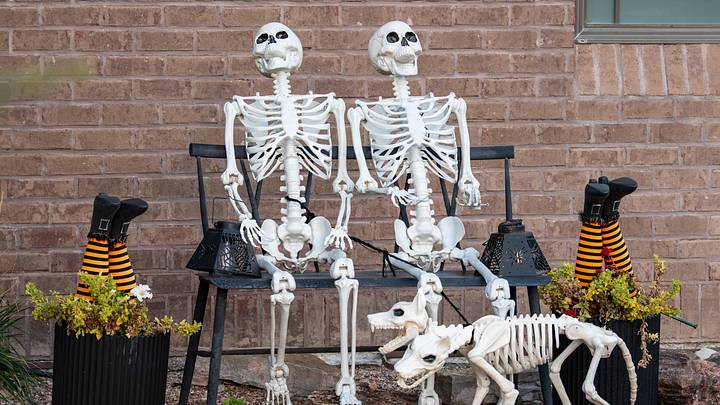
Nowadays, most people associate Halloween with pop-up decorations, pop-culture costumes, and an abundance of candy. But this holiday’s Celtic ancestor was a time of deep reverence and real fear, as many people believed spirits swarmed the earth during this liminal period.
Many of the Halloween staples we know and love today are widely believed to have roots in Celtic traditions—including the practice of putting up spooky decorations. This trend dates back to the ancient practice of carving faces into gourds and squash and displaying them outside homes to keep errant spirits out.
A brief history of Halloween

Most historians trace Halloween’s roots back to the Celtic holiday of Samhain. This festival was one of four major Gaelic holidays, along with Imbolc, Beltane, and Lughnasadh. It was celebrated across present-day Ireland, England, Wales, the Isle of Man, and northern France some 2,000 to 3,000 years ago.
Samhain marked the transition from autumn to winter, and was often honored by sacred communal bonfires lit by Druid priests. Some ancient texts refer to the holiday as a three-day festival during which townspeople were required to appear before their local chieftains.
It was also widely seen as a time when the veil between the world of the living and the dead became thin, allowing ancestors, spirits, monsters, and faeries to cross over and walk among the living. This belief led to the development of many traditions designed to honor the dead and to protect mortals.
In the fifth century CE, as Christianity was in the process of stamping out paganism across Europe, Pope Boniface attempted to turn Samhain into a festival that took place in May and honored saints. Still, autumnal fire celebrations continued to occur. In the eighth century, Pope Gregory III moved the Roman festival of All Saints’ Day to November 1. Later, October 31 became known as All Hallows Eve, and many continued to practice their pagan traditions on that night. Many Irish and Scottish immigrants carried Samhain traditions with them to America in the 19th century, leading to the development of modern-day Halloween.
The roots and surprisingly recent rise of Halloween decorations

The earliest ancestors of our modern Halloween decorations were turnips, gourds, and squash with carved faces, and these were intended to ward off evil spirits during Samhain. In the Middle Ages, turnips were the most popular choice for this task. These were often filled with burning coals and hung from sticks, and were known as jack-o’-lanterns. When immigrants brought these traditions to America, they found pumpkins more common than turnips, so pumpkins became the preferred choice for Halloween carving efforts.
Elaborate, large-scale Halloween decorations as we know them actually didn’t become common until the 1920s and ‘30s. In the decades prior, Americans largely celebrated Halloween with parties and fortune-telling games. In the 1920s, Scottish and Irish immigrants in the U.S. began reviving Old World Halloween traditions of dressing up, visiting homes, and asking for food in exchange for prayers, songs, or other offerings. These visits often became rowdy and prank-heavy, and because of this, communities began setting up organized trick-or-treating systems.
As trick-or-treating for candy became more common in the 1920s, so did Halloween decorations designed to please and entertain young visitors. Their popularity dipped during World War II but exploded as the postwar economy boomed. At this time, decorations were often less scary and more kid-friendly overall, which popularized decorating and helped Halloween become the massive industry that it is today. Many common decorations pay tribute to much older traditions, from ghosts that honor Halloween’s ancient connection to spirits to witches, ghouls, and other creatures from ancient folklore.
Today, people put up Halloween decorations for many reasons. They can offer nostalgic fun, as well as the chance to experience the thrill of a scare without any real danger. They can also connect communities, and sometimes serve as ways to show off wealth and creativity. Decorating for Halloween has also been shown to have some mental health benefits related to the joy it can bring and the benefits of social engagement.
And—if you believe in the old stories—those glowing, singing ghouls and ghosts in front of your home might just also be warding off roving spirits along the way.