%20%20--%3E%0A%3Csvg%20version%3D%221.1%22%20id%3D%22Layer_1%22%20xmlns%3D%22http%3A%2F%2Fwww.w3.org%2F2000%2Fsvg%22%20xmlns%3Axlink%3D%22http%3A%2F%2Fwww.w3.org%2F1999%2Fxlink%22%20x%3D%220px%22%20y%3D%220px%22%0A%09%20viewBox%3D%220%200%20684.6%2068.1%22%20style%3D%22enable-background%3Anew%200%200%20684.6%2068.1%3B%22%20xml%3Aspace%3D%22preserve%22%3E%0A%3Cg%3E%0A%09%3Cpath%20d%3D%22M444.1%2C29.3h-17.4v14.5h17.4V29.3z%20M36.4%2C68.1l29.3-50.8V0H50.4L32.9%2C36.8L15.5%2C0H0v68.1h16.7V45.8l12.4%2C22.3H36.4z%0A%09%09%20M49.1%2C68.1h16.6V23.4L49.1%2C52.1V68.1z%20M76.6%2C68.1h45V53.8H93.3V41.6h21V27.1h-21V14.8h28.3V0.1h-45V68.1z%20M175.6%2C68.1h17.3v-68%0A%09%09h-16.5v40.3L150%2C0.1h-17.6v68h16.7V27.7L175.6%2C68.1z%20M235.8%2C14.8h15.4V0.1h-47.4v14.7H219v53.2h16.8V14.8z%20M290.3%2C45.9h-17.1%0A%09%09l7.5-15.6h2L290.3%2C45.9z%20M298.7%2C68.1h18l-32.2-68h-5.7l-32%2C68h18l3.3-7.1h27.1L298.7%2C68.1z%20M325.2%2C68.1h46.2V53.8h-29.6V0.1h-16.7%0A%09%09V68.1z%20M423.7%2C14.8h27.2V0.1H407v68h16.7V14.8z%20M462%2C68.1h46.2V53.8h-29.6V0.1H462V68.1z%20M564.8%2C34.1c0%2C10.7-7.2%2C19.2-18.5%2C19.2%0A%09%09c-11.4%2C0-18.5-8.5-18.5-19.2s7.1-19.2%2C18.5-19.2C557.6%2C14.9%2C564.8%2C23.4%2C564.8%2C34.1%20M580.6%2C34.1c0-19-14.2-34-34.3-34%0A%09%09c-20.2%2C0-34.3%2C15-34.3%2C34c0%2C19%2C14.1%2C34%2C34.3%2C34C566.4%2C68.1%2C580.6%2C53.1%2C580.6%2C34.1%20M604.8%2C20.5c0-4.1%2C3.3-6.2%2C6.7-6.2%0A%09%09c4.4%2C0%2C6.6%2C3%2C6.6%2C6.6h14.7C631.8%2C9.1%2C625.1%2C0.1%2C611%2C0.1c-12%2C0-21.7%2C9.3-21.7%2C20.6c0%2C10.9%2C5.9%2C15.9%2C16.7%2C19.8%0A%09%09c5.2%2C1.8%2C11.5%2C3.2%2C11.5%2C8c0%2C3.3-2.4%2C5.5-6.4%2C5.5c-3.6%2C0-6.6-3-6.6-6.7h-15.2c0%2C11.5%2C7.9%2C20.8%2C21.8%2C20.8c12%2C0%2C21.6-9.3%2C21.6-20.6%0A%09%09c0-10-5.3-16.4-16.7-19.8C610.6%2C26.1%2C604.8%2C25.3%2C604.8%2C20.5%20M670%2C20.9h14.7C683.8%2C9.1%2C677.1%2C0.1%2C663%2C0.1c-12%2C0-21.7%2C9.3-21.7%2C20.6%0A%09%09c0%2C10.9%2C5.9%2C15.9%2C16.7%2C19.8c5.2%2C1.8%2C11.5%2C3.2%2C11.5%2C8c0%2C3.3-2.4%2C5.5-6.4%2C5.5c-3.6%2C0-6.6-3-6.6-6.7h-15.2c0%2C11.5%2C7.9%2C20.8%2C21.8%2C20.8%0A%09%09c12%2C0%2C21.6-9.3%2C21.6-20.6c0-10-5.3-16.4-16.7-19.8c-5.4-1.6-11.3-2.4-11.3-7.2c0-4.1%2C3.3-6.2%2C6.7-6.2C667.7%2C14.4%2C670%2C17.3%2C670%2C20.9%0A%09%09%22%2F%3E%0A%3C%2Fg%3E%0A%3C%2Fsvg%3E%0A)

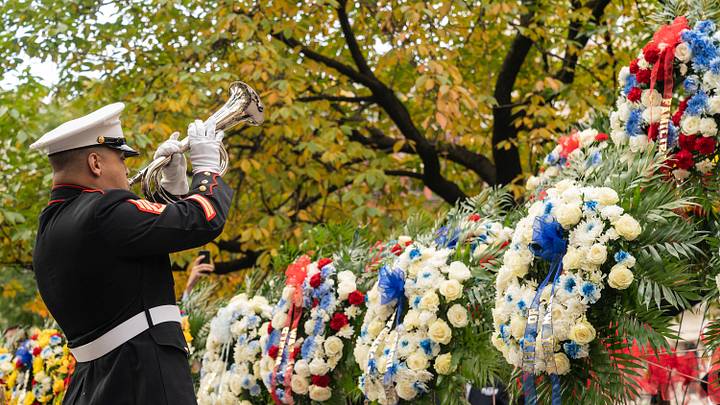
November 11 is Veterans Day, the national holiday commemorating those who have served in the military. It is often confused with Memorial Day, which honors those troops who were killed or died from injuries caused by the wars they fought in, but Veterans Day is more about showing gratitude to the living troops who served. But the holiday didn't originally include veterans of all wars.
To celebrate the end of World War I, the U.S. implemented a new holiday called Armistice Day. It wouldn't become Veterans Day for a couple of decades, after more wars had taken place and more soldiers were coming home needing support. It became important not just to commemorate those who fought to end one war, but those who fought in other wars and those who served outside of wartime, working to maintain peace.

World War I Armistice
On November 11, 1918, World War I effectively came to an end as the Allies and the Germans agreed to an armistice. The word armistice comes from the Latin "arma," meaning weapons, and "sistere," meaning to halt or bring to a standstill. So, while World War I is officially recorded as ending in June 1919 with the Treaty of Versailles, the actual combat ceased in the previous November.
Armistice Day was first celebrated in November 1919, just months after the Treaty of Versailles. In 1926, Congress passed a resolution to officially name November 11 Armistice Day, and in 1938 it was made a national holiday. Britain also made November 11 a holiday, opting to name theirs "Remembrance Day," to honor soldiers of all wars, not just World War I. America didn't know it yet, but our country would adopt that same idea after participating in other major wars.

Honoring All Veterans
After World War II (1939-1945) and the Korean War (1950-1953), the United States wanted to honor the soldiers who fought in these wars as well as World War I. In 1954, instead of creating separate holidays for each war, Congress voted to strike the word "Armistice" from the official legislation and replace it with "Veterans." President Dwight D. Eisenhower signed the resolution, legally changing the name to Veterans Day.
Since then, the U.S. has fought several more wars, including the current Iran War. Each November 11, any man or woman who served in the United States military, in wartime or peacetime, is to be honored for their hard work and dedication to our country. This does not include active-duty members, and many of them will ask that you not give them special attention that should go to those who previously served. You can thank active-duty members on Armed Forces Day, the third Saturday in May, or any other day of the year.

How to Honor and Support Veterans Now
As culture and politics have evolved in the U.S., veterans began to be treated terribly. The Vietnam War, which had many critics, saw soldiers returning home to be mocked, harassed, and threatened. The following wars also saw a lack of respect for those who fought to protect the country. Leaders and governments that should have taken accountability for wartime errors have often been quiet as veterans became scapegoats.
Thanking veterans for their service on Veterans Day is a good start, since there are troops who come home and never receive gratitude. But it's not the only thing we can do to support these men and women. Donating to organizations like the Wounded Warrior Project, DAV, or the Gary Sinise Foundation helps veterans get medical care, housing, and other needs met. Honoring those who served is best done by taking care of them when it's time for them to rest.