%20%20--%3E%0A%3Csvg%20version%3D%221.1%22%20id%3D%22Layer_1%22%20xmlns%3D%22http%3A%2F%2Fwww.w3.org%2F2000%2Fsvg%22%20xmlns%3Axlink%3D%22http%3A%2F%2Fwww.w3.org%2F1999%2Fxlink%22%20x%3D%220px%22%20y%3D%220px%22%0A%09%20viewBox%3D%220%200%20684.6%2068.1%22%20style%3D%22enable-background%3Anew%200%200%20684.6%2068.1%3B%22%20xml%3Aspace%3D%22preserve%22%3E%0A%3Cg%3E%0A%09%3Cpath%20d%3D%22M444.1%2C29.3h-17.4v14.5h17.4V29.3z%20M36.4%2C68.1l29.3-50.8V0H50.4L32.9%2C36.8L15.5%2C0H0v68.1h16.7V45.8l12.4%2C22.3H36.4z%0A%09%09%20M49.1%2C68.1h16.6V23.4L49.1%2C52.1V68.1z%20M76.6%2C68.1h45V53.8H93.3V41.6h21V27.1h-21V14.8h28.3V0.1h-45V68.1z%20M175.6%2C68.1h17.3v-68%0A%09%09h-16.5v40.3L150%2C0.1h-17.6v68h16.7V27.7L175.6%2C68.1z%20M235.8%2C14.8h15.4V0.1h-47.4v14.7H219v53.2h16.8V14.8z%20M290.3%2C45.9h-17.1%0A%09%09l7.5-15.6h2L290.3%2C45.9z%20M298.7%2C68.1h18l-32.2-68h-5.7l-32%2C68h18l3.3-7.1h27.1L298.7%2C68.1z%20M325.2%2C68.1h46.2V53.8h-29.6V0.1h-16.7%0A%09%09V68.1z%20M423.7%2C14.8h27.2V0.1H407v68h16.7V14.8z%20M462%2C68.1h46.2V53.8h-29.6V0.1H462V68.1z%20M564.8%2C34.1c0%2C10.7-7.2%2C19.2-18.5%2C19.2%0A%09%09c-11.4%2C0-18.5-8.5-18.5-19.2s7.1-19.2%2C18.5-19.2C557.6%2C14.9%2C564.8%2C23.4%2C564.8%2C34.1%20M580.6%2C34.1c0-19-14.2-34-34.3-34%0A%09%09c-20.2%2C0-34.3%2C15-34.3%2C34c0%2C19%2C14.1%2C34%2C34.3%2C34C566.4%2C68.1%2C580.6%2C53.1%2C580.6%2C34.1%20M604.8%2C20.5c0-4.1%2C3.3-6.2%2C6.7-6.2%0A%09%09c4.4%2C0%2C6.6%2C3%2C6.6%2C6.6h14.7C631.8%2C9.1%2C625.1%2C0.1%2C611%2C0.1c-12%2C0-21.7%2C9.3-21.7%2C20.6c0%2C10.9%2C5.9%2C15.9%2C16.7%2C19.8%0A%09%09c5.2%2C1.8%2C11.5%2C3.2%2C11.5%2C8c0%2C3.3-2.4%2C5.5-6.4%2C5.5c-3.6%2C0-6.6-3-6.6-6.7h-15.2c0%2C11.5%2C7.9%2C20.8%2C21.8%2C20.8c12%2C0%2C21.6-9.3%2C21.6-20.6%0A%09%09c0-10-5.3-16.4-16.7-19.8C610.6%2C26.1%2C604.8%2C25.3%2C604.8%2C20.5%20M670%2C20.9h14.7C683.8%2C9.1%2C677.1%2C0.1%2C663%2C0.1c-12%2C0-21.7%2C9.3-21.7%2C20.6%0A%09%09c0%2C10.9%2C5.9%2C15.9%2C16.7%2C19.8c5.2%2C1.8%2C11.5%2C3.2%2C11.5%2C8c0%2C3.3-2.4%2C5.5-6.4%2C5.5c-3.6%2C0-6.6-3-6.6-6.7h-15.2c0%2C11.5%2C7.9%2C20.8%2C21.8%2C20.8%0A%09%09c12%2C0%2C21.6-9.3%2C21.6-20.6c0-10-5.3-16.4-16.7-19.8c-5.4-1.6-11.3-2.4-11.3-7.2c0-4.1%2C3.3-6.2%2C6.7-6.2C667.7%2C14.4%2C670%2C17.3%2C670%2C20.9%0A%09%09%22%2F%3E%0A%3C%2Fg%3E%0A%3C%2Fsvg%3E%0A)

Language is changing all the time, and in the internet age, that pace of change has only accelerated. But it’s not just our language that’s moving faster. By shifting a great deal of our daily communication online, we’re all guilty of wanting to get our feelings, reactions, and expressions across to other people as quickly as possible—and for that, we’ve started chopping down our language into an array of snappy, time-saving abbreviations and acronyms.
LOL. LMAO. IMHO. TBQHWY. These days, shortenings like these have become such easy and natural ways of communicating that some of them are even coming full circle and slipping into our spoken vocabularies, too. But for all these familiar, everyday initialisms, there are a host of others that are perhaps not quite as well known. Here’s a quick acronym-by-acronym guide to some of the internet’s commonest shortcuts.
AFAIC and AFAIK

These two might look similar, but they don’t quite imply the same thing. AFAIK shows the limits of your knowledge and experience, and stands for “as far as I know.” AFAIC, meanwhile, shows the limits of your patience or your interest; it stands for “as far as I’m concerned.”
DKDC

Like the even more nonchalant, and even less concerned cousin of AFAIC, DKDC stands for “don’t know, don’t care.”
FAFO

This R-rated acronym was one of the most searched-for text abbreviations of 2025. Used to imply that actions have consequences, it stands for “f**k around, find out.” The acronym’s use online was popularized in 2022 by TikTok user @rogerskaer, who gave a neat explanation of how FAFO-ing might occur.
FWIW

Use this one whenever you need to share a personal opinion or something you worry might be subjective. FWIF stands for “for what it’s worth.”
GOAT

Although it’s now far better known than it used to be, if you’re still not familiar with this one, you’re in good company—none other than Meryl Streep was confused as to why people kept calling her a “goat.” It is, of course, meant as a compliment (when it’s an online abbreviation, at least), as GOAT stands for “greatest of all time.”
HMU

Use this one if you’re inviting someone to get in contact: it’s short for “hit me up.”
ICYMI

Often used by brands to recirculate special offers or trending material, or as a means of re-boosting viral posts to boost online traffic, ICYMI stands for “in case you missed it.” This one was popular enough to be added to the Merriam-Webster Dictionary in an update back in 2022.
IIRC

Used to imply that you think you have your facts straight, but your memory might be unsound, IIRC stands for “if I remember correctly,” or “if I recall correctly.”
IKR

You might catch this one being used online as a reply to someone expressing their shared opinion (and often, shared shock or disapproval) of something. IKR stands for “I know, right?”
ISTG

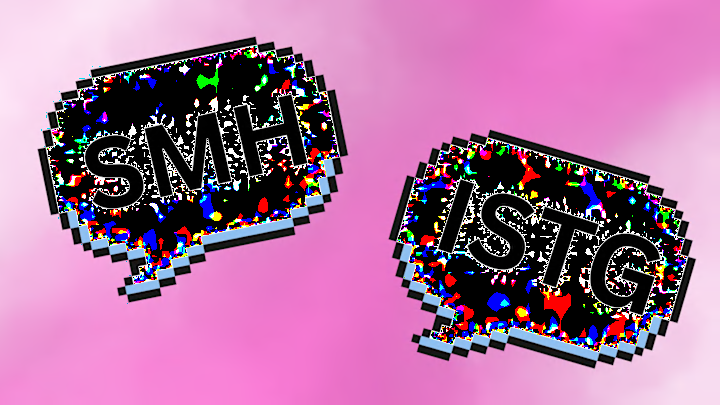
A shorthand means of variously expressing seriousness, determination, trepidation, or surprise, ISTG stands for “I swear to God.”
JK

Often paired with a tension-reducing “lol,” JK stands for “just kidding.”
NBD

Like an online version of a spoken “meh,” NBD stands for “no big deal.”
NGL

“I wasn’t too pleased, ngl.” In contexts like this one, NGL is a useful texter’s tag meaning “not gonna lie.”
OOMF

Something that you might see on social media is OOMF—a social media account holder’s shorthand for “one of my followers,” or “one of my friends” (often with the implication that that “friend” is someone online.) First used in the early 2010s, OOMF is often (but not always) used in flirty, knowing, or in-joke contexts, or in a passive-aggressive manner of calling someone out without naming them.
OOTD

People sharing their “outfit of the day” or OOTD online has become such a widespread online trend in the 2020s that even the hallowed fashion mag Vogue has begun to pay the trend attention.
SMH

This one has been around for a while, with even Merriam-Webster getting in on the act here and tracing the use of SMH—standing for “shaking,” or “scratching my head”—back to the chatrooms of the 1990s. It’s used, according to Merriam-Webster, “to impart a sense of bemused incredulity, or of frustration or disapproval.”
Should you want to impart an even greater sense of incredulity, though, there’s also the alternative: SMDH, or “shaking my damn head.”
SYBAU

When “shut up” just doesn’t quite cut it, you need SYBAU. Used in especially heated or vehement contexts, it’s an acronym of “shut your b***h a*s up.”
TFW

Often used alongside #relatable memes or content, TFW stands for “that feeling when.” It’s akin to another similar acronym, MFW, which is meant to imply “my face when” something suitably relatable happens.
TTYL

A simple signoff that’s been with us since the early days of the internet, TTYL stands for “talk to you later.”