%20%20--%3E%0A%3Csvg%20version%3D%221.1%22%20id%3D%22Layer_1%22%20xmlns%3D%22http%3A%2F%2Fwww.w3.org%2F2000%2Fsvg%22%20xmlns%3Axlink%3D%22http%3A%2F%2Fwww.w3.org%2F1999%2Fxlink%22%20x%3D%220px%22%20y%3D%220px%22%0A%09%20viewBox%3D%220%200%20684.6%2068.1%22%20style%3D%22enable-background%3Anew%200%200%20684.6%2068.1%3B%22%20xml%3Aspace%3D%22preserve%22%3E%0A%3Cg%3E%0A%09%3Cpath%20d%3D%22M444.1%2C29.3h-17.4v14.5h17.4V29.3z%20M36.4%2C68.1l29.3-50.8V0H50.4L32.9%2C36.8L15.5%2C0H0v68.1h16.7V45.8l12.4%2C22.3H36.4z%0A%09%09%20M49.1%2C68.1h16.6V23.4L49.1%2C52.1V68.1z%20M76.6%2C68.1h45V53.8H93.3V41.6h21V27.1h-21V14.8h28.3V0.1h-45V68.1z%20M175.6%2C68.1h17.3v-68%0A%09%09h-16.5v40.3L150%2C0.1h-17.6v68h16.7V27.7L175.6%2C68.1z%20M235.8%2C14.8h15.4V0.1h-47.4v14.7H219v53.2h16.8V14.8z%20M290.3%2C45.9h-17.1%0A%09%09l7.5-15.6h2L290.3%2C45.9z%20M298.7%2C68.1h18l-32.2-68h-5.7l-32%2C68h18l3.3-7.1h27.1L298.7%2C68.1z%20M325.2%2C68.1h46.2V53.8h-29.6V0.1h-16.7%0A%09%09V68.1z%20M423.7%2C14.8h27.2V0.1H407v68h16.7V14.8z%20M462%2C68.1h46.2V53.8h-29.6V0.1H462V68.1z%20M564.8%2C34.1c0%2C10.7-7.2%2C19.2-18.5%2C19.2%0A%09%09c-11.4%2C0-18.5-8.5-18.5-19.2s7.1-19.2%2C18.5-19.2C557.6%2C14.9%2C564.8%2C23.4%2C564.8%2C34.1%20M580.6%2C34.1c0-19-14.2-34-34.3-34%0A%09%09c-20.2%2C0-34.3%2C15-34.3%2C34c0%2C19%2C14.1%2C34%2C34.3%2C34C566.4%2C68.1%2C580.6%2C53.1%2C580.6%2C34.1%20M604.8%2C20.5c0-4.1%2C3.3-6.2%2C6.7-6.2%0A%09%09c4.4%2C0%2C6.6%2C3%2C6.6%2C6.6h14.7C631.8%2C9.1%2C625.1%2C0.1%2C611%2C0.1c-12%2C0-21.7%2C9.3-21.7%2C20.6c0%2C10.9%2C5.9%2C15.9%2C16.7%2C19.8%0A%09%09c5.2%2C1.8%2C11.5%2C3.2%2C11.5%2C8c0%2C3.3-2.4%2C5.5-6.4%2C5.5c-3.6%2C0-6.6-3-6.6-6.7h-15.2c0%2C11.5%2C7.9%2C20.8%2C21.8%2C20.8c12%2C0%2C21.6-9.3%2C21.6-20.6%0A%09%09c0-10-5.3-16.4-16.7-19.8C610.6%2C26.1%2C604.8%2C25.3%2C604.8%2C20.5%20M670%2C20.9h14.7C683.8%2C9.1%2C677.1%2C0.1%2C663%2C0.1c-12%2C0-21.7%2C9.3-21.7%2C20.6%0A%09%09c0%2C10.9%2C5.9%2C15.9%2C16.7%2C19.8c5.2%2C1.8%2C11.5%2C3.2%2C11.5%2C8c0%2C3.3-2.4%2C5.5-6.4%2C5.5c-3.6%2C0-6.6-3-6.6-6.7h-15.2c0%2C11.5%2C7.9%2C20.8%2C21.8%2C20.8%0A%09%09c12%2C0%2C21.6-9.3%2C21.6-20.6c0-10-5.3-16.4-16.7-19.8c-5.4-1.6-11.3-2.4-11.3-7.2c0-4.1%2C3.3-6.2%2C6.7-6.2C667.7%2C14.4%2C670%2C17.3%2C670%2C20.9%0A%09%09%22%2F%3E%0A%3C%2Fg%3E%0A%3C%2Fsvg%3E%0A)

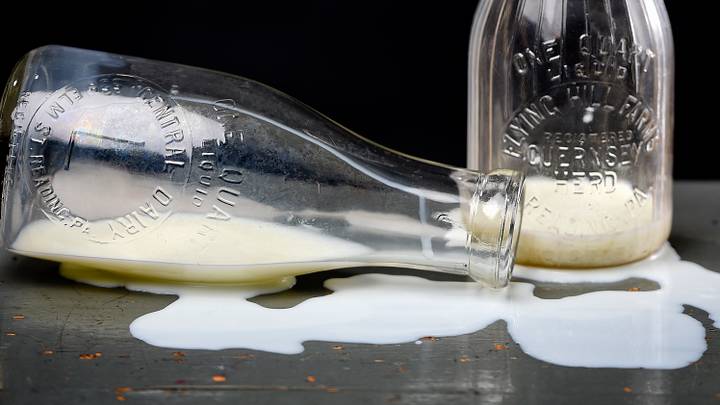
Have you ever made a simple mistake that felt much bigger in the moment? Chances are, someone told you: "Don't cry over spilled milk" or "There's no use crying over spilled milk." This idiom was created as a way of boosting positivity and helping people move forward after mistakes, though today it can be used a bit callously.
There are times when saying this phrase can be helpful and kind, while other times it can feel as if you're invalidating another person's experiences. Take a minute to learn the history behind "Don't cry over spilled milk," and some of the times when using it won't make you seem like a jerk.

The History of Crying Over Spilled Milk
The exact origin of the phrase is unknown, though its use goes back centuries. The earliest record we have is from 1659, when Welsh author James Howell used the saying "No weeping for shed milk" in his book Paramoigraphy (Proverbs). The phrase evolved and became "Tis a folly to cry for spilled milk" by 1738, when it appeared in Johnathan Swift's essay "Polite Conversation."
The modern form of the idiom, as we know it, was first used in 1872. A short story that ran in the British Once A Week magazine stated: "There's no use crying over spilt milk." Americans changed "spilt" to "spilled," but otherwise, the saying found its final phrasing, for now. Language does like to keep changing, after all!

What Does "Don't Cry Over Spilled Milk" Mean?
"Don't cry over spilled milk" means that something has already happened that you cannot change, so agonizing over it will not help the situation. Whether it was a mistake, a wrong choice you made, or something completely out of your control, nothing will be made better by getting upset. All that's left to do is problem-solve and either fix things or start over.
A more modern interpretation is that something so small and inconsequential happened that it isn't worth getting upset over. Rather than being synonymous with "What's done is done," the idiom has begun to transform to fit more with "Don't sweat the small stuff." Similar takes, but the slight differences affect how and when we use "Don't cry over spilled milk."

When to Use "Don't Cry Over Spilled Milk"
If you're going off the interpretation that it's better to move on from small mistakes than to get upset, then it's good to use "don't cry over spilled milk" in teaching moments. Your kid tried to pour himself some milk but dropped the jug? That's a perfect time to calmly tell them that mistakes happen and you can just clean up the milk together. That's family bonding and developing skills all at once.
When someone under your authority makes a small slip-up, you can use "don't cry over spilled milk" to defuse the situation. It becomes reassuring to know that you aren't upset with them, so they don't need to overly fret about it.

When Not to Use "Don't Cry Over Spilled Milk"
When interpreting "Don't cry over spilled milk" to mean that some things are too inconsequential to worry about, please make sure that the event is objectively small. That other reasonable people would agree with your judgment that the thing is a mere trifle. Otherwise, you come off as rude, and it seems as if you are minimizing someone else's pain.
If your friend finds out that their spouse has been unfaithful, being supportive and compassionate does not include the words "Don't cry over spilled milk." A young mother with a screaming, hungry baby will not appreciate the irony of the phrase as the last of the formula gets knocked to the ground. If you're unsure if the situation is small enough that this idiom is appropriate, it's better not to say it.