%20%20--%3E%0A%3Csvg%20version%3D%221.1%22%20id%3D%22Layer_1%22%20xmlns%3D%22http%3A%2F%2Fwww.w3.org%2F2000%2Fsvg%22%20xmlns%3Axlink%3D%22http%3A%2F%2Fwww.w3.org%2F1999%2Fxlink%22%20x%3D%220px%22%20y%3D%220px%22%0A%09%20viewBox%3D%220%200%20684.6%2068.1%22%20style%3D%22enable-background%3Anew%200%200%20684.6%2068.1%3B%22%20xml%3Aspace%3D%22preserve%22%3E%0A%3Cg%3E%0A%09%3Cpath%20d%3D%22M444.1%2C29.3h-17.4v14.5h17.4V29.3z%20M36.4%2C68.1l29.3-50.8V0H50.4L32.9%2C36.8L15.5%2C0H0v68.1h16.7V45.8l12.4%2C22.3H36.4z%0A%09%09%20M49.1%2C68.1h16.6V23.4L49.1%2C52.1V68.1z%20M76.6%2C68.1h45V53.8H93.3V41.6h21V27.1h-21V14.8h28.3V0.1h-45V68.1z%20M175.6%2C68.1h17.3v-68%0A%09%09h-16.5v40.3L150%2C0.1h-17.6v68h16.7V27.7L175.6%2C68.1z%20M235.8%2C14.8h15.4V0.1h-47.4v14.7H219v53.2h16.8V14.8z%20M290.3%2C45.9h-17.1%0A%09%09l7.5-15.6h2L290.3%2C45.9z%20M298.7%2C68.1h18l-32.2-68h-5.7l-32%2C68h18l3.3-7.1h27.1L298.7%2C68.1z%20M325.2%2C68.1h46.2V53.8h-29.6V0.1h-16.7%0A%09%09V68.1z%20M423.7%2C14.8h27.2V0.1H407v68h16.7V14.8z%20M462%2C68.1h46.2V53.8h-29.6V0.1H462V68.1z%20M564.8%2C34.1c0%2C10.7-7.2%2C19.2-18.5%2C19.2%0A%09%09c-11.4%2C0-18.5-8.5-18.5-19.2s7.1-19.2%2C18.5-19.2C557.6%2C14.9%2C564.8%2C23.4%2C564.8%2C34.1%20M580.6%2C34.1c0-19-14.2-34-34.3-34%0A%09%09c-20.2%2C0-34.3%2C15-34.3%2C34c0%2C19%2C14.1%2C34%2C34.3%2C34C566.4%2C68.1%2C580.6%2C53.1%2C580.6%2C34.1%20M604.8%2C20.5c0-4.1%2C3.3-6.2%2C6.7-6.2%0A%09%09c4.4%2C0%2C6.6%2C3%2C6.6%2C6.6h14.7C631.8%2C9.1%2C625.1%2C0.1%2C611%2C0.1c-12%2C0-21.7%2C9.3-21.7%2C20.6c0%2C10.9%2C5.9%2C15.9%2C16.7%2C19.8%0A%09%09c5.2%2C1.8%2C11.5%2C3.2%2C11.5%2C8c0%2C3.3-2.4%2C5.5-6.4%2C5.5c-3.6%2C0-6.6-3-6.6-6.7h-15.2c0%2C11.5%2C7.9%2C20.8%2C21.8%2C20.8c12%2C0%2C21.6-9.3%2C21.6-20.6%0A%09%09c0-10-5.3-16.4-16.7-19.8C610.6%2C26.1%2C604.8%2C25.3%2C604.8%2C20.5%20M670%2C20.9h14.7C683.8%2C9.1%2C677.1%2C0.1%2C663%2C0.1c-12%2C0-21.7%2C9.3-21.7%2C20.6%0A%09%09c0%2C10.9%2C5.9%2C15.9%2C16.7%2C19.8c5.2%2C1.8%2C11.5%2C3.2%2C11.5%2C8c0%2C3.3-2.4%2C5.5-6.4%2C5.5c-3.6%2C0-6.6-3-6.6-6.7h-15.2c0%2C11.5%2C7.9%2C20.8%2C21.8%2C20.8%0A%09%09c12%2C0%2C21.6-9.3%2C21.6-20.6c0-10-5.3-16.4-16.7-19.8c-5.4-1.6-11.3-2.4-11.3-7.2c0-4.1%2C3.3-6.2%2C6.7-6.2C667.7%2C14.4%2C670%2C17.3%2C670%2C20.9%0A%09%09%22%2F%3E%0A%3C%2Fg%3E%0A%3C%2Fsvg%3E%0A)

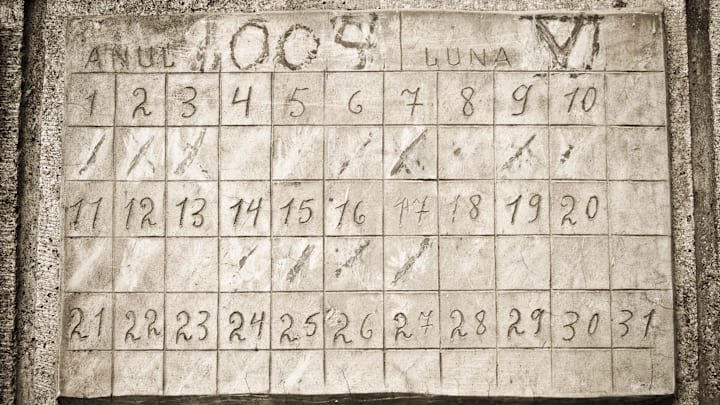
Every time you glance at a calendar, you're examining the minds of ancient astronomers and civilizations. The seven-day week wasn’t the product of a type-A planner who desperately needed to rationalize time, but rather the result of sky-watching, religious tradition, and the blending of cultures. The names we use today span thousands of years and reflect how different societies understood the universe and their place in it.
The number seven was not chosen at random. According to The Old Farmer's Almanac, when the days of the week were created, civilization was only aware of seven celestial bodies: the Sun, Moon, and five planets that were visible without the advanced technology we use to study the cosmos today.
The ancient Romans assigned these objects to a god and dedicated a day of the week to each one. When word of their calendar spread to Northern Europe, Anglo-Saxon cultures tweaked the list and made amendments based on their religious beliefs.
We cycle through Sunday, Monday, Tuesday, Wednesday, Thursday, Friday, and Saturday every single week without having a single clue what they stand for or where they came from. Let’s approach the calendar with curiosity and uncover the history behind the days of the week.
SUNDAY
Latin | French | Italian | Spanish | Saxon |
|---|---|---|---|---|
Dies Solis | Dimanche | Domenica | Domingo | Sunnandaeg |
Sunday is straightforward; it’s the Sun’s day. Named in honor of the giant star that brings us warmth and positivity, Sunday’s significance shines across cultures, whether as a day of worship, rest, or both. In Latin, it pays tribute to Sol, the Sun god. In French, Italian, and Spanish, Sunday translates to "The Lord’s Day." In ancient Germanic civilizations, it was known as the Sun’s Day.
MONDAY
Latin | French | Italian | Spanish | Saxon |
|---|---|---|---|---|
Dies Lunae | Lundi | Lunedì | Lunes | Monandaeg |
Monday follows the same naming pattern, only with a dimmer, moodier glow. This day honors the Moon, which reigns over the tides and illuminates the night sky. The Moon’s influence was so profound that its name endured. In Latin, French, Italian, and Spanish, Monday pays tribute to Luna, the goddess of the moon. In Saxon tradition, the name gives the Moon its moment in the weekly lineup.
TUESDAY
Latin | French | Italian | Spanish | Saxon |
|---|---|---|---|---|
Dies Martis | Mardi | Martedì | Martes | Tiwesdaeg |
Tuesday is trickier. It's not named after a planet (anymore). The Romans associated this day with Mars, their god of war. When Saxon cultures adopted the Roman calendar, they swapped out Mars with their own god of war, Tiw. The result is a weekday that carries the energy of battle (the modern-day equivalent of filing through 50 emails on a Monday morning). Romance languages kept Mars’ influence, with their words for Tuesday still beginning with "mar," while Northern Europeans embraced Tiw’s name.
WEDNESDAY
Latin | French | Italian | Spanish | Saxon |
|---|---|---|---|---|
Dies Mercurii | Mercredi | Mercoledì | Miércoles | Wodnesdaeg |
Wednesday’s name returns us to the planetary theme, specifically Mercury, the god and planet admired by ancient stargazers. In Latin-based languages, Wednesday reflects this connection, paying homage to Mercury, the Roman god of commerce. Instead of Mercury, the Saxons honored Woden, their king of the gods, by naming the fourth day after him. Woden, signifying wisdom, replaced Mercury in the modern English calendar and evolved into one of the hardest days of the week to pronounce.
THURSDAY
Latin | French | Italian | Spanish | Saxon |
|---|---|---|---|---|
Dies Jovis | Jeudi | Giovedì | Jueves | Thursdaeg |
On Thursday, the thunder rolled in. Enter: Thor, the hammer-wielding Germanic god of strength and thunderstorms. He stepped in for Jupiter, the Roman king of the gods, who also ruled over thunder and sky. The French and Spanish words for Thursday begin with a "J," whereas the English term, derived from Saxon, is "Thor's Day."
FRIDAY
Latin | French | Italian | Spanish | Saxon |
|---|---|---|---|---|
Dies Veneris | Vendredi | Venerdì | Viernes | Frigedaeg |
Friday takes its name from Frigg, the Germanic goddess of love, family, and home, mirroring the Roman association with Venus, goddess of love. The day’s name reflects its intended spirit: celebration, and affection. While Romance languages retain the "ven" root for Venus, Saxon cultures preserve the legacy of Frigg with Friday.
SATURDAY
Latin | French | Italian | Spanish | Saxon |
|---|---|---|---|---|
Dies Saturni | Samedi | Sabato | Sábado | Saeterndaeg |
Saturday stands apart from the rest in that it unified French, Spanish, Italian, and Northern European civilizations, all in agreement that the day was meant for delight. Unlike other days, it maintains the Roman origin across cultures, celebrating Saturn, the god of fun and feasting, in perfect accordance with how many people still schedule their Saturdays.
DAYS OF THE WEEK

It’s clear that the meanings behind the days of the week have stood the test of time. Saturdays are still lively, Mondays are hectic, Wednesdays are perplexing, and Sundays are restful, just as ancient civilizations intended.
Whether the week seems to crawl or rush past, remember that you’re participating in a cycle shaped by ancient gods, the solar system, and generations of storytelling. The weekly calendar is more than a schedule; it’s an everlasting record of time and a reminder that significance and purpose can go hand in hand with routine.