%20%20--%3E%0A%3Csvg%20version%3D%221.1%22%20id%3D%22Layer_1%22%20xmlns%3D%22http%3A%2F%2Fwww.w3.org%2F2000%2Fsvg%22%20xmlns%3Axlink%3D%22http%3A%2F%2Fwww.w3.org%2F1999%2Fxlink%22%20x%3D%220px%22%20y%3D%220px%22%0A%09%20viewBox%3D%220%200%20684.6%2068.1%22%20style%3D%22enable-background%3Anew%200%200%20684.6%2068.1%3B%22%20xml%3Aspace%3D%22preserve%22%3E%0A%3Cg%3E%0A%09%3Cpath%20d%3D%22M444.1%2C29.3h-17.4v14.5h17.4V29.3z%20M36.4%2C68.1l29.3-50.8V0H50.4L32.9%2C36.8L15.5%2C0H0v68.1h16.7V45.8l12.4%2C22.3H36.4z%0A%09%09%20M49.1%2C68.1h16.6V23.4L49.1%2C52.1V68.1z%20M76.6%2C68.1h45V53.8H93.3V41.6h21V27.1h-21V14.8h28.3V0.1h-45V68.1z%20M175.6%2C68.1h17.3v-68%0A%09%09h-16.5v40.3L150%2C0.1h-17.6v68h16.7V27.7L175.6%2C68.1z%20M235.8%2C14.8h15.4V0.1h-47.4v14.7H219v53.2h16.8V14.8z%20M290.3%2C45.9h-17.1%0A%09%09l7.5-15.6h2L290.3%2C45.9z%20M298.7%2C68.1h18l-32.2-68h-5.7l-32%2C68h18l3.3-7.1h27.1L298.7%2C68.1z%20M325.2%2C68.1h46.2V53.8h-29.6V0.1h-16.7%0A%09%09V68.1z%20M423.7%2C14.8h27.2V0.1H407v68h16.7V14.8z%20M462%2C68.1h46.2V53.8h-29.6V0.1H462V68.1z%20M564.8%2C34.1c0%2C10.7-7.2%2C19.2-18.5%2C19.2%0A%09%09c-11.4%2C0-18.5-8.5-18.5-19.2s7.1-19.2%2C18.5-19.2C557.6%2C14.9%2C564.8%2C23.4%2C564.8%2C34.1%20M580.6%2C34.1c0-19-14.2-34-34.3-34%0A%09%09c-20.2%2C0-34.3%2C15-34.3%2C34c0%2C19%2C14.1%2C34%2C34.3%2C34C566.4%2C68.1%2C580.6%2C53.1%2C580.6%2C34.1%20M604.8%2C20.5c0-4.1%2C3.3-6.2%2C6.7-6.2%0A%09%09c4.4%2C0%2C6.6%2C3%2C6.6%2C6.6h14.7C631.8%2C9.1%2C625.1%2C0.1%2C611%2C0.1c-12%2C0-21.7%2C9.3-21.7%2C20.6c0%2C10.9%2C5.9%2C15.9%2C16.7%2C19.8%0A%09%09c5.2%2C1.8%2C11.5%2C3.2%2C11.5%2C8c0%2C3.3-2.4%2C5.5-6.4%2C5.5c-3.6%2C0-6.6-3-6.6-6.7h-15.2c0%2C11.5%2C7.9%2C20.8%2C21.8%2C20.8c12%2C0%2C21.6-9.3%2C21.6-20.6%0A%09%09c0-10-5.3-16.4-16.7-19.8C610.6%2C26.1%2C604.8%2C25.3%2C604.8%2C20.5%20M670%2C20.9h14.7C683.8%2C9.1%2C677.1%2C0.1%2C663%2C0.1c-12%2C0-21.7%2C9.3-21.7%2C20.6%0A%09%09c0%2C10.9%2C5.9%2C15.9%2C16.7%2C19.8c5.2%2C1.8%2C11.5%2C3.2%2C11.5%2C8c0%2C3.3-2.4%2C5.5-6.4%2C5.5c-3.6%2C0-6.6-3-6.6-6.7h-15.2c0%2C11.5%2C7.9%2C20.8%2C21.8%2C20.8%0A%09%09c12%2C0%2C21.6-9.3%2C21.6-20.6c0-10-5.3-16.4-16.7-19.8c-5.4-1.6-11.3-2.4-11.3-7.2c0-4.1%2C3.3-6.2%2C6.7-6.2C667.7%2C14.4%2C670%2C17.3%2C670%2C20.9%0A%09%09%22%2F%3E%0A%3C%2Fg%3E%0A%3C%2Fsvg%3E%0A)

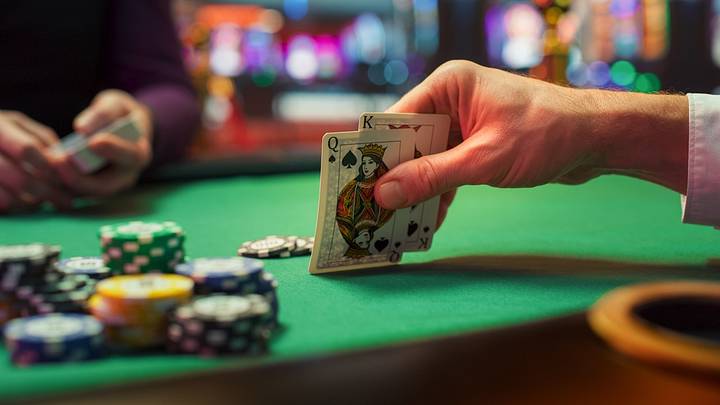
Perhaps without even realizing or acknowledging it, you might unwittingly drop a phrase from gamblers’ vernacular into your everyday language every now and then. Whenever you show your hand or go for broke, up the ante, back the wrong horse, or keep a poker face, you’re dipping into a figurative vocabulary that our language has gradually amassed over the centuries from the world of card games, horse racing, bookmaking, and betting.
But some of this vocabulary’s gambling associations are a little less obvious than those few examples might suggest—and look a little deeper at the origins of our language, and you’ll perhaps find rather more gambling phrases than you might have thought.
Above Board

The “board” in this context is a table—that is, the same one on which you might play a “board game.” This particular expression, which dates back to the late 1500s at least, isn’t from board gaming, however, but from card playing. “A figurative expression borrowed from gamesters,” is how the great English lexicographer Samuel Johnson explained this phrase, “who, when they put their hands under the table, are changing their cards.” Playing above board ultimately came to mean acting fairly and openly.
Across the Board

The “board” in this context is different from the one mentioned above. It was originally the upright display board on which bookmakers would write the odds before a horse race. This phrase came to mean “encompassing all scenarios” in reference to an “across the board” bet, in which the same amount of money would be placed on a horse to win, place, or show in a race.
Dark Horse

In 19th-century horse racing parlance, a dark horse was a competitor in a horse race about whom relatively little (if anything) was known, making it difficult to know how well (or how poorly) it might perform; “dark,” in this context, is being used figuratively to mean unclear or unknown. From there, the word fell into wider use to refer to anyone or anything that is equally mysterious, or which does not immediately show how good it might be. In this context, it proved especially popular in American political discourse to refer to unexpected electoral candidates about whom relatively little is known.
Double Down

If you double down, then you reinforce an earlier position or belief, and become all the more zealous or determined in your decision. This is a phrase that comes from blackjack, in which “doubling down” originally meant to double an original bid in exchange for just one more drawn card. Both this meaning, and the more widely used definition of reinforcing one’s opinions, appear to have been 20th-century inventions.
Draw a Blank

This expression refers to playing a lottery and the drawing of lots from a prize-winning pot. One of the most famous lotteries in history was a fundraising endeavor launched by Elizabeth I in the 1560s, which was advertised at the time as being “without any blanckes.” That’s because lotteries at the time typically worked by a player’s winning ticket being first drawn from a pot of entrants, and then a second ticket would be drawn from a pot of prizes; the twist was that the pot of prizes also contained blank tickets, and if one of those were to be drawn with your ticket, then you would go home empty-handed. As a result, this expression came to be used to mean to fail in (or later, to fail to remember) some kind of undertaking.
Hands Down

It might sound like it could refer to card players literally placing their “hands” face “down” on the table, but this is actually a phrase derived from horse racing. A jockey wins “hands down” when they are so assured of their victory in a race that they can slacken their horse’s reins and relax, dropping their “hands down” as they pass the finish line. As a result, this expression came to be used to refer to any easy, total, or all-encompassing victory.
Hedge Your Bets

When a piece of land is “hedged,” this means that it is demarcated or divided up by planting a surrounding hedge around or through it to show where its limits lie. From this early meaning, which dates back to the 14th century at least, came several more figurative uses of the verb “hedge,” a word that at first meant to limit or rein something in, and then to act cautiously or ditheringly, or in such a way that you protect yourself from loss. “Hedging” a bet, therefore, came to be used in the 1600s to refer to offsetting the risk of a larger bet by taking out several smaller side bets with other lenders or bookmakers.