%20%20--%3E%0A%3Csvg%20version%3D%221.1%22%20id%3D%22Layer_1%22%20xmlns%3D%22http%3A%2F%2Fwww.w3.org%2F2000%2Fsvg%22%20xmlns%3Axlink%3D%22http%3A%2F%2Fwww.w3.org%2F1999%2Fxlink%22%20x%3D%220px%22%20y%3D%220px%22%0A%09%20viewBox%3D%220%200%20684.6%2068.1%22%20style%3D%22enable-background%3Anew%200%200%20684.6%2068.1%3B%22%20xml%3Aspace%3D%22preserve%22%3E%0A%3Cg%3E%0A%09%3Cpath%20d%3D%22M444.1%2C29.3h-17.4v14.5h17.4V29.3z%20M36.4%2C68.1l29.3-50.8V0H50.4L32.9%2C36.8L15.5%2C0H0v68.1h16.7V45.8l12.4%2C22.3H36.4z%0A%09%09%20M49.1%2C68.1h16.6V23.4L49.1%2C52.1V68.1z%20M76.6%2C68.1h45V53.8H93.3V41.6h21V27.1h-21V14.8h28.3V0.1h-45V68.1z%20M175.6%2C68.1h17.3v-68%0A%09%09h-16.5v40.3L150%2C0.1h-17.6v68h16.7V27.7L175.6%2C68.1z%20M235.8%2C14.8h15.4V0.1h-47.4v14.7H219v53.2h16.8V14.8z%20M290.3%2C45.9h-17.1%0A%09%09l7.5-15.6h2L290.3%2C45.9z%20M298.7%2C68.1h18l-32.2-68h-5.7l-32%2C68h18l3.3-7.1h27.1L298.7%2C68.1z%20M325.2%2C68.1h46.2V53.8h-29.6V0.1h-16.7%0A%09%09V68.1z%20M423.7%2C14.8h27.2V0.1H407v68h16.7V14.8z%20M462%2C68.1h46.2V53.8h-29.6V0.1H462V68.1z%20M564.8%2C34.1c0%2C10.7-7.2%2C19.2-18.5%2C19.2%0A%09%09c-11.4%2C0-18.5-8.5-18.5-19.2s7.1-19.2%2C18.5-19.2C557.6%2C14.9%2C564.8%2C23.4%2C564.8%2C34.1%20M580.6%2C34.1c0-19-14.2-34-34.3-34%0A%09%09c-20.2%2C0-34.3%2C15-34.3%2C34c0%2C19%2C14.1%2C34%2C34.3%2C34C566.4%2C68.1%2C580.6%2C53.1%2C580.6%2C34.1%20M604.8%2C20.5c0-4.1%2C3.3-6.2%2C6.7-6.2%0A%09%09c4.4%2C0%2C6.6%2C3%2C6.6%2C6.6h14.7C631.8%2C9.1%2C625.1%2C0.1%2C611%2C0.1c-12%2C0-21.7%2C9.3-21.7%2C20.6c0%2C10.9%2C5.9%2C15.9%2C16.7%2C19.8%0A%09%09c5.2%2C1.8%2C11.5%2C3.2%2C11.5%2C8c0%2C3.3-2.4%2C5.5-6.4%2C5.5c-3.6%2C0-6.6-3-6.6-6.7h-15.2c0%2C11.5%2C7.9%2C20.8%2C21.8%2C20.8c12%2C0%2C21.6-9.3%2C21.6-20.6%0A%09%09c0-10-5.3-16.4-16.7-19.8C610.6%2C26.1%2C604.8%2C25.3%2C604.8%2C20.5%20M670%2C20.9h14.7C683.8%2C9.1%2C677.1%2C0.1%2C663%2C0.1c-12%2C0-21.7%2C9.3-21.7%2C20.6%0A%09%09c0%2C10.9%2C5.9%2C15.9%2C16.7%2C19.8c5.2%2C1.8%2C11.5%2C3.2%2C11.5%2C8c0%2C3.3-2.4%2C5.5-6.4%2C5.5c-3.6%2C0-6.6-3-6.6-6.7h-15.2c0%2C11.5%2C7.9%2C20.8%2C21.8%2C20.8%0A%09%09c12%2C0%2C21.6-9.3%2C21.6-20.6c0-10-5.3-16.4-16.7-19.8c-5.4-1.6-11.3-2.4-11.3-7.2c0-4.1%2C3.3-6.2%2C6.7-6.2C667.7%2C14.4%2C670%2C17.3%2C670%2C20.9%0A%09%09%22%2F%3E%0A%3C%2Fg%3E%0A%3C%2Fsvg%3E%0A)

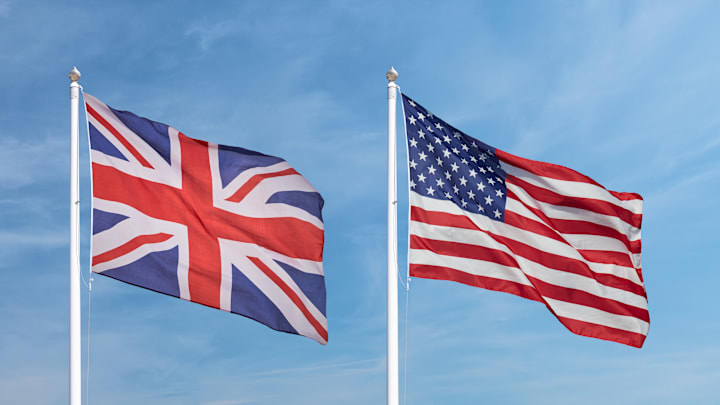
Gen Z slang can feel like a language of its own, borrowing not only from African American Vernacular but also from British English for the latest buzzwords. But how did words like queue and gobsmacked finally make their way onto American soil? The explanation isn’t exactly bonkers: like most slang, pop culture, TikTok, and the easy streaming of UK TV hits—think Love Island—have helped these Britishisms spread across the pond.
Language-learning platform Babbel teamed up with Northern Arizona University researchers to measure this cultural exchange, analyzing millions of words and hours of American speech—and found the top British imports: bonkers, amongst, cheeky, and queue. But the list doesn’t stop there: whether you want to sound more sophisticated or chronically online, there’s plenty more British lingo to learn. Here’s a guide to the most charming British slang terms that have entered the chat in America.
Bonkers
When “crazy” or “mad” just don’t cut it, the British slang term bonkers is a safe bet. Meaning absurd or wildly extreme, it’s used for anything from sports mayhem to viral internet trends. Influenced by British usage, bonkers has become the fastest-growing British slang words in the U.S., thanks in large part to Gen Z, who are known for speaking in hyperbole.
Gutted

Originally a literal term for removing the insides of a fish or animal, gutted began taking on a figurative meaning by the late 19th century, describing the emotional equivalent of having your insides ripped out. The slang initially caught on in Britain but is now used by Americans to convey that sinking, “everything’s gone wrong” feeling—like being ghosted by a crush or watching your favorite team lose.
Snarky
As online discourse made gossip a global pastime, Americans adopted this British term for wry, cutting commentary—now synonymous with the sharp-tongued, snarky takes on celebrities, cities, and everything in between that flourish on sites like Reddit.
Cheers

A versatile British expression, cheers can mean “thank you,” “goodbye,” or be used as a toast when raising a glass. You might hear it in a casual exchange or while clinking glasses at a pub. Today, many Americans use cheers as a nod to British culture, expanding its use from champagne toasts to a simple signal of gratitude—or even an email sign-off.
Shambles
Whether you’ve lost your job or your dog, it’s safe to say your life is in shambles. Originally a word for a slaughterhouse, shambles evolved into British slang for total disorder or chaos. Americans now use the noun as a delightfully dramatic way to mark a mess—whether it’s the state of your room, personal life, or even yourself.
Fit

Across the pond, fit means attractive or good-looking: think someone you’d call “fine” in the U.S. You might hear, “He’s really fit” or “She looks fit in that outfit.” In America, fit initially referred to physical health, but it has since broadened to mean general attractiveness. Americans adopted the term from UK TV, TikTok, and social media, using it to describe someone hot or stylish.
Bloody
A classic British intensifier, bloody is used to add emphasis to almost anything—“bloody brilliant,” “bloody awful,” “bloody tired”—or as the exclamation bloody hell! Originally considered vulgar, it’s now a quintessential part of everyday UK speech, essentially the British equivalent of the F-bomb. Americans sometimes borrow it for a dash of British flair, especially to playfully mimic British or Irish accents.
Dodgy

Before Americans popularized the abbreviation sus, Brits had their own word for suspicious, dishonest, or even dangerous: dodgy. It can describe anything from a pub in a bad neighborhood or an unreliable person to a defective gadget. Inspired by pop culture and online conversation, Americans occasionally use dodgy in place of words like "sketchy" or "shady."
Cheeky
If you overhear the word cheeky across the pond, odds are they’re referring to someone sassy or mildly disrespectful, rather than the revealing style of bikini bottom the word primarily referred to in America until recently. It’s a British adjective used to describe something slightly bold, mischievous, or playful—think a sassy comment, a sly grin, or a “cheeky” little treat like an afternoon coffee. In the U.S., fresh used to cover this meaning, but pop culture and social media have helped cheeky catch on.
Posh

One thing most Americans can agree on is that the British excel at sophistication, and that’s exactly what posh captures. This common British adjective describes someone or something elegant, luxurious, or upper-class, as in “a posh restaurant” or “she comes from a posh family.” Americans tend to use it when they’re feeling a little fancy—or most famously, to reference 90s pop icon Posh Spice.
Amongst
A distinctly British (and formal) alternative to among, amongst is used in the same way but often feels slightly more refined or literary. You might see it in phrases like, “She wandered amongst the flowers” or “Amongst friends, he felt at ease.” While among is far more common in everyday American speech, amongst is occasionally borrowed for stylistic flair and has become one of the fastest-growing British slang words in the U.S.
Queue

Calling a line a queue was once a glaring sign that you grew up in the UK. But with tech platforms like Netflix using it for your watchlist, and society looking for a cuter way to describe waiting in line for that overpriced viral latte, Americans have embraced the British word. Today, the term queue is widely used stateside to mean patiently waiting your turn, whether at a dining hotspot or on a ticket-selling site.
Gobsmacked
A quintessentially British word that became popular in the 1980s, gobsmacked describes being completely astonished: so shocked you’re left speechless. The term combines gob (British/Scottish slang for mouth) and smacked (slapped), implying a surprise so powerful it feels like a literal blow to the mouth. Americans have increasingly used gobsmacked—especially after high-profile uses like Susan Boyle’s famous 2009 interview—to add colorful British flair to expressions of shock or amazement.