%20%20--%3E%0A%3Csvg%20version%3D%221.1%22%20id%3D%22Layer_1%22%20xmlns%3D%22http%3A%2F%2Fwww.w3.org%2F2000%2Fsvg%22%20xmlns%3Axlink%3D%22http%3A%2F%2Fwww.w3.org%2F1999%2Fxlink%22%20x%3D%220px%22%20y%3D%220px%22%0A%09%20viewBox%3D%220%200%20684.6%2068.1%22%20style%3D%22enable-background%3Anew%200%200%20684.6%2068.1%3B%22%20xml%3Aspace%3D%22preserve%22%3E%0A%3Cg%3E%0A%09%3Cpath%20d%3D%22M444.1%2C29.3h-17.4v14.5h17.4V29.3z%20M36.4%2C68.1l29.3-50.8V0H50.4L32.9%2C36.8L15.5%2C0H0v68.1h16.7V45.8l12.4%2C22.3H36.4z%0A%09%09%20M49.1%2C68.1h16.6V23.4L49.1%2C52.1V68.1z%20M76.6%2C68.1h45V53.8H93.3V41.6h21V27.1h-21V14.8h28.3V0.1h-45V68.1z%20M175.6%2C68.1h17.3v-68%0A%09%09h-16.5v40.3L150%2C0.1h-17.6v68h16.7V27.7L175.6%2C68.1z%20M235.8%2C14.8h15.4V0.1h-47.4v14.7H219v53.2h16.8V14.8z%20M290.3%2C45.9h-17.1%0A%09%09l7.5-15.6h2L290.3%2C45.9z%20M298.7%2C68.1h18l-32.2-68h-5.7l-32%2C68h18l3.3-7.1h27.1L298.7%2C68.1z%20M325.2%2C68.1h46.2V53.8h-29.6V0.1h-16.7%0A%09%09V68.1z%20M423.7%2C14.8h27.2V0.1H407v68h16.7V14.8z%20M462%2C68.1h46.2V53.8h-29.6V0.1H462V68.1z%20M564.8%2C34.1c0%2C10.7-7.2%2C19.2-18.5%2C19.2%0A%09%09c-11.4%2C0-18.5-8.5-18.5-19.2s7.1-19.2%2C18.5-19.2C557.6%2C14.9%2C564.8%2C23.4%2C564.8%2C34.1%20M580.6%2C34.1c0-19-14.2-34-34.3-34%0A%09%09c-20.2%2C0-34.3%2C15-34.3%2C34c0%2C19%2C14.1%2C34%2C34.3%2C34C566.4%2C68.1%2C580.6%2C53.1%2C580.6%2C34.1%20M604.8%2C20.5c0-4.1%2C3.3-6.2%2C6.7-6.2%0A%09%09c4.4%2C0%2C6.6%2C3%2C6.6%2C6.6h14.7C631.8%2C9.1%2C625.1%2C0.1%2C611%2C0.1c-12%2C0-21.7%2C9.3-21.7%2C20.6c0%2C10.9%2C5.9%2C15.9%2C16.7%2C19.8%0A%09%09c5.2%2C1.8%2C11.5%2C3.2%2C11.5%2C8c0%2C3.3-2.4%2C5.5-6.4%2C5.5c-3.6%2C0-6.6-3-6.6-6.7h-15.2c0%2C11.5%2C7.9%2C20.8%2C21.8%2C20.8c12%2C0%2C21.6-9.3%2C21.6-20.6%0A%09%09c0-10-5.3-16.4-16.7-19.8C610.6%2C26.1%2C604.8%2C25.3%2C604.8%2C20.5%20M670%2C20.9h14.7C683.8%2C9.1%2C677.1%2C0.1%2C663%2C0.1c-12%2C0-21.7%2C9.3-21.7%2C20.6%0A%09%09c0%2C10.9%2C5.9%2C15.9%2C16.7%2C19.8c5.2%2C1.8%2C11.5%2C3.2%2C11.5%2C8c0%2C3.3-2.4%2C5.5-6.4%2C5.5c-3.6%2C0-6.6-3-6.6-6.7h-15.2c0%2C11.5%2C7.9%2C20.8%2C21.8%2C20.8%0A%09%09c12%2C0%2C21.6-9.3%2C21.6-20.6c0-10-5.3-16.4-16.7-19.8c-5.4-1.6-11.3-2.4-11.3-7.2c0-4.1%2C3.3-6.2%2C6.7-6.2C667.7%2C14.4%2C670%2C17.3%2C670%2C20.9%0A%09%09%22%2F%3E%0A%3C%2Fg%3E%0A%3C%2Fsvg%3E%0A)

In the early 1900s, a bizarre trend emerged in contemporary slang that saw anything or anyone particularly impressive described in the form “the something’s something.” This trend reached its peak in the 1920s, when phrases like “the clam’s garters,” “the worm’s ribs,” “the cat’s pyjamas,” “the owl’s bowels,” and—most notably of all—“the bee’s knees” all fell into use.
Unfortunately, only a handful of these have survived through to our language today, but happily these aren’t the only Roaring Twenties coinages you might find yourself unknowingly using in your everyday language.
- ALONG FOR THE RIDE
- BLIND DATE
- BUDDY SYSTEM
- FLY ON THE WALL
- GREASE MONKEY
- HEEBIE-JEEBIES
- ON-SCREEN
- PECKING ORDER
- UNDER THE COUNTER
- WHODUNIT
ALONG FOR THE RIDE

If you go along for the ride, you accompany someone else—not necessarily on a “ride,” either, as this can just as easily be used in any scenario in which you “go along” with someone else. Either way, it’s a phrase that first proved popular back in the 1920s, with its earliest record now pinned down to 1921.
BLIND DATE

The first blind date was recorded in print back in 1921. The word appears to have been invented in the United States, before this incognito means of making a romantic connection proved popular elsewhere too.
BUDDY SYSTEM

This particular system in which people (and in particular, school kids) pair up so as to be responsible for one another’s safety was first coined in 1920.
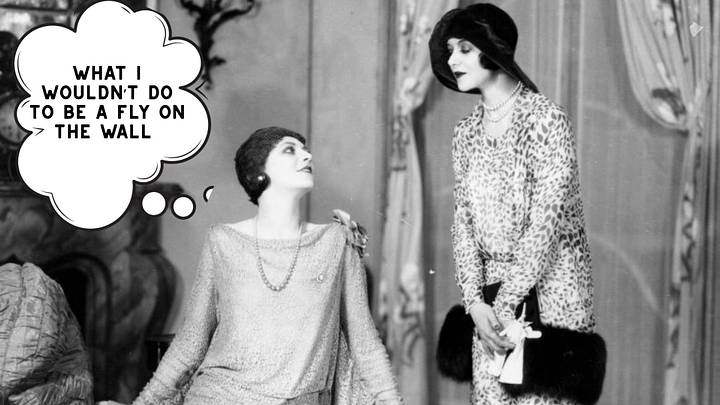
FLY ON THE WALL

Describing someone who has a surreptitiously unseen view of something salacious or that they’d long to see as a fly on the wall dates back to 1927. The adjective fly-on-the-wall, as in the style of documentary filmmaking, is somewhat later and dates from the early 1940s.
GREASE MONKEY

Mechanics have been playfully known as grease monkeys in US slang since 1927 at least.
HEEBIE-JEEBIES

If something gives you the heebie-jeebies, then it gives you the jitters, or a feeling of unsettled agitation or nervousness. No one is entirely sure where the phrase comes from, aside from the fact that it seems to have been popularized (or perhaps invented) by the cartoonist Billy DeBeck in the 1920s.
ON-SCREEN

Things appearing in the movies were first described as appearing on-screen way back in 1929. Oddly, the opposing adjective off-screen—first used of things that don’t appear on camera, and then more loosely to the private lives of on-screen stars—didn’t appear until three years later.
PECKING ORDER

Oddly, the phrase pecking order wasn’t originally a jokey metaphor. When it was first coined back in 1927, it was a genuine term used in animal behavior studies to refer to the kind of social hierarchy observed among certain creatures—originally chickens, hence the name—in which higher-ranking animals rule and oppress those below them. It didn’t take long for the term to be adopted more generally for any ranked system, however, and pecking order fell into wider use in the 1930s.
UNDER THE COUNTER

Perhaps unsurprisingly, this phrase refers to illicit dealing dates from Prohibition times, with its earliest known record dated 1927.
WHODUNIT

Although it was in 1930 that this intentionally misspelled term for a murder mystery first truly caught on, thanks to a book review by the American journalist and critic Donald Fordon, evidence of the word itself has since been unearthed from a year earlier, suggesting it was in the 1920s that this kind of story first proved popular.