%20%20--%3E%0A%3Csvg%20version%3D%221.1%22%20id%3D%22Layer_1%22%20xmlns%3D%22http%3A%2F%2Fwww.w3.org%2F2000%2Fsvg%22%20xmlns%3Axlink%3D%22http%3A%2F%2Fwww.w3.org%2F1999%2Fxlink%22%20x%3D%220px%22%20y%3D%220px%22%0A%09%20viewBox%3D%220%200%20684.6%2068.1%22%20style%3D%22enable-background%3Anew%200%200%20684.6%2068.1%3B%22%20xml%3Aspace%3D%22preserve%22%3E%0A%3Cg%3E%0A%09%3Cpath%20d%3D%22M444.1%2C29.3h-17.4v14.5h17.4V29.3z%20M36.4%2C68.1l29.3-50.8V0H50.4L32.9%2C36.8L15.5%2C0H0v68.1h16.7V45.8l12.4%2C22.3H36.4z%0A%09%09%20M49.1%2C68.1h16.6V23.4L49.1%2C52.1V68.1z%20M76.6%2C68.1h45V53.8H93.3V41.6h21V27.1h-21V14.8h28.3V0.1h-45V68.1z%20M175.6%2C68.1h17.3v-68%0A%09%09h-16.5v40.3L150%2C0.1h-17.6v68h16.7V27.7L175.6%2C68.1z%20M235.8%2C14.8h15.4V0.1h-47.4v14.7H219v53.2h16.8V14.8z%20M290.3%2C45.9h-17.1%0A%09%09l7.5-15.6h2L290.3%2C45.9z%20M298.7%2C68.1h18l-32.2-68h-5.7l-32%2C68h18l3.3-7.1h27.1L298.7%2C68.1z%20M325.2%2C68.1h46.2V53.8h-29.6V0.1h-16.7%0A%09%09V68.1z%20M423.7%2C14.8h27.2V0.1H407v68h16.7V14.8z%20M462%2C68.1h46.2V53.8h-29.6V0.1H462V68.1z%20M564.8%2C34.1c0%2C10.7-7.2%2C19.2-18.5%2C19.2%0A%09%09c-11.4%2C0-18.5-8.5-18.5-19.2s7.1-19.2%2C18.5-19.2C557.6%2C14.9%2C564.8%2C23.4%2C564.8%2C34.1%20M580.6%2C34.1c0-19-14.2-34-34.3-34%0A%09%09c-20.2%2C0-34.3%2C15-34.3%2C34c0%2C19%2C14.1%2C34%2C34.3%2C34C566.4%2C68.1%2C580.6%2C53.1%2C580.6%2C34.1%20M604.8%2C20.5c0-4.1%2C3.3-6.2%2C6.7-6.2%0A%09%09c4.4%2C0%2C6.6%2C3%2C6.6%2C6.6h14.7C631.8%2C9.1%2C625.1%2C0.1%2C611%2C0.1c-12%2C0-21.7%2C9.3-21.7%2C20.6c0%2C10.9%2C5.9%2C15.9%2C16.7%2C19.8%0A%09%09c5.2%2C1.8%2C11.5%2C3.2%2C11.5%2C8c0%2C3.3-2.4%2C5.5-6.4%2C5.5c-3.6%2C0-6.6-3-6.6-6.7h-15.2c0%2C11.5%2C7.9%2C20.8%2C21.8%2C20.8c12%2C0%2C21.6-9.3%2C21.6-20.6%0A%09%09c0-10-5.3-16.4-16.7-19.8C610.6%2C26.1%2C604.8%2C25.3%2C604.8%2C20.5%20M670%2C20.9h14.7C683.8%2C9.1%2C677.1%2C0.1%2C663%2C0.1c-12%2C0-21.7%2C9.3-21.7%2C20.6%0A%09%09c0%2C10.9%2C5.9%2C15.9%2C16.7%2C19.8c5.2%2C1.8%2C11.5%2C3.2%2C11.5%2C8c0%2C3.3-2.4%2C5.5-6.4%2C5.5c-3.6%2C0-6.6-3-6.6-6.7h-15.2c0%2C11.5%2C7.9%2C20.8%2C21.8%2C20.8%0A%09%09c12%2C0%2C21.6-9.3%2C21.6-20.6c0-10-5.3-16.4-16.7-19.8c-5.4-1.6-11.3-2.4-11.3-7.2c0-4.1%2C3.3-6.2%2C6.7-6.2C667.7%2C14.4%2C670%2C17.3%2C670%2C20.9%0A%09%09%22%2F%3E%0A%3C%2Fg%3E%0A%3C%2Fsvg%3E%0A)

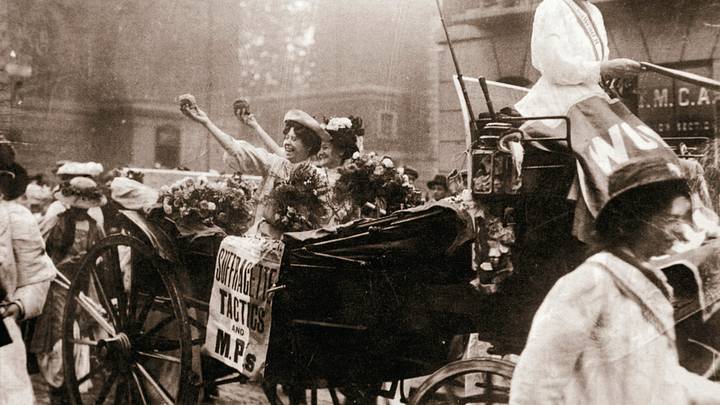
On January 31, 1906, a Connecticut newspaper wrote: “A new word has been invented in England which seems to meet a ‘felt want.’ As the feminine of suffragist, suffragettes have come into use.”
Today, the word “suffragette” is still widely used to refer to women who fought for the right to vote in the late 19th and early 20th century, and is not intended to be derogatory. However, this was not the case when the word was first coined. Here is a look at the history of how this word was originally used to mock women—and how women ultimately reclaimed that word and began to use it in an empowering way.
Where the Term “Suffragette” Comes From

As the 1906 report indicates, the term “suffragette” was derived from the word “suffragist,” the term used for someone who campaigned to expand voting rights. Both words stem from the concept of “suffrage,” defined by the Collins Dictionary as “the right to vote.” Historically, those entitled to vote in the UK were very limited in number, and by the turn of the twentieth century women were still barred from voting entirely. Suffragists were those who lobbied to expand the right to vote to women, as well as to the sections of the male population who were not yet allowed to do so.
The concept of “suffragettes” initially began to emerge to describe members of the Women’s Social and Political Union, who fought for women’s right to vote in more aggressive ways than suffragists usually did. While suffragists traditionally campaigned in ways that did not involve physical action, the suffragettes of the WSPU fought for the vote in more physical ways, which sometimes included sabotage and violence.
Expanding the voting franchise to include women was controversial with some of the press, and the conservative newspaper the Daily Mail eventually coined a word to refer to these more militant female campaigners: “suffragette.” It first appeared in print in the newspaper on January 10, 1906.
How “Suffragette” Turned From an Insult to a Movement

This term was not originally used simply to denote that these were suffragists who happened to be women. The suffix -ette originated in French as a way to express a smaller version of something, and was frequently applied in the English language during this period to words that were used to belittle women and make them seem as small as the suffix implied. And so, when the Mail began using the expression “suffragette” to refer to women campaigning for the right to vote, it was intended as an insult to those women.
However, the women fighting for the vote took on the term suffragette and turned its meaning around, taking ownership of it instead of letting their enemies use it as a term of derision. In 1912, members of the WSPU launched a newspaper named The Suffragette to highlight their cause. A word that had originally been used to belittle women was ultimately repurposed by the women it had once been used to insult, who transformed it into a unifying term that helped them push forward towards their goals.