%20%20--%3E%0A%3Csvg%20version%3D%221.1%22%20id%3D%22Layer_1%22%20xmlns%3D%22http%3A%2F%2Fwww.w3.org%2F2000%2Fsvg%22%20xmlns%3Axlink%3D%22http%3A%2F%2Fwww.w3.org%2F1999%2Fxlink%22%20x%3D%220px%22%20y%3D%220px%22%0A%09%20viewBox%3D%220%200%20684.6%2068.1%22%20style%3D%22enable-background%3Anew%200%200%20684.6%2068.1%3B%22%20xml%3Aspace%3D%22preserve%22%3E%0A%3Cg%3E%0A%09%3Cpath%20d%3D%22M444.1%2C29.3h-17.4v14.5h17.4V29.3z%20M36.4%2C68.1l29.3-50.8V0H50.4L32.9%2C36.8L15.5%2C0H0v68.1h16.7V45.8l12.4%2C22.3H36.4z%0A%09%09%20M49.1%2C68.1h16.6V23.4L49.1%2C52.1V68.1z%20M76.6%2C68.1h45V53.8H93.3V41.6h21V27.1h-21V14.8h28.3V0.1h-45V68.1z%20M175.6%2C68.1h17.3v-68%0A%09%09h-16.5v40.3L150%2C0.1h-17.6v68h16.7V27.7L175.6%2C68.1z%20M235.8%2C14.8h15.4V0.1h-47.4v14.7H219v53.2h16.8V14.8z%20M290.3%2C45.9h-17.1%0A%09%09l7.5-15.6h2L290.3%2C45.9z%20M298.7%2C68.1h18l-32.2-68h-5.7l-32%2C68h18l3.3-7.1h27.1L298.7%2C68.1z%20M325.2%2C68.1h46.2V53.8h-29.6V0.1h-16.7%0A%09%09V68.1z%20M423.7%2C14.8h27.2V0.1H407v68h16.7V14.8z%20M462%2C68.1h46.2V53.8h-29.6V0.1H462V68.1z%20M564.8%2C34.1c0%2C10.7-7.2%2C19.2-18.5%2C19.2%0A%09%09c-11.4%2C0-18.5-8.5-18.5-19.2s7.1-19.2%2C18.5-19.2C557.6%2C14.9%2C564.8%2C23.4%2C564.8%2C34.1%20M580.6%2C34.1c0-19-14.2-34-34.3-34%0A%09%09c-20.2%2C0-34.3%2C15-34.3%2C34c0%2C19%2C14.1%2C34%2C34.3%2C34C566.4%2C68.1%2C580.6%2C53.1%2C580.6%2C34.1%20M604.8%2C20.5c0-4.1%2C3.3-6.2%2C6.7-6.2%0A%09%09c4.4%2C0%2C6.6%2C3%2C6.6%2C6.6h14.7C631.8%2C9.1%2C625.1%2C0.1%2C611%2C0.1c-12%2C0-21.7%2C9.3-21.7%2C20.6c0%2C10.9%2C5.9%2C15.9%2C16.7%2C19.8%0A%09%09c5.2%2C1.8%2C11.5%2C3.2%2C11.5%2C8c0%2C3.3-2.4%2C5.5-6.4%2C5.5c-3.6%2C0-6.6-3-6.6-6.7h-15.2c0%2C11.5%2C7.9%2C20.8%2C21.8%2C20.8c12%2C0%2C21.6-9.3%2C21.6-20.6%0A%09%09c0-10-5.3-16.4-16.7-19.8C610.6%2C26.1%2C604.8%2C25.3%2C604.8%2C20.5%20M670%2C20.9h14.7C683.8%2C9.1%2C677.1%2C0.1%2C663%2C0.1c-12%2C0-21.7%2C9.3-21.7%2C20.6%0A%09%09c0%2C10.9%2C5.9%2C15.9%2C16.7%2C19.8c5.2%2C1.8%2C11.5%2C3.2%2C11.5%2C8c0%2C3.3-2.4%2C5.5-6.4%2C5.5c-3.6%2C0-6.6-3-6.6-6.7h-15.2c0%2C11.5%2C7.9%2C20.8%2C21.8%2C20.8%0A%09%09c12%2C0%2C21.6-9.3%2C21.6-20.6c0-10-5.3-16.4-16.7-19.8c-5.4-1.6-11.3-2.4-11.3-7.2c0-4.1%2C3.3-6.2%2C6.7-6.2C667.7%2C14.4%2C670%2C17.3%2C670%2C20.9%0A%09%09%22%2F%3E%0A%3C%2Fg%3E%0A%3C%2Fsvg%3E%0A)

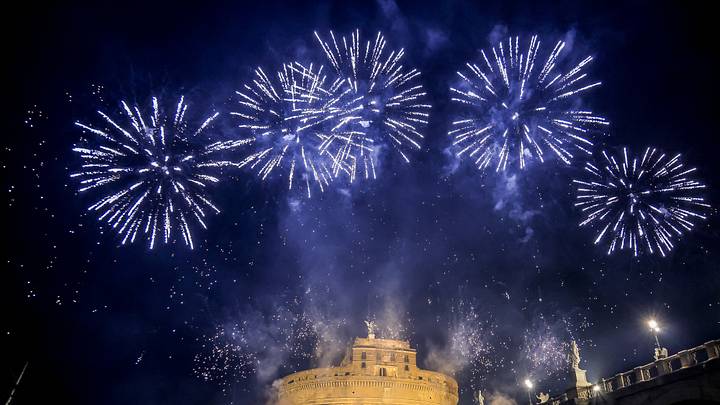
Each Fourth of July, thousands of fireworks shows ignite the summer skies across America. According to the American Pyrotechnics Association, over 16,000 community fireworks shows take place each July 4. The nation’s largest show, New York City’s Macy’s Fourth of July Fireworks, involves over 85,000 shells.
Fireworks have long been synonymous with America’s Independence Day celebrations. In 1776, Founding Father John Adams wrote that he imagined America’s independence should be celebrated with “Illuminations from one End of this Continent to the other from this Time forward forever more.”
At that time, the word “fireworks” did exist, but those luminous and loud light shows that have come to characterize July 4 were also called “illuminations.” So how did the word “fireworks” come into being? The answer lies with military technologies of the 1500s.
The early history of fireworks

The earliest fireworks were invented around 200 BCE in China, when people noticed that tossing bamboo into a fire produced a small explosion. (Interestingly, the Mandarin Chinese word for firecracker is “baozhu,” which translates to “exploding bamboo.)
Fireworks as we know them today originated around 800 AD. This is when, according to legend, Chinese alchemists mixed potassium nitrate, charcoal, and sulfur in an effort to create an elixir for immortality. But when the mixture caught on fire, they found that instead of creating the key to eternal life, they had created gunpowder. When the substance was later exposed to fire while inside bamboo or paper tubes, people discovered it could produce fireworks.
The earliest fireworks shows soon began popping up around this time. Fireworks were often used to scare away evil spirits or to celebrate events. They were also not launched into the air, and they certainly weren’t the dazzling, colorful displays they are today. Instead, early fireworks shows were colorless, earthbound explosions that served various ritual functions.
The development of the word “fireworks”

By the year 1200, China had begun using gunpowder-powered cannons to shoot projectiles in times of war. Simultaneously, fireworks made their way into the Western world through increased trade, where the tradition of shooting them into the air for the thrill of it became commonplace.
The English word “fireworks” originated in the 1500s as a reference to military explosives, according to Merriam-Webster. The word “fireworks” itself is, of course, a combination of two words: “fire” and “works,” a word that means “deeds or actions.”
Though the word “fireworks” initially referred to weapons, by 1575 the practice of lighting gunpowder in the air for celebratory purposes had developed, and the word “fireworks” became common parlance. Over time, “fireworks” lost their association with military fire and became almost entirely associated with joyful displays in the sky.
By the 1600s, fireworks shows were becoming commonplace. These early aerial fireworks shows were often dangerous affairs, though. Run by a “firemaster” and a “green man” who would wear leaves and tell jokes as the fireworks shows kicked off, many “green men” were killed in malfunctions during these early displays.
In the 1600s, the word “fireworks” also took on a figurative meaning, becoming a common way to describe anything spectacular and majestic. It wasn’t until the 19th century, however, that potassium chlorate began to be added to fireworks, giving them their signature colors.
Names of fireworks

The name “fireworks” is a general term that describes any kind of pyrotechnics show—but anyone who’s looked a little closer into the realm of pyrotechnics will know that individual fireworks have very different names.
A dud, for example, is the term used to describe a firework that fails to go off. Meanwhile, the most common fireworks—those classic spheres of colorful sparks—are called peonies. Crossettes are large explosions that break apart into smaller ones, and horsetails resemble tails of light falling from the sky.
The 2027 Mental Floss Amazing Facts Calendar is now on sale! Order yours today.