%20%20--%3E%0A%3Csvg%20version%3D%221.1%22%20id%3D%22Layer_1%22%20xmlns%3D%22http%3A%2F%2Fwww.w3.org%2F2000%2Fsvg%22%20xmlns%3Axlink%3D%22http%3A%2F%2Fwww.w3.org%2F1999%2Fxlink%22%20x%3D%220px%22%20y%3D%220px%22%0A%09%20viewBox%3D%220%200%20684.6%2068.1%22%20style%3D%22enable-background%3Anew%200%200%20684.6%2068.1%3B%22%20xml%3Aspace%3D%22preserve%22%3E%0A%3Cg%3E%0A%09%3Cpath%20d%3D%22M444.1%2C29.3h-17.4v14.5h17.4V29.3z%20M36.4%2C68.1l29.3-50.8V0H50.4L32.9%2C36.8L15.5%2C0H0v68.1h16.7V45.8l12.4%2C22.3H36.4z%0A%09%09%20M49.1%2C68.1h16.6V23.4L49.1%2C52.1V68.1z%20M76.6%2C68.1h45V53.8H93.3V41.6h21V27.1h-21V14.8h28.3V0.1h-45V68.1z%20M175.6%2C68.1h17.3v-68%0A%09%09h-16.5v40.3L150%2C0.1h-17.6v68h16.7V27.7L175.6%2C68.1z%20M235.8%2C14.8h15.4V0.1h-47.4v14.7H219v53.2h16.8V14.8z%20M290.3%2C45.9h-17.1%0A%09%09l7.5-15.6h2L290.3%2C45.9z%20M298.7%2C68.1h18l-32.2-68h-5.7l-32%2C68h18l3.3-7.1h27.1L298.7%2C68.1z%20M325.2%2C68.1h46.2V53.8h-29.6V0.1h-16.7%0A%09%09V68.1z%20M423.7%2C14.8h27.2V0.1H407v68h16.7V14.8z%20M462%2C68.1h46.2V53.8h-29.6V0.1H462V68.1z%20M564.8%2C34.1c0%2C10.7-7.2%2C19.2-18.5%2C19.2%0A%09%09c-11.4%2C0-18.5-8.5-18.5-19.2s7.1-19.2%2C18.5-19.2C557.6%2C14.9%2C564.8%2C23.4%2C564.8%2C34.1%20M580.6%2C34.1c0-19-14.2-34-34.3-34%0A%09%09c-20.2%2C0-34.3%2C15-34.3%2C34c0%2C19%2C14.1%2C34%2C34.3%2C34C566.4%2C68.1%2C580.6%2C53.1%2C580.6%2C34.1%20M604.8%2C20.5c0-4.1%2C3.3-6.2%2C6.7-6.2%0A%09%09c4.4%2C0%2C6.6%2C3%2C6.6%2C6.6h14.7C631.8%2C9.1%2C625.1%2C0.1%2C611%2C0.1c-12%2C0-21.7%2C9.3-21.7%2C20.6c0%2C10.9%2C5.9%2C15.9%2C16.7%2C19.8%0A%09%09c5.2%2C1.8%2C11.5%2C3.2%2C11.5%2C8c0%2C3.3-2.4%2C5.5-6.4%2C5.5c-3.6%2C0-6.6-3-6.6-6.7h-15.2c0%2C11.5%2C7.9%2C20.8%2C21.8%2C20.8c12%2C0%2C21.6-9.3%2C21.6-20.6%0A%09%09c0-10-5.3-16.4-16.7-19.8C610.6%2C26.1%2C604.8%2C25.3%2C604.8%2C20.5%20M670%2C20.9h14.7C683.8%2C9.1%2C677.1%2C0.1%2C663%2C0.1c-12%2C0-21.7%2C9.3-21.7%2C20.6%0A%09%09c0%2C10.9%2C5.9%2C15.9%2C16.7%2C19.8c5.2%2C1.8%2C11.5%2C3.2%2C11.5%2C8c0%2C3.3-2.4%2C5.5-6.4%2C5.5c-3.6%2C0-6.6-3-6.6-6.7h-15.2c0%2C11.5%2C7.9%2C20.8%2C21.8%2C20.8%0A%09%09c12%2C0%2C21.6-9.3%2C21.6-20.6c0-10-5.3-16.4-16.7-19.8c-5.4-1.6-11.3-2.4-11.3-7.2c0-4.1%2C3.3-6.2%2C6.7-6.2C667.7%2C14.4%2C670%2C17.3%2C670%2C20.9%0A%09%09%22%2F%3E%0A%3C%2Fg%3E%0A%3C%2Fsvg%3E%0A)

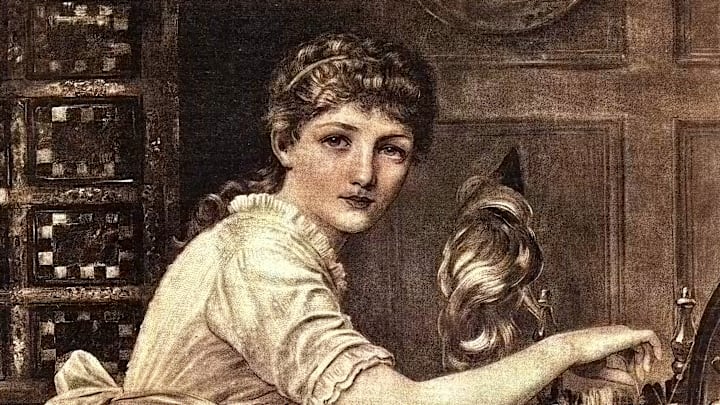
For centuries, “spinster” has been a negative term that refers to an older, unmarried woman in an often pitying, sometimes cruel way. Of course, depending on who you talk to, being an older and unmarried woman is certainly not a tragedy. Still, that doesn’t mean the term “spinster” has become a compliment. However, the label did not actually start off as an insult.
The Origins of the Term “Spinster”

“Spinster” has its origins not in stereotypes about singledom but in economic realities. The term “spinster” was first documented in the 14th century, when it was used to describe people who made a living by spinning yarn and thread. Most of the time, these people happened to be women.
The term “spinster” originally was a mix of the verb “spin” and the suffix “ster.” The latter was originally an Old and Middle English suffix associated with jobs performed by women, as opposed to “er,” which referred to a male and often appeared in terms like “butcher” and “lawyer.”
How “Spinster” Became a Negative Term

According to some scholars, the original people called spinsters were most often poorer European women. Some historians believe that married women, especially those whose husbands were tradesmen, often had more access to tools and various forms of employment. Poor, unmarried women would typically have to take on some of the more thankless jobs, ranging from scullery maids to field workers who earned a third or less of what men did.
Weaving and spinning were also lower-paying occupations that many single women undertook in an effort to acquire some financial stability. They required little equipment or financial backing, making them accessible to women without husbands or extensive resources. This may have helped create an association between being a spinster and being a poor, unmarried woman, which may have also contributed to the term’s lingering negative connotations.
On the other hand, some scholars note that women who were able to make a living through spinning and weaving also may have actually sometimes been more financially independent than women without vocations of their own, enabling them to choose to remain single. Being a spinster may even have been a point of pride for some of these women.
By the 18th century, however, the term had become a legal designation that described single women. It slowly developed its association with “old maids” and unwanted singledom, likely due to patriarchal pressures that encouraged women to marry and demonized those who did not.
The Meaning of “Spinster” in Modern Times
For many years, “spinster” was an official term for a single woman. Merriam-Webster defines it as “an unmarried woman and especially one past the common age for marrying.” Alternatively, the word for unmarried men of any age has long been “bachelor,” a word that often has positive connotations—a double standard, to say the least.
“Spinster” and “bachelor” were actually the official legal terms for single women and men in Wales and England until 2005, when the label was simply changed to “single” as part of the Civil Partnership Act.
Today, the term “spinster” has retained its negative connotations. It’s also not hard to see the associations between depictions of spinsters, medieval depictions of witches, and contemporary “crazy cat lady” stereotypes that all view single women with horror and pity.
On the other hand, there’s been a widespread effort to reclaim being single among women over the past century—and being single can even have a wide range of health benefits. Of course, some women have always enjoyed being single, even in the Victorian era. One woman named Miss Sarah Kennerly explained the reason she chose to stay unattached in a particularly eloquent 1889 letter to Tit-Bits Magazine.
“Like the wild mustang of the prairie that roams unfettered, tossing his head in utter disdain at the approach of the lasso which, if once round his neck, proclaims him captive,” she wrote, “so I find it more delightful to tread on the verge of freedom and captivity, than to allow the snarer to cast around me the matrimonial lasso.”