%20%20--%3E%0A%3Csvg%20version%3D%221.1%22%20id%3D%22Layer_1%22%20xmlns%3D%22http%3A%2F%2Fwww.w3.org%2F2000%2Fsvg%22%20xmlns%3Axlink%3D%22http%3A%2F%2Fwww.w3.org%2F1999%2Fxlink%22%20x%3D%220px%22%20y%3D%220px%22%0A%09%20viewBox%3D%220%200%20684.6%2068.1%22%20style%3D%22enable-background%3Anew%200%200%20684.6%2068.1%3B%22%20xml%3Aspace%3D%22preserve%22%3E%0A%3Cg%3E%0A%09%3Cpath%20d%3D%22M444.1%2C29.3h-17.4v14.5h17.4V29.3z%20M36.4%2C68.1l29.3-50.8V0H50.4L32.9%2C36.8L15.5%2C0H0v68.1h16.7V45.8l12.4%2C22.3H36.4z%0A%09%09%20M49.1%2C68.1h16.6V23.4L49.1%2C52.1V68.1z%20M76.6%2C68.1h45V53.8H93.3V41.6h21V27.1h-21V14.8h28.3V0.1h-45V68.1z%20M175.6%2C68.1h17.3v-68%0A%09%09h-16.5v40.3L150%2C0.1h-17.6v68h16.7V27.7L175.6%2C68.1z%20M235.8%2C14.8h15.4V0.1h-47.4v14.7H219v53.2h16.8V14.8z%20M290.3%2C45.9h-17.1%0A%09%09l7.5-15.6h2L290.3%2C45.9z%20M298.7%2C68.1h18l-32.2-68h-5.7l-32%2C68h18l3.3-7.1h27.1L298.7%2C68.1z%20M325.2%2C68.1h46.2V53.8h-29.6V0.1h-16.7%0A%09%09V68.1z%20M423.7%2C14.8h27.2V0.1H407v68h16.7V14.8z%20M462%2C68.1h46.2V53.8h-29.6V0.1H462V68.1z%20M564.8%2C34.1c0%2C10.7-7.2%2C19.2-18.5%2C19.2%0A%09%09c-11.4%2C0-18.5-8.5-18.5-19.2s7.1-19.2%2C18.5-19.2C557.6%2C14.9%2C564.8%2C23.4%2C564.8%2C34.1%20M580.6%2C34.1c0-19-14.2-34-34.3-34%0A%09%09c-20.2%2C0-34.3%2C15-34.3%2C34c0%2C19%2C14.1%2C34%2C34.3%2C34C566.4%2C68.1%2C580.6%2C53.1%2C580.6%2C34.1%20M604.8%2C20.5c0-4.1%2C3.3-6.2%2C6.7-6.2%0A%09%09c4.4%2C0%2C6.6%2C3%2C6.6%2C6.6h14.7C631.8%2C9.1%2C625.1%2C0.1%2C611%2C0.1c-12%2C0-21.7%2C9.3-21.7%2C20.6c0%2C10.9%2C5.9%2C15.9%2C16.7%2C19.8%0A%09%09c5.2%2C1.8%2C11.5%2C3.2%2C11.5%2C8c0%2C3.3-2.4%2C5.5-6.4%2C5.5c-3.6%2C0-6.6-3-6.6-6.7h-15.2c0%2C11.5%2C7.9%2C20.8%2C21.8%2C20.8c12%2C0%2C21.6-9.3%2C21.6-20.6%0A%09%09c0-10-5.3-16.4-16.7-19.8C610.6%2C26.1%2C604.8%2C25.3%2C604.8%2C20.5%20M670%2C20.9h14.7C683.8%2C9.1%2C677.1%2C0.1%2C663%2C0.1c-12%2C0-21.7%2C9.3-21.7%2C20.6%0A%09%09c0%2C10.9%2C5.9%2C15.9%2C16.7%2C19.8c5.2%2C1.8%2C11.5%2C3.2%2C11.5%2C8c0%2C3.3-2.4%2C5.5-6.4%2C5.5c-3.6%2C0-6.6-3-6.6-6.7h-15.2c0%2C11.5%2C7.9%2C20.8%2C21.8%2C20.8%0A%09%09c12%2C0%2C21.6-9.3%2C21.6-20.6c0-10-5.3-16.4-16.7-19.8c-5.4-1.6-11.3-2.4-11.3-7.2c0-4.1%2C3.3-6.2%2C6.7-6.2C667.7%2C14.4%2C670%2C17.3%2C670%2C20.9%0A%09%09%22%2F%3E%0A%3C%2Fg%3E%0A%3C%2Fsvg%3E%0A)

Many movies, shows, and books that focus on 19th century Britain spend their time following members of the royal family and their elite networks. Yet behind every ball, royal wedding, and feast, there were always legions of butlers, maids, and hard-working, extremely low-paid employees scrambling to make sure every detail was perfectly in place.
The TV show Bridgerton was no exception, focusing almost entirely on new and old members of the ton, or the upper-class elite—at least until season four came around. This season focuses on Sophie, a scullery maid who works her way into Benedict Bridgerton’s heart after he sees her at a masked ball. Sophie’s story touches on a different reality than Bridgerton has previously explored, but it was one that was very real for many people during this time.
What Did Scullery Maids Do?

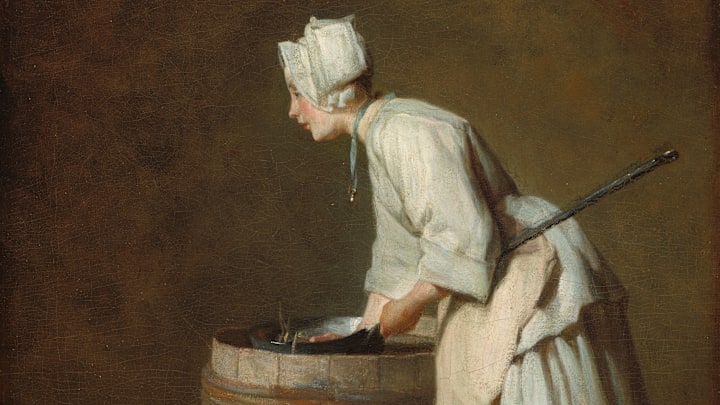
Washing up after meals might be a pain nowadays, but in Regency, Victorian, and Edwardian-era Britain, this was an altogether different beast. Sanitation was a major issue that was just starting to receive more attention at this time. This led to the popularization of a room called the scullery, which was dedicated entirely to cleaning and washing dishes, and to the creation of the scullery maid.
These maids were often responsible for washing dishes and scouring kitchen floors. But their duties included essentially everything their superiors wanted them to do—and everyone was their superior, as scullery maids were the lowest-ranking employees in kitchens of this era.
These maids were often responsible for some of the hardest tasks required by wealthy houses, from hauling heavy buckets of bathwater up flights of stairs to starting and maintaining kitchen fires. They were often tasked with taking care of the other servants, and were sometimes nicknamed skivvies, a term that meant underwear at the time, as their duties sometimes included washing servants’ underclothes. Their daily duties could also involve emptying and scrubbing chamber pots and setting servants’ tables.
Usually young women, scullery maids were typically the first to rise and the last to go to sleep of the whole household staff, and would sometimes also have to get up into the middle of the night to add coal to the cooking fires. They would do most of their work from the scullery, which was sometimes so cold and damp that these maids would stand on slatted mats to avoid soaking their feet on the cold floors.
They were often not even able to eat with other servants as they had to keep an eye on the kitchen at all times. In addition to all this, their manner and appearance were still expected to be impeccable, and at the same time, they were largely expected to be invisible to all.

They would sometimes suffer injuries from being in cold, damp spaces, from slipping on the wet scullery floors, and from the lye soaps they would use for the washing-up. Of course, the Regency and Victorian eras were rife with dangerous beauty products and general sanitation issues that put even the royals at risk, but being a scullery maid certainly came with its own unique challenges.
Scullery maids were typically low-ranking and rather unfortunate creatures, but they sometimes were able to move up in the ranks and become cooks or take on other positions. Of course, in fairytales—and in Bridgerton—their trajectories aren’t always as fixed.
Famous fictional scullery maids include Snow White, Cinderella, and now, Sophie from Bridgerton, whose journey from her father’s ward to scullery maid to the apple of Benedict Bridgerton’s eye evokes fairy tales more than what her actual fate probably would've been like.