%20%20--%3E%0A%3Csvg%20version%3D%221.1%22%20id%3D%22Layer_1%22%20xmlns%3D%22http%3A%2F%2Fwww.w3.org%2F2000%2Fsvg%22%20xmlns%3Axlink%3D%22http%3A%2F%2Fwww.w3.org%2F1999%2Fxlink%22%20x%3D%220px%22%20y%3D%220px%22%0A%09%20viewBox%3D%220%200%20684.6%2068.1%22%20style%3D%22enable-background%3Anew%200%200%20684.6%2068.1%3B%22%20xml%3Aspace%3D%22preserve%22%3E%0A%3Cg%3E%0A%09%3Cpath%20d%3D%22M444.1%2C29.3h-17.4v14.5h17.4V29.3z%20M36.4%2C68.1l29.3-50.8V0H50.4L32.9%2C36.8L15.5%2C0H0v68.1h16.7V45.8l12.4%2C22.3H36.4z%0A%09%09%20M49.1%2C68.1h16.6V23.4L49.1%2C52.1V68.1z%20M76.6%2C68.1h45V53.8H93.3V41.6h21V27.1h-21V14.8h28.3V0.1h-45V68.1z%20M175.6%2C68.1h17.3v-68%0A%09%09h-16.5v40.3L150%2C0.1h-17.6v68h16.7V27.7L175.6%2C68.1z%20M235.8%2C14.8h15.4V0.1h-47.4v14.7H219v53.2h16.8V14.8z%20M290.3%2C45.9h-17.1%0A%09%09l7.5-15.6h2L290.3%2C45.9z%20M298.7%2C68.1h18l-32.2-68h-5.7l-32%2C68h18l3.3-7.1h27.1L298.7%2C68.1z%20M325.2%2C68.1h46.2V53.8h-29.6V0.1h-16.7%0A%09%09V68.1z%20M423.7%2C14.8h27.2V0.1H407v68h16.7V14.8z%20M462%2C68.1h46.2V53.8h-29.6V0.1H462V68.1z%20M564.8%2C34.1c0%2C10.7-7.2%2C19.2-18.5%2C19.2%0A%09%09c-11.4%2C0-18.5-8.5-18.5-19.2s7.1-19.2%2C18.5-19.2C557.6%2C14.9%2C564.8%2C23.4%2C564.8%2C34.1%20M580.6%2C34.1c0-19-14.2-34-34.3-34%0A%09%09c-20.2%2C0-34.3%2C15-34.3%2C34c0%2C19%2C14.1%2C34%2C34.3%2C34C566.4%2C68.1%2C580.6%2C53.1%2C580.6%2C34.1%20M604.8%2C20.5c0-4.1%2C3.3-6.2%2C6.7-6.2%0A%09%09c4.4%2C0%2C6.6%2C3%2C6.6%2C6.6h14.7C631.8%2C9.1%2C625.1%2C0.1%2C611%2C0.1c-12%2C0-21.7%2C9.3-21.7%2C20.6c0%2C10.9%2C5.9%2C15.9%2C16.7%2C19.8%0A%09%09c5.2%2C1.8%2C11.5%2C3.2%2C11.5%2C8c0%2C3.3-2.4%2C5.5-6.4%2C5.5c-3.6%2C0-6.6-3-6.6-6.7h-15.2c0%2C11.5%2C7.9%2C20.8%2C21.8%2C20.8c12%2C0%2C21.6-9.3%2C21.6-20.6%0A%09%09c0-10-5.3-16.4-16.7-19.8C610.6%2C26.1%2C604.8%2C25.3%2C604.8%2C20.5%20M670%2C20.9h14.7C683.8%2C9.1%2C677.1%2C0.1%2C663%2C0.1c-12%2C0-21.7%2C9.3-21.7%2C20.6%0A%09%09c0%2C10.9%2C5.9%2C15.9%2C16.7%2C19.8c5.2%2C1.8%2C11.5%2C3.2%2C11.5%2C8c0%2C3.3-2.4%2C5.5-6.4%2C5.5c-3.6%2C0-6.6-3-6.6-6.7h-15.2c0%2C11.5%2C7.9%2C20.8%2C21.8%2C20.8%0A%09%09c12%2C0%2C21.6-9.3%2C21.6-20.6c0-10-5.3-16.4-16.7-19.8c-5.4-1.6-11.3-2.4-11.3-7.2c0-4.1%2C3.3-6.2%2C6.7-6.2C667.7%2C14.4%2C670%2C17.3%2C670%2C20.9%0A%09%09%22%2F%3E%0A%3C%2Fg%3E%0A%3C%2Fsvg%3E%0A)

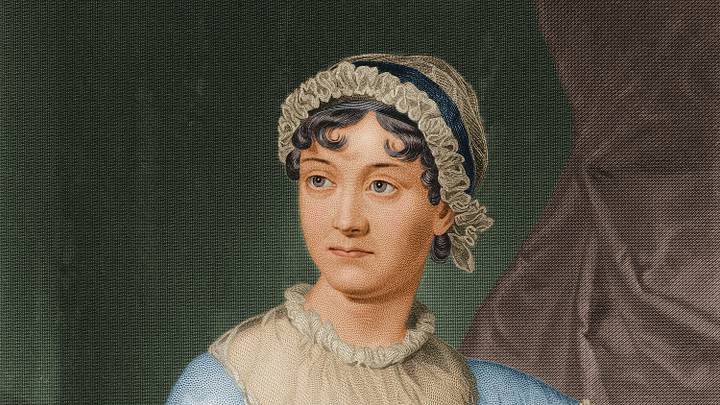
Jane Austen was the author of six classic works of literature, including Sense and Sensibility, Pride and Prejudice, and Persuasion. Her novels’ timeless themes of love, class, and morality have endeared them to generation after generation, inspiring countless film and television adaptations along the way.
Austen herself has also been subject to a great deal of discussion and interest. Born in 1775 in Steventon, Hampshire, England, the writer had a large family and received much of her early schooling via unlimited access to her father’s library. She began writing as a child and produced a number of stories and fragments between the ages of 11 and 17. Between the ages of 19 and 25, she penned the first drafts of what would become Sense and Sensibility, Pride and Prejudice, and Northanger Abbey.
When Austen was 25, her father retired and moved the family to Bath. He died four years later, leaving Austen, her sister, and their mother with much reduced financial stability. They spent the following years living with a friend in Southampton. During these less stable years, Austen did not write regularly or complete any manuscripts.
In 1809, when Austen was 29, her brother offered his mother and sisters a large cottage on his estate in Chawton. It was there that, despite the full house and regular stream of unannounced visitors, Austen developed the dependable daily routine that allowed her to complete and publish the drafts she had started years before, and much more.
Jane Austen’s morning routine

Austen was an early riser and woke before the other women in her house. The first thing she did each day was sit down and play the piano. Sometimes she would also answer letters, consult with housekeepers, or walk to the nearby village during these early hours.
She then organized the family’s breakfast, which was served daily at 9 a.m and likely would have consisted of buttered toast and muffins. Breakfast was Austen’s only daily household task; her sister Cassandra dealt with most of the practicalities of running the home, a fact that Austen was grateful for. “Composition seems to me impossible with a head full of joints of mutton & doses of rhubarb,” she once reflected.
Austen's writing habits

After breakfast, Austen would sit down to write. Surprisingly, she never wrote in private. Instead, she always worked in the sitting room, often while her mother and sister sewed nearby. Her work would often be interrupted by visitors, who could appear unannounced at any moment.
The sitting room door always creaked loudly when someone was arriving, and according to Austen’s nephew James Edward Austen-Leigh, this was intentional: in his memoir, he wrote that Austen forbade servants from oiling the door because the sound served as an alarm that gave her time to hide her work. She also chose to write on small papers specifically because they were easy to tuck away at a moment’s notice.
Austen wrote with a quill pen at a walnut tripod table near the window, which is still on view at the Chawton Cottage today. It was at this small table that she revised Sense and Sensibility, Pride and Prejudice, and Northanger Abbey and wrote Mansfield Park, Emma, Persuasion, and the unfinished Sanditon.
Austen wrote slowly, revising as she went. After finishing a draft, she would revise the entire thing once again. She took regular breaks and often brainstormed ideas and revisions during afternoon walks and throughout the evenings.
Austen greatly enjoyed gardening and living in nature, and frequently strolled through the nearby orchard. “You cannot imagine—it is not in human nature to imagine—what a nice walk we have round the orchard. The row of beech look very well indeed,” she wrote in an 1811 letter.
Dinner and evenings at Chawton

Dinner, the second meal of the day, occurred between 3 and 5 p.m. Evenings were spent socializing, playing games, and drinking tea, and light snacks and cakes were served around 7 or 8 p.m. Austen would often read excerpts from her unfinished novels to her family during this time, and her mother and sister’s feedback was an important part of her process.
Austen’s first novel, Sense and Sensibility, was published in 1811, followed by Pride and Prejudice, Mansfield Park, and Emma. All were completed amid the hustle and bustle of a busy cottage full of women.
The author died in 1817 at the age of 41, and though her books had by then become favorites of the likes of the future King George IV, she remained completely anonymous to the general public until after her death.