%20%20--%3E%0A%3Csvg%20version%3D%221.1%22%20id%3D%22Layer_1%22%20xmlns%3D%22http%3A%2F%2Fwww.w3.org%2F2000%2Fsvg%22%20xmlns%3Axlink%3D%22http%3A%2F%2Fwww.w3.org%2F1999%2Fxlink%22%20x%3D%220px%22%20y%3D%220px%22%0A%09%20viewBox%3D%220%200%20684.6%2068.1%22%20style%3D%22enable-background%3Anew%200%200%20684.6%2068.1%3B%22%20xml%3Aspace%3D%22preserve%22%3E%0A%3Cg%3E%0A%09%3Cpath%20d%3D%22M444.1%2C29.3h-17.4v14.5h17.4V29.3z%20M36.4%2C68.1l29.3-50.8V0H50.4L32.9%2C36.8L15.5%2C0H0v68.1h16.7V45.8l12.4%2C22.3H36.4z%0A%09%09%20M49.1%2C68.1h16.6V23.4L49.1%2C52.1V68.1z%20M76.6%2C68.1h45V53.8H93.3V41.6h21V27.1h-21V14.8h28.3V0.1h-45V68.1z%20M175.6%2C68.1h17.3v-68%0A%09%09h-16.5v40.3L150%2C0.1h-17.6v68h16.7V27.7L175.6%2C68.1z%20M235.8%2C14.8h15.4V0.1h-47.4v14.7H219v53.2h16.8V14.8z%20M290.3%2C45.9h-17.1%0A%09%09l7.5-15.6h2L290.3%2C45.9z%20M298.7%2C68.1h18l-32.2-68h-5.7l-32%2C68h18l3.3-7.1h27.1L298.7%2C68.1z%20M325.2%2C68.1h46.2V53.8h-29.6V0.1h-16.7%0A%09%09V68.1z%20M423.7%2C14.8h27.2V0.1H407v68h16.7V14.8z%20M462%2C68.1h46.2V53.8h-29.6V0.1H462V68.1z%20M564.8%2C34.1c0%2C10.7-7.2%2C19.2-18.5%2C19.2%0A%09%09c-11.4%2C0-18.5-8.5-18.5-19.2s7.1-19.2%2C18.5-19.2C557.6%2C14.9%2C564.8%2C23.4%2C564.8%2C34.1%20M580.6%2C34.1c0-19-14.2-34-34.3-34%0A%09%09c-20.2%2C0-34.3%2C15-34.3%2C34c0%2C19%2C14.1%2C34%2C34.3%2C34C566.4%2C68.1%2C580.6%2C53.1%2C580.6%2C34.1%20M604.8%2C20.5c0-4.1%2C3.3-6.2%2C6.7-6.2%0A%09%09c4.4%2C0%2C6.6%2C3%2C6.6%2C6.6h14.7C631.8%2C9.1%2C625.1%2C0.1%2C611%2C0.1c-12%2C0-21.7%2C9.3-21.7%2C20.6c0%2C10.9%2C5.9%2C15.9%2C16.7%2C19.8%0A%09%09c5.2%2C1.8%2C11.5%2C3.2%2C11.5%2C8c0%2C3.3-2.4%2C5.5-6.4%2C5.5c-3.6%2C0-6.6-3-6.6-6.7h-15.2c0%2C11.5%2C7.9%2C20.8%2C21.8%2C20.8c12%2C0%2C21.6-9.3%2C21.6-20.6%0A%09%09c0-10-5.3-16.4-16.7-19.8C610.6%2C26.1%2C604.8%2C25.3%2C604.8%2C20.5%20M670%2C20.9h14.7C683.8%2C9.1%2C677.1%2C0.1%2C663%2C0.1c-12%2C0-21.7%2C9.3-21.7%2C20.6%0A%09%09c0%2C10.9%2C5.9%2C15.9%2C16.7%2C19.8c5.2%2C1.8%2C11.5%2C3.2%2C11.5%2C8c0%2C3.3-2.4%2C5.5-6.4%2C5.5c-3.6%2C0-6.6-3-6.6-6.7h-15.2c0%2C11.5%2C7.9%2C20.8%2C21.8%2C20.8%0A%09%09c12%2C0%2C21.6-9.3%2C21.6-20.6c0-10-5.3-16.4-16.7-19.8c-5.4-1.6-11.3-2.4-11.3-7.2c0-4.1%2C3.3-6.2%2C6.7-6.2C667.7%2C14.4%2C670%2C17.3%2C670%2C20.9%0A%09%09%22%2F%3E%0A%3C%2Fg%3E%0A%3C%2Fsvg%3E%0A)

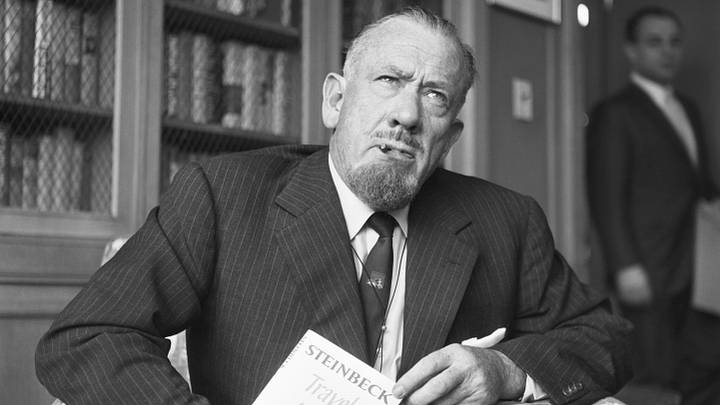
“I’m fifty years old. If 'East of Eden' isn’t good, then I’ve been wasting my time.” So said John Steinbeck upon the publication of his eighth novel back in 1952.
"East of Eden" tells the intertwining sagas of two American families, the Trasks and the Hamiltons, spanning a sprawling period from the start of the Civil War to the end of World War I. An immensely ambitious and involved work incorporating elements of the biblical story of Cain and Abel, Steinbeck also based the novel on the life story of his own maternal great-grandfather, Samuel Hamilton, and integrated various relatives and stories from his own family history into the plot. The character of Adam Trask, one of the novel’s central brothers, for instance, has been claimed to be based on Steinbeck’s father, while Steinbeck himself serves as the book’s narrator, features as a child in various scenes in the book, and originally addressed the novel to his own sons, Thom and John.
Despite Steinbeck’s reputation today as one of the greatest novelists of the last century, at the time of the publication of "East of Eden," he had been experiencing something of a creative and critical slump, and had been struggling to maintain the success and acclaim of his 1935 commercial breakout Tortilla Flat, and his Pulitzer-winning classic "The Grapes of Wrath" four years later. "East of Eden," he believed, was to be his magnum opus, and as such was not only an attempt to regain his reputation as one of America’s greatest living writers, but the culmination of his decades of writing experience. “I think everything else I have written has been, in a sense, practice for this,” he explained. “It has in it everything I have been able to learn about my art or craft or profession in all these years.”
Happily, much of Steinbeck’s audience agreed. The book became an instant bestseller, and appears to have firmly resonated with many of its readers. “The book seems to be selling enormously,” Steinbeck wrote to a friend just a month after its release. “I am getting flocks of letters and oddly enough … [p]eople write as though it were their book.”
The critics, however, were not quite so kind—which even Steinbeck himself had to admit in precisely the same letter. “I am interested in Anthony West’s review in the New Yorker,” he wrote. “I wonder what made him so angry?”
“VERBAL SYRUP”
West’s review was just one of a raft of scathing critiques that "East of Eden" received on its publication. West in particular labelled the book as “puerile” and “verbal syrup,” and likened it to “those nineteenth-century melodramas in which the villains could always be recognized because they waxed their mustaches.” The New York Times likewise called the novel “amorphous” and “clumsy in structure,” while Time Magazine found flaws with the quality of Steinbeck’s prose, plotline, and storytelling, even going so far as to drag his reputation and past successes into the mud. “Now 50,” the review said, Steinbeck “has run a wobbly literary path for nearly a quarter of a century,” with his breakout Tortilla Flat really nothing more than “charming sentimentality,” and its follow-up In Dubious Battle considered “left-wing melodrama.” Even Of Mice and Men was dismissed as “maudlin blather.”
THE BIBLICAL BACKSTORY

Many critics took issue with Steinbeck’s clumsy and heavy-handed incorporation of the Cain and Abel story in his novel, and the rather unsubtle and sensational way in which the story was told. The New York Times’ review, although somewhat positive overall, said "East of Eden" was “defaced by excessive melodramatics and much cheap sensationalism,” and that “the Biblical situation” that underpins the story creates “poetic hesitation and indecision … rather than dramatic definition or narrative explication.” In a similarly mixed review, The Washington Post compared the novel to other classic novels that, despite their long-standing popularity and success, “aren’t coherent or artistically graceful.” Other critics found fault with Steinbeck’s somewhat questionable discussion of the central theological topic of “timshel”—a Hebrew word whose interpretation forms a major part of the storyline and ending—and found the arguments he therefore sets out around good and evil to have no artistic merit.
STEINBECK THE MORALIST

“More moralist than novelist” is how one critic dismissed Steinbeck in his review of "East of Eden," and he was by no means alone. The biblical basis and sensational content of the novel were another frequent cause of criticism, with Steinbeck accused of making the novel more a didactic vehicle for his own opinions and philosophies rather than a worthwhile work of fiction.
THE CATHY PROBLEM
Cathy is essentially the catalyst of "East of Eden," whose actions impact all those around her in increasingly destructive ways (a destruction that Cathy herself seems to revel in). Of all the novel’s characters, however, Cathy came to be singled out by the critics as the most problematic in the book, with both her personality and storyline dismissed as downright implausible and unbelievable on the one hand, and morally grotesque on the other. “[The] most vicious female in literature,” the New York Times said of Cathy, “whose story, if we accept it at all, we accept at the level of folklore.”
Steinbeck’s novel might not have achieved the widespread critical acclaim he had hoped for (or, arguably, deserved), but "East of Eden" has since gone on to be thoroughly reappraised and is today considered one of the greatest novels of all time.