%20%20--%3E%0A%3Csvg%20version%3D%221.1%22%20id%3D%22Layer_1%22%20xmlns%3D%22http%3A%2F%2Fwww.w3.org%2F2000%2Fsvg%22%20xmlns%3Axlink%3D%22http%3A%2F%2Fwww.w3.org%2F1999%2Fxlink%22%20x%3D%220px%22%20y%3D%220px%22%0A%09%20viewBox%3D%220%200%20684.6%2068.1%22%20style%3D%22enable-background%3Anew%200%200%20684.6%2068.1%3B%22%20xml%3Aspace%3D%22preserve%22%3E%0A%3Cg%3E%0A%09%3Cpath%20d%3D%22M444.1%2C29.3h-17.4v14.5h17.4V29.3z%20M36.4%2C68.1l29.3-50.8V0H50.4L32.9%2C36.8L15.5%2C0H0v68.1h16.7V45.8l12.4%2C22.3H36.4z%0A%09%09%20M49.1%2C68.1h16.6V23.4L49.1%2C52.1V68.1z%20M76.6%2C68.1h45V53.8H93.3V41.6h21V27.1h-21V14.8h28.3V0.1h-45V68.1z%20M175.6%2C68.1h17.3v-68%0A%09%09h-16.5v40.3L150%2C0.1h-17.6v68h16.7V27.7L175.6%2C68.1z%20M235.8%2C14.8h15.4V0.1h-47.4v14.7H219v53.2h16.8V14.8z%20M290.3%2C45.9h-17.1%0A%09%09l7.5-15.6h2L290.3%2C45.9z%20M298.7%2C68.1h18l-32.2-68h-5.7l-32%2C68h18l3.3-7.1h27.1L298.7%2C68.1z%20M325.2%2C68.1h46.2V53.8h-29.6V0.1h-16.7%0A%09%09V68.1z%20M423.7%2C14.8h27.2V0.1H407v68h16.7V14.8z%20M462%2C68.1h46.2V53.8h-29.6V0.1H462V68.1z%20M564.8%2C34.1c0%2C10.7-7.2%2C19.2-18.5%2C19.2%0A%09%09c-11.4%2C0-18.5-8.5-18.5-19.2s7.1-19.2%2C18.5-19.2C557.6%2C14.9%2C564.8%2C23.4%2C564.8%2C34.1%20M580.6%2C34.1c0-19-14.2-34-34.3-34%0A%09%09c-20.2%2C0-34.3%2C15-34.3%2C34c0%2C19%2C14.1%2C34%2C34.3%2C34C566.4%2C68.1%2C580.6%2C53.1%2C580.6%2C34.1%20M604.8%2C20.5c0-4.1%2C3.3-6.2%2C6.7-6.2%0A%09%09c4.4%2C0%2C6.6%2C3%2C6.6%2C6.6h14.7C631.8%2C9.1%2C625.1%2C0.1%2C611%2C0.1c-12%2C0-21.7%2C9.3-21.7%2C20.6c0%2C10.9%2C5.9%2C15.9%2C16.7%2C19.8%0A%09%09c5.2%2C1.8%2C11.5%2C3.2%2C11.5%2C8c0%2C3.3-2.4%2C5.5-6.4%2C5.5c-3.6%2C0-6.6-3-6.6-6.7h-15.2c0%2C11.5%2C7.9%2C20.8%2C21.8%2C20.8c12%2C0%2C21.6-9.3%2C21.6-20.6%0A%09%09c0-10-5.3-16.4-16.7-19.8C610.6%2C26.1%2C604.8%2C25.3%2C604.8%2C20.5%20M670%2C20.9h14.7C683.8%2C9.1%2C677.1%2C0.1%2C663%2C0.1c-12%2C0-21.7%2C9.3-21.7%2C20.6%0A%09%09c0%2C10.9%2C5.9%2C15.9%2C16.7%2C19.8c5.2%2C1.8%2C11.5%2C3.2%2C11.5%2C8c0%2C3.3-2.4%2C5.5-6.4%2C5.5c-3.6%2C0-6.6-3-6.6-6.7h-15.2c0%2C11.5%2C7.9%2C20.8%2C21.8%2C20.8%0A%09%09c12%2C0%2C21.6-9.3%2C21.6-20.6c0-10-5.3-16.4-16.7-19.8c-5.4-1.6-11.3-2.4-11.3-7.2c0-4.1%2C3.3-6.2%2C6.7-6.2C667.7%2C14.4%2C670%2C17.3%2C670%2C20.9%0A%09%09%22%2F%3E%0A%3C%2Fg%3E%0A%3C%2Fsvg%3E%0A)

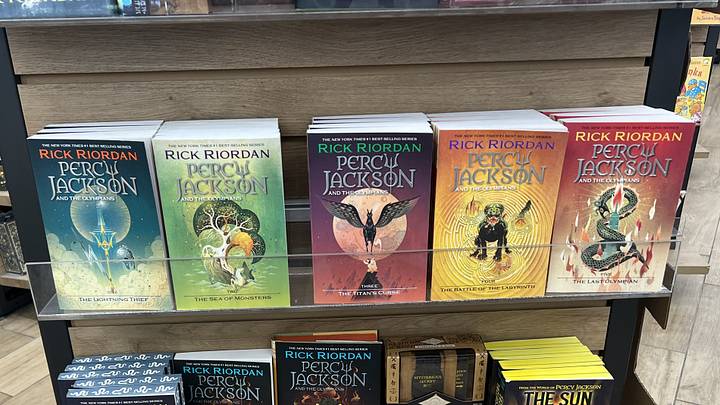
The latest season of Percy Jackson and the Olympians debuts on Disney+ on November 20, 2026, bringing The Titan’s Curse to life in live action for the first time. The season will focus on Percy Jackson teaming up with unlikely allies to rescue Annabeth Chase from the forces of Kronos, a quest that will determine his role in the Great Prophecy that guides the series.
In an interview with D23, author Rick Riordan explained that his goal with the Percy Jackson franchise was to create stories that were “fun and enjoyable and also kind of a stealth education in mythology.” Simply reading the books or watching the series will introduce audiences to the gods and monsters that populate Greek mythology, with a few direct references to the myths they come from. But Riordan’s way of infusing Greek mythology into his stories actually goes much deeper.
While the series as a whole functions as a modern remix of Greek mythology, throwing lesser-known characters like Procrustes into the same narrative as mythological icons like Medusa and the Minotaur, each book also follows the broad strokes of one or more Greek hero’s quests. Below, we break down the seven heroes and myths that serve as key inspirations for each book in the Percy Jackson and the Olympians series.
- The Titanomachy
- Perseus, the Gorgon Slayer
- The Odyssey
- Jason and the Argonauts
- Heracles, the Greatest of all Heroes
- Daedalus and his Failures
- The Iliad
The Titanomachy

The series-long conflict in the Percy Jackson and the Olympians series is based on the return of the Titans, so it’s vital to understand the myths surrounding them and their conflict with the gods. Ancient Greek cosmology claimed that the universe was once controlled by the primordial deities Gaia (Earth) and Uranus (Sky), but Gaia asked her son Kronos to overthrow his father. He agreed, establishing himself and his siblings as the supreme deities on Earth. However, after defeating his father, Kronos was warned that he would one day be overthrown by his own son.
Fearing this, Kronos ate his children as soon as his wife bore them, including five of the Olympian gods. His wife hid their youngest son, Zeus, who was raised in secret before returning to force his father to vomit up his siblings. With the gods free, Zeus launched a war against the Titans that would last ten years. The gods finally gained the advantage after freeing the Cyclopes and Hecatonchires from Tartarus. The Cyclopes created symbols of power for each of the male gods, crafting Zeus’s lightning bolts, Poseidon’s trident, and Hades’s helm of darkness. Using these weapons, the Olympians finally conquered the Titans, casting them into Tartarus and taking their place.
The series takes all of this as a starting point, with Kronos attempting to reclaim power by manipulating demigods. Each of the first four books takes a step toward his resurrection, culminating in the second great Titanomachy in The Last Olympian. Kronos and the other Titans play an active role in the story, remembering their first defeat and actively trying to change the outcome. But while they overtly serve as the series’s primary antagonists, the Titans also contribute to the story's thematic arc by asking whether the cycle of son betraying father is inevitable.
Perseus, the Gorgon Slayer

Turning to the more specific inspirations in the Percy Jackson franchise, the first figure that you need to understand is Perseus, a demigod who was chosen as Percy's namesake because he received a happier ending than most Greek heroes. Perseus was the son of Zeus and a princess named Danae, who had been imprisoned by her father thanks to a prophecy that claimed that her son would one day overthrow and kill his grandfather. Like so many mythic figures, Perseus had to grow up in hiding to avoid being killed.
Despite that, Perseus had a relatively happy childhood until he was tasked with killing Medusa, a snake-haired monster capable of turning men to stone with a single glance. King Polydectes threatened to capture Danae if Perseus did not succeed at killing the Gorgon. So Perseus sought advice from the Grey Sisters, who, in certain stories, helped him find Medusa, the Helm of Hades, and a set of winged sandals. These tools gave Perseus the mobility and stealth he needed to behead the monster.
He then met Princess Andromeda, who was chained to a rock as a sacrifice to a sea monster. Perseus spoke to her father, who agreed to let Perseus marry her if he could defeat the monster. Perseus produced Medusa’s head, which promptly turned the creature to stone. When he returned home to find that King Polydectes had been abusing his mother, Perseus also used the head to get revenge on the king. With his enemies thwarted, Perseus settled down with Andromeda, eventually becoming the great-grandfather of Heracles.
Perseus’s story has a lot of influence on The Lightning Thief, from the broad strokes of Percy needing to kill Medusa and rescue his mother to the more specific details, such as the use of an invisibility cap and flying shoes. The idea that Percy is fated to kill some portion of his family also appears throughout the franchise, forcing him to confront his rocky relationship with the gods whenever a new prophecy puts the fate of the world in his hands.
The Odyssey

The Odyssey is one of the most well-known pieces of Greek mythology in the modern day, but it tends to be boiled down to a handful of plot points that appear in Books 9 through 12. After fighting in the Trojan War for 10 years, Odysseus attempts to take his men home to Ithaca. After trying and failing to conquer the Cicones, Odysseus and his crew escape from the Lotus-Eaters, whose food makes the travelers forget about returning home, and confront the cyclops Polyphemus. Although Odysseus is able to save many of his men by outwitting and blinding Polyphemus, he eventually tells the cyclops his name, which launches a conflict with Poseidon.
From there, he gets blown off track by a bag of winds, loses most of his men to cannibalistic giants known as the Laestrygonians, and has to defeat a sorceress named Circe who turned his men into pigs. After getting her on his side, he travels to the Underworld for advice on how to get home, avoids the lure of the Sirens, and sacrifices six of his men to get past the strait of Scylla and Charybdis. They might have made it home alive, but his crew kills the sacred cattle of Helios, which results in everyone else being killed and Odysseus being stranded on an island for seven years with an infatuated nymph named Calypso.
While Odysseus attempts to survive a mythological obstacle course, his wife and son face an invasion. 108 suitors attempt to claim the kingdom by marrying Penelope, a fate which she evades for years by pretending to weave a burial shroud for her father-in-law. When Odysseus returns, he teams up with his son to hide the suitors' weapons while Penelope announces that she will marry the man who can perform an archery feat. Odysseus is the only one who can manage it, stringing his old war bow before killing all of the suitors. Penelope tests his identity using knowledge about their wedding bed before finally welcoming her husband home.
The Sea of Monsters provides the most obvious parallels to The Odyssey, as Percy and his friends are forced to fight the Laestrygonians, navigate Scylla and Charybdis, and survive their encounters with Sirens, Circe, and Polyphemus. There are also references to Penelope’s side of the story, as Grover uses her weaving trick to buy himself time. Other elements of the Odyssey, including Calypso’s island and the new residence of the Lotus-Eaters, appear throughout the series as safe but time-consuming refuges where the chara
Jason and the Argonauts

The story of Jason and the Argonauts is a bit of a greatest hits compilation in Greek mythology, combining many of the most famous heroes and monsters in one epic quest. Before we can explore their adventures, however, we must understand their mission. The Argonauts sought the Golden Fleece, which was created from a flying golden ram that had been sent to rescue a cloud nymph’s children from their murderous stepmother. When the boy made it safely to Colchis, he sacrificed the ram to Zeus and gave its fleece to the king, Aeëtes, who hung it in a sacred grove, guarded by a dragon who never slept.
Over in Iolcos, the rightful heir to the kingdom was ordered to retrieve the Golden Fleece before he could claim his inheritance from his uncle. Jason acquired the fastest ship ever made and put together a legendary crew, including figures such as Heracles, Orpheus, and Atalanta, along with the fathers of Trojan War-era heroes like Odysseus and Achilles. They sailed for Colchis, facing off against six-armed giants, harpies, and a treacherous passage that sank most ships that passed through it.
When they arrived, King Aeëtes required Jason to prove himself by yoking fire-breathing bulls to plow a field, sowing dragon teeth in the soil, and fighting the skeletal army that emerged from the field. Jason accomplished these tasks with the help of Aeëtes’s daughter Medea, who was a powerful sorceress. When the king still refused to give Jason the fleece, Medea drugged the dragon to allow Jason to steal the fleece and then murdered and dismembered her brother to stop her father from pursuing them.
On their way home, the Argonauts had to seek purification from Circe, get past the Sirens, and defeat a bronze giant named Talos. They succeeded in all of this, but when Medea proceeded to trick Jason’s cousins into murdering their father, they were exiled from Iolcos. They escaped to Corinth, where Jason fell for the king’s daughter—a betrayal that resulted in Medea murdering the king, his daughter, and her own children in revenge.
Perhaps due to Medea’s murderous tendencies, the original Percy Jackson and the Olympians series avoided borrowing many of the Argonauts’ challenges. However, The Sea of Monsters involves a quest to acquire the Golden Fleece, and the sequel series The Heroes of Olympus gathers the modern world’s greatest heroes on the Argo II. The Titan’s Curse also includes some of the threats Jason had to face, including the skeletal army and the bronze giant. While the overall myth may have been considered far too dark for Percy Jackson’s target audience, many of its sub-narratives still found their way into the final series.
Heracles, the Greatest of all Heroes

Heracles (more commonly known by his Roman name, Hercules) is one of the most famous figures in mythology, often seen as the paragon of Greek heroism. However, many people in the modern day know little about the demigod. Heracles was the son of Perseus’s granddaughter Alcmene and Zeus, a fact which caused him no small amount of trouble. Hera, seeing him as a physical manifestation of her husband’s infidelity, sent snakes to kill the boy while he was still in the cradle, allowing him to claim his first victory at just eight months old.
Despite Hera’s schemes against him, Heracles had a relatively happy early life, gaining acclaim from defeating monsters, marrying the Theban princess Megara, and having multiple children with her. However, Hera drove Heracles to madness, making him unknowingly slaughter his wife and children. The Oracle of Delphi told him to serve his cousin, King Eurystheus, as penance for his crimes.
Eurystheus ordered Heracles to complete twelve seemingly impossible tasks: slay the invincible Nemean lion; defeat the nine-headed hydra plaguing Lerna; capture a golden stag that was sacred to Artemis; capture the Erymanthian boar; clean the stables of King Augeas (who owned thousands of cattle); defeat the man-eating Stymphalian birds; capture the Cretan bull; retrieve the man-eating mares of King Diomedes; claim the girdle of Hippolyta, Queen of the Amazons; steal the cattle of a three-headed giant named Geryon; collect golden apples from the garden of the Hesperides; and capture Cerberus, the three-headed dog that guarded the Underworld.
During and after these Labours, Heracles encountered dozens of other monsters and mythical creatures, triumphing over every obstacle in his way. But when his wife, Deianira, was tricked into giving him a centaur’s poisoned blood as a love potion, Heracles tore off his own skin and dragged himself to a funeral pyre. Finally defeated in the mortal world, Heracles then ascended to godhood and claimed Hera’s daughter Hebe as his immortal bride.
Between The Sea of Monsters and The Last Olympian, Percy faces many of the same opponents that Heracles did. Luke Castellan is also tasked with stealing an apple from the Hesperides as a hand-me-down quest, and Percy’s sword Riptide was originally owned by Heracles. In the Percy Jackson universe, Heracles serves as the gods’ ideal hero, though his actions often clash with Percy’s own values. After proving that Percy is just as strong and impressive as Heracles, the series puts him in the position to make the same mistakes, marking him as a better role model when he chooses differently.
Daedalus and his Failures

Daedalus was one of the greatest inventors of myth, serving a similar role in Greek mythology to what Leonardo da Vinci did in real life. While he's credited with a number of revolutionary creations, his most important stories come from his time in Crete, serving King Minos. After being cursed to love a bull, Minos's wife gave birth to a half-human, half-bull creature: the Minotaur. Minos tasked Daedalus with constructing a labyrinth to house the Minotaur, periodically stocking the maze with human sacrifices from Athens.
Intending to stop the slaughter of his people, the Athenian prince Theseus volunteered to be one of the sacrifices. Minos’s daughter Ariadne fell in love with him and asked Daedalus for help in getting Theseus out alive. Daedalus told Ariadne to give Theseus a ball of golden thread which would allow him to escape the labyrinth, and once he killed the Minotaur, Theseus and Ariadne fled.go
In their absence, Daedalus and his son were punished by King Minos, who had them locked in an inescapable tower. Seeing no other way out, Daedalus crafted wings out of feathers and wax, warning his son not to fly too high or too low. Icarus disobeyed his father, flying high enough that the sun melted the wax from his wings, causing him to plunge into the water below.
While the Minotaur first appears in The Lightning Thief, Daedalus’s legends serve as the primary inspiration for the fourth book in the series, The Battle of the Labyrinth. In Riordan’s world, the Labyrinth is a sentient being, expanding across the planet as a network of hidden passages for anyone who can safely navigate it. In order to prevent Kronos's armies from having sole control over the passages, Percy and his friends seek out Daedalus, who becomes the first hero to go beyond inspiring the stories, becoming a main character in his own right. As the story progresses, the characters use artifacts like Ariadne’s string and Icarus’s wings to escape the threat of King Minos and his Titan allies.
The Iliad

The influence of Greek mythology on the Percy Jackson franchise is most overt in the final installment, where Percy is explicitly told, “You are refighting the Trojan War here. Patterns repeat themselves in history. They reappear just as monsters do. A great siege. Two armies…” The battle lines might be drawn by the Titanomachy, but the plot of The Last Olympian has far more in common with The Iliad.
The Iliad began in the tenth year of the Trojan War, prioritizing a conflict between Achilles and Agamemnon over the conflict between the Trojans and the Greeks. After sacking a city, the Greeks captured two maidens (Chryseis and Briseis), giving them as spoils of war to Agamemnon and Achilles. When Apollo threatened them with plague if they didn't return Chryseis, Agamemnon demanded to have Briseis instead. Feeling this was a slight against him, Achilles declared that his troops would leave the war.
While Achilles eventually allowed his men to fight, he refused to join the battle personally, depriving the Greeks of their greatest warrior. Gods and men alike fought for their respective sides, but Troy was destined to win unless Achilles stepped in. This caused waves of hopelessness to go through the ranks, prompting Agamemnon to offer to return Briseis, marry his daughter to Achilles, and even give the man several cities to rule. Achilles refused, too consumed by pride to accept any offer.
After many Greeks were killed and injured in battle, the remaining leaders asked Achilles's best friend (and rumored lover) Patroclus to appeal to him on their behalf. Patroclus asked Achilles to either join the fight or loan him his armor so they could bluff the Trojans. Achilles agreed to let Patroclus use his armor, a strategy which worked well until the Trojans killed Patroclus. Fueled by grief, rage, and divine power, Achilles entered the field in armor crafted by Hephaestus himself, killing every Trojan he saw until he found and killed the man who killed Patroclus. The Iliad ended shortly after the death of Hector and burial of Patroclus, leaving the gambit with the Trojan horse and Achilles's infamous death for others to tell.
While The Last Olympian spends time exploring how Percy and Luke both acquire Achilles’ invulnerability, the greater influence of The Iliad appears in its thematic parallels. Clarisse serves as the book’s Achilles, sitting out of the war over a matter of pride and losing a friend because of it. Other demigods wonder whether it’s worth fighting a war they seem destined to lose, fighting the same sense of hopelessness that the Greeks faced after nearly a decade of war. Ultimately, however, the series defines its characters by how they deviate from the original narratives, praising them for choosing trust and selflessness when so many Greek tragedies were caused by heroes who only cared about their own glory.