%20%20--%3E%0A%3Csvg%20version%3D%221.1%22%20id%3D%22Layer_1%22%20xmlns%3D%22http%3A%2F%2Fwww.w3.org%2F2000%2Fsvg%22%20xmlns%3Axlink%3D%22http%3A%2F%2Fwww.w3.org%2F1999%2Fxlink%22%20x%3D%220px%22%20y%3D%220px%22%0A%09%20viewBox%3D%220%200%20684.6%2068.1%22%20style%3D%22enable-background%3Anew%200%200%20684.6%2068.1%3B%22%20xml%3Aspace%3D%22preserve%22%3E%0A%3Cg%3E%0A%09%3Cpath%20d%3D%22M444.1%2C29.3h-17.4v14.5h17.4V29.3z%20M36.4%2C68.1l29.3-50.8V0H50.4L32.9%2C36.8L15.5%2C0H0v68.1h16.7V45.8l12.4%2C22.3H36.4z%0A%09%09%20M49.1%2C68.1h16.6V23.4L49.1%2C52.1V68.1z%20M76.6%2C68.1h45V53.8H93.3V41.6h21V27.1h-21V14.8h28.3V0.1h-45V68.1z%20M175.6%2C68.1h17.3v-68%0A%09%09h-16.5v40.3L150%2C0.1h-17.6v68h16.7V27.7L175.6%2C68.1z%20M235.8%2C14.8h15.4V0.1h-47.4v14.7H219v53.2h16.8V14.8z%20M290.3%2C45.9h-17.1%0A%09%09l7.5-15.6h2L290.3%2C45.9z%20M298.7%2C68.1h18l-32.2-68h-5.7l-32%2C68h18l3.3-7.1h27.1L298.7%2C68.1z%20M325.2%2C68.1h46.2V53.8h-29.6V0.1h-16.7%0A%09%09V68.1z%20M423.7%2C14.8h27.2V0.1H407v68h16.7V14.8z%20M462%2C68.1h46.2V53.8h-29.6V0.1H462V68.1z%20M564.8%2C34.1c0%2C10.7-7.2%2C19.2-18.5%2C19.2%0A%09%09c-11.4%2C0-18.5-8.5-18.5-19.2s7.1-19.2%2C18.5-19.2C557.6%2C14.9%2C564.8%2C23.4%2C564.8%2C34.1%20M580.6%2C34.1c0-19-14.2-34-34.3-34%0A%09%09c-20.2%2C0-34.3%2C15-34.3%2C34c0%2C19%2C14.1%2C34%2C34.3%2C34C566.4%2C68.1%2C580.6%2C53.1%2C580.6%2C34.1%20M604.8%2C20.5c0-4.1%2C3.3-6.2%2C6.7-6.2%0A%09%09c4.4%2C0%2C6.6%2C3%2C6.6%2C6.6h14.7C631.8%2C9.1%2C625.1%2C0.1%2C611%2C0.1c-12%2C0-21.7%2C9.3-21.7%2C20.6c0%2C10.9%2C5.9%2C15.9%2C16.7%2C19.8%0A%09%09c5.2%2C1.8%2C11.5%2C3.2%2C11.5%2C8c0%2C3.3-2.4%2C5.5-6.4%2C5.5c-3.6%2C0-6.6-3-6.6-6.7h-15.2c0%2C11.5%2C7.9%2C20.8%2C21.8%2C20.8c12%2C0%2C21.6-9.3%2C21.6-20.6%0A%09%09c0-10-5.3-16.4-16.7-19.8C610.6%2C26.1%2C604.8%2C25.3%2C604.8%2C20.5%20M670%2C20.9h14.7C683.8%2C9.1%2C677.1%2C0.1%2C663%2C0.1c-12%2C0-21.7%2C9.3-21.7%2C20.6%0A%09%09c0%2C10.9%2C5.9%2C15.9%2C16.7%2C19.8c5.2%2C1.8%2C11.5%2C3.2%2C11.5%2C8c0%2C3.3-2.4%2C5.5-6.4%2C5.5c-3.6%2C0-6.6-3-6.6-6.7h-15.2c0%2C11.5%2C7.9%2C20.8%2C21.8%2C20.8%0A%09%09c12%2C0%2C21.6-9.3%2C21.6-20.6c0-10-5.3-16.4-16.7-19.8c-5.4-1.6-11.3-2.4-11.3-7.2c0-4.1%2C3.3-6.2%2C6.7-6.2C667.7%2C14.4%2C670%2C17.3%2C670%2C20.9%0A%09%09%22%2F%3E%0A%3C%2Fg%3E%0A%3C%2Fsvg%3E%0A)

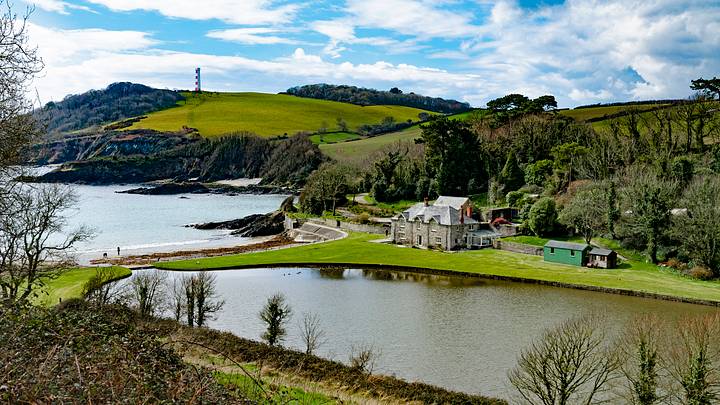
There are certain novels where the setting is an integral part of the story. For example, in Jane Austen's Pride and Prejudice, Mr. Darcy's home, Pemberley, is more than just a location. It becomes the catalyst for Elizabeth accepting and reciprocating Darcy's feelings. Other novels with indispensable architecture are Jane Eyre by Charlotte Brontë, Brideshead Revisited by Evelyn Waugh, and Rebecca by Daphne du Maurier.
If you aren't familiar with du Maurier's novel, it is difficult to fully grasp just how important the Manderley estate is to the characters and the progression of the plot. In fact, Manderley could almost be considered its own character, setting the stage for the tension, mystery, and gothic tone in Rebecca. And the reason Manderley feels like a living entity is that Daphne du Maurier based her fictional estate on real places from her life.
Manderley
"Last night I dreamt I went to Manderley again," is the famous beginning line of Rebecca, hinting at the way the narrator and her husband, Maxim de Winter, are forever haunted by their old home. With its imposing iron gates and landscaping filled with flowers the same crimson shade as blood, Manderley personifies the cruel and vengeful spirit of its first mistress, Rebecca de Winter.
The estate overflows with malicious intent, but upon first glance, Manderley is a gorgeous countryside manor that leaves the narrator awe-struck. Daphne du Maurier carefully crafted the interior design, architecture, and location of Manderley to also evoke awe and dread in her readers. Taking inspiration from one home she visited as a child and another that she lived in as an adult, du Maurier was able to make Manderley come to life.
Milton Hall
The first home that du Maurier thought of when creating Manderley was Milton Hall in Cambridgeshire, England. This house was built in 1594 and is the largest private residence in the county. Its elegant and sizeable staircase, ballroom, and foyer left a lasting impression of grandeur on du Maurier when she visited Milton Hall with her mother in 1917 and 1918, and she kept those designs in mind as she wrote Rebecca.
Milton Hall also had its share of secrets and rumors, though not so eerie as being haunted. The home was passed down through generations of the Fitzwilliam family, who descended from William the Conqueror. One son, Billy, born in 1872, had his inheritance of Milton Hall questioned when people thought he was a changeling, swapped at birth with a baby girl so that the Fitzwilliams had an heir. Not as terrifying as a ghost seeking revenge, but the suspense and mystery from Milton Hall flowed into the fictional Manderley.

Menabilly
Manderley also takes after du Maurier's Cornish estate, Menabilly. The author was entranced by the house and managed to lease it from the Rashleigh family, who had owned it since 1596. She actually based several of her book settings on Menabilly, loving that her "house of secrets" became the locale of some of her most gripping suspense and Gothic horror novels.
Hidden away from the rest of Cornwall, Menabilly held an air of mystery that fascinated du Maurier. She felt the legends and folklore of the Cornish people were absorbed into the very stones. In 1930, du Maurier witnessed a shipwreck off the coast from her balcony at Menabilly, and that experience was transformed into Rebecca de Winter's supposed fate.

Of Menabilly, du Maurier said, "Perhaps it is wrong to love a block of stone like this, as one loves a person. It cannot last. It cannot endure... Perhaps it is the very insecurity of the love that makes the passion strong." She loved the heart of the place, and all the skeletons hidden within its closets. That she was able to re-create that mysterious heart within Manderley gives us a glimpse of just how strong her passion was for places that held stories within their walls.