%20%20--%3E%0A%3Csvg%20version%3D%221.1%22%20id%3D%22Layer_1%22%20xmlns%3D%22http%3A%2F%2Fwww.w3.org%2F2000%2Fsvg%22%20xmlns%3Axlink%3D%22http%3A%2F%2Fwww.w3.org%2F1999%2Fxlink%22%20x%3D%220px%22%20y%3D%220px%22%0A%09%20viewBox%3D%220%200%20684.6%2068.1%22%20style%3D%22enable-background%3Anew%200%200%20684.6%2068.1%3B%22%20xml%3Aspace%3D%22preserve%22%3E%0A%3Cg%3E%0A%09%3Cpath%20d%3D%22M444.1%2C29.3h-17.4v14.5h17.4V29.3z%20M36.4%2C68.1l29.3-50.8V0H50.4L32.9%2C36.8L15.5%2C0H0v68.1h16.7V45.8l12.4%2C22.3H36.4z%0A%09%09%20M49.1%2C68.1h16.6V23.4L49.1%2C52.1V68.1z%20M76.6%2C68.1h45V53.8H93.3V41.6h21V27.1h-21V14.8h28.3V0.1h-45V68.1z%20M175.6%2C68.1h17.3v-68%0A%09%09h-16.5v40.3L150%2C0.1h-17.6v68h16.7V27.7L175.6%2C68.1z%20M235.8%2C14.8h15.4V0.1h-47.4v14.7H219v53.2h16.8V14.8z%20M290.3%2C45.9h-17.1%0A%09%09l7.5-15.6h2L290.3%2C45.9z%20M298.7%2C68.1h18l-32.2-68h-5.7l-32%2C68h18l3.3-7.1h27.1L298.7%2C68.1z%20M325.2%2C68.1h46.2V53.8h-29.6V0.1h-16.7%0A%09%09V68.1z%20M423.7%2C14.8h27.2V0.1H407v68h16.7V14.8z%20M462%2C68.1h46.2V53.8h-29.6V0.1H462V68.1z%20M564.8%2C34.1c0%2C10.7-7.2%2C19.2-18.5%2C19.2%0A%09%09c-11.4%2C0-18.5-8.5-18.5-19.2s7.1-19.2%2C18.5-19.2C557.6%2C14.9%2C564.8%2C23.4%2C564.8%2C34.1%20M580.6%2C34.1c0-19-14.2-34-34.3-34%0A%09%09c-20.2%2C0-34.3%2C15-34.3%2C34c0%2C19%2C14.1%2C34%2C34.3%2C34C566.4%2C68.1%2C580.6%2C53.1%2C580.6%2C34.1%20M604.8%2C20.5c0-4.1%2C3.3-6.2%2C6.7-6.2%0A%09%09c4.4%2C0%2C6.6%2C3%2C6.6%2C6.6h14.7C631.8%2C9.1%2C625.1%2C0.1%2C611%2C0.1c-12%2C0-21.7%2C9.3-21.7%2C20.6c0%2C10.9%2C5.9%2C15.9%2C16.7%2C19.8%0A%09%09c5.2%2C1.8%2C11.5%2C3.2%2C11.5%2C8c0%2C3.3-2.4%2C5.5-6.4%2C5.5c-3.6%2C0-6.6-3-6.6-6.7h-15.2c0%2C11.5%2C7.9%2C20.8%2C21.8%2C20.8c12%2C0%2C21.6-9.3%2C21.6-20.6%0A%09%09c0-10-5.3-16.4-16.7-19.8C610.6%2C26.1%2C604.8%2C25.3%2C604.8%2C20.5%20M670%2C20.9h14.7C683.8%2C9.1%2C677.1%2C0.1%2C663%2C0.1c-12%2C0-21.7%2C9.3-21.7%2C20.6%0A%09%09c0%2C10.9%2C5.9%2C15.9%2C16.7%2C19.8c5.2%2C1.8%2C11.5%2C3.2%2C11.5%2C8c0%2C3.3-2.4%2C5.5-6.4%2C5.5c-3.6%2C0-6.6-3-6.6-6.7h-15.2c0%2C11.5%2C7.9%2C20.8%2C21.8%2C20.8%0A%09%09c12%2C0%2C21.6-9.3%2C21.6-20.6c0-10-5.3-16.4-16.7-19.8c-5.4-1.6-11.3-2.4-11.3-7.2c0-4.1%2C3.3-6.2%2C6.7-6.2C667.7%2C14.4%2C670%2C17.3%2C670%2C20.9%0A%09%09%22%2F%3E%0A%3C%2Fg%3E%0A%3C%2Fsvg%3E%0A)

Some of the world’s most famous novels and authors have fallen foul of censorship laws and had their work removed from shelves and publication. George Orwell’s Animal Farm was famously banned in the Soviet Union for over 30 years due to the political allegory at its heart, while James Joyce’s Ulysses sparked a host of lawsuits questioning its profanity. Even children’s stories aren’t exempt, as Roald Dahl’s The Witches fell afoul of more conservative tastes on its publication in 1983, and was banned in Texas for promoting the occult.
A full list of books that have sparked scandals like these, though, would contain more than its fair share of romantic literature, with censors finding fault with everything from overt sexual content to controversial language and orientations. Five romance books that proved scandalous on their publication—and the reason for the controversy surrounding them—are listed here.
- FANNY HILL, JOHN CLELAND (1748–9)
- JANE EYRE, CHARLOTTE BRONTË (1847)
- LADY CHATTERLEY’S LOVER, D. H. LAWRENCE (1928)
- MEMOIRS OF HECATE COUNTY, EDMUND WILSON (1946)
- MAURICE, E. M. FORSTER (1971)
FANNY HILL, JOHN CLELAND (1748–9)

The businessman-turned-author John Cleland wrote this bawdy romp of a novel—first published as Memoirs of a Woman of Pleasure in two installments in 1748 and 1749—while in a debtors’ prison in London. The book chronicles the life and loves of a London prostitute in sensually precise detail, until she at long last (and having amassed considerable and varied experiences) finds true love.
Unfortunately for Cleland, its graphic content (hidden as it may be behind a batch of creative euphemisms) was denounced as “an open insult upon religion and good manners” by the Bishop of London, and Cleland was hauled before the Privy Council to defend himself. As a result, the book publication was suppressed, and Cleland—gifted a yearly pension of £100 by the Council’s president in recognition of his literary talent—went on to secure a far more reputable career as a playwright and amateur scholar.
The controversy surrounding Fanny Hill, as it became known, meanwhile made it a cause celebre, and despite its full text being banned, pirated copies continued to sell widely for over 200 years. It wasn’t until 1963 that the ban was finally lifted, and the unexpurgated text could be published (legally, at least) for the first time.
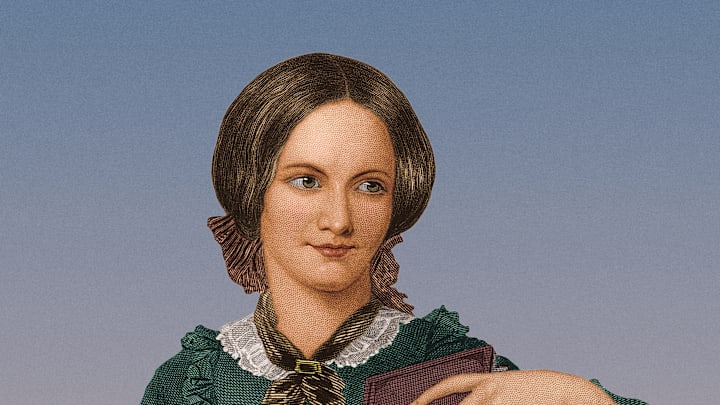
JANE EYRE, CHARLOTTE BRONTË (1847)

Charlotte Brontë’s gripping romantic Gothic drama Jane Eyre was first published under the pseudonym Currer Bell in 1847. Although immediately popular, the book’s content divided readers and critics alike, and sparked something of a scandal in mid-19th century England. “The heroine herself is a specimen of the bold daring young ladies who delight in overstepping conventional rules,” wrote one critic, while another put it plainly that “it would be no credit to anyone to be the author of Jane Eyre.”
The reason for all this pearl-clutching was the novel’s daring content, which (no spoilers) brought several controversial themes and episodes into the homes and minds of Victorian-era readers—and, just as scandalously, put power, intelligence, passion, and determination in the hands of a female character created by a female writer.
This was seen by some as anti-Christian, anti-authority, and grossly immoral. “It is the boast of its writer,” wrote one critic, “to trample upon customs respected by our forefathers. […] People were once ashamed to stand forth as the advocates of vice…but such barriers are unhappily broken through, and not by men only, but by women, from whom we naturally look for all that is gentle and loveable.”
LADY CHATTERLEY’S LOVER, D. H. LAWRENCE (1928)

Perhaps the quintessential example of the romantic literary scandal, D. H. Lawrence’s final full-length novel Lady Chatterley’s Lover promptly became one of the most controversial novels in the history of English literature upon its publication in the late 1920s. The book tells the story of the eponymous Lady Chatterley, a young woman who finds herself trapped in an emotionally and physically unfulfilling marriage. Initially imagining an affair with someone of a similar social standing to satisfy her physical and sexual needs, she instead embarks on a wild and tempestuous love affair with her husband’s gruff gamekeeper, Mellors.
The novel’s sexual content and controversial subject matter was a problem for Lawrence from the start, as he failed to find anyone willing to finance its publication, leaving him to print the first 2,000 copies himself. Lawrence (who had abandoned England after having similar trouble with another of his more controversial novels, The Rainbow) died two years later, and the novel remained unpublished in full in his native country until Penguin printed an unabridged edition in 1960. Doing so led to one of the most notorious censorship trials in British history, with Penguin accused of flouting the 1959 Obscene Publications Act by bringing the book to print. The company was eventually acquitted, and the book returned to shelves.
MEMOIRS OF HECATE COUNTY, EDMUND WILSON (1946)

This is hardly the best-known title on this list, certainly, and nor is the American journalist and essayist Edmund Wilson’s Memoirs of Hecate County technically a novel, but rather a loosely interwoven collection of six short stories all set in the same insular New York suburb. A handful of the stories in the book had already been published in various magazines and newspapers, but the fourth, “The Princess with the Golden Hair,” was original. It also proved enormously controversial.
Shortly after its publication, the story—which follows the unnamed thirty-something narrator as he navigates a series of illicit and highly sexual love affairs following the breakdown of his previous relationship—caught the attention of the Society for the Suppression of Vice, who took the book’s publishers, Doubleday, to court in New York.
The court found in favor of the Society, but Doubleday challenged the ruling and the case eventually ended up before the Supreme Court. They split 4–4 (with one of the judges, who had spoken to Wilson personally, abstaining), and as a result, the New York decision stood, and the book was banned. This lengthy series of court battles, however, had taken the best part of two and a half years, by which time tens of thousands of copies of the book had been sold as news of its scandalous content spread. It was another decade before the ban was finally lifted, and the book was published in full again for the first time in 1958.
MAURICE, E. M. FORSTER (1971)

Perhaps better known for the likes of A Passage to India and A Room with a View, the English author E. M. Forster’s final novel Maurice was actually written in the early 1910s (predating A Passage to India by over a decade), but was not published until a year after his death, 57 years later, in 1971. The reason why he sat on the novel for almost six decades is that its content would quite simply have been too scandalous for Edwardian-era England—so rather than undoubtedly sparking a scandal at the time, Forster chose instead to avoid the turmoil. As Forster himself noted on his original copy of the manuscript, the book was “publishable, but worth it?”
The controversial content in Maurice is that, unlike a lot of other classic romantic novels, the relationship at its center is a homosexual one. The novel’s title character is a Cambridge University student who at long last comes to terms with his sexuality in the prim and repressive world of high-society England, abandons the life he had before him, and embarks on an ultimately happy relationship with a working-class gamekeeper, Alec.
Needless to say, such a plotline would hardly have gone down well in the 1910s; homosexuality was illegal in the United Kingdom at the time Forster wrote the book. Even when the novel was at long last published in 1971, homosexuality had still only been legal for four years (and the age of consent would remain set at 21 for another two decades).