%20%20--%3E%0A%3Csvg%20version%3D%221.1%22%20id%3D%22Layer_1%22%20xmlns%3D%22http%3A%2F%2Fwww.w3.org%2F2000%2Fsvg%22%20xmlns%3Axlink%3D%22http%3A%2F%2Fwww.w3.org%2F1999%2Fxlink%22%20x%3D%220px%22%20y%3D%220px%22%0A%09%20viewBox%3D%220%200%20684.6%2068.1%22%20style%3D%22enable-background%3Anew%200%200%20684.6%2068.1%3B%22%20xml%3Aspace%3D%22preserve%22%3E%0A%3Cg%3E%0A%09%3Cpath%20d%3D%22M444.1%2C29.3h-17.4v14.5h17.4V29.3z%20M36.4%2C68.1l29.3-50.8V0H50.4L32.9%2C36.8L15.5%2C0H0v68.1h16.7V45.8l12.4%2C22.3H36.4z%0A%09%09%20M49.1%2C68.1h16.6V23.4L49.1%2C52.1V68.1z%20M76.6%2C68.1h45V53.8H93.3V41.6h21V27.1h-21V14.8h28.3V0.1h-45V68.1z%20M175.6%2C68.1h17.3v-68%0A%09%09h-16.5v40.3L150%2C0.1h-17.6v68h16.7V27.7L175.6%2C68.1z%20M235.8%2C14.8h15.4V0.1h-47.4v14.7H219v53.2h16.8V14.8z%20M290.3%2C45.9h-17.1%0A%09%09l7.5-15.6h2L290.3%2C45.9z%20M298.7%2C68.1h18l-32.2-68h-5.7l-32%2C68h18l3.3-7.1h27.1L298.7%2C68.1z%20M325.2%2C68.1h46.2V53.8h-29.6V0.1h-16.7%0A%09%09V68.1z%20M423.7%2C14.8h27.2V0.1H407v68h16.7V14.8z%20M462%2C68.1h46.2V53.8h-29.6V0.1H462V68.1z%20M564.8%2C34.1c0%2C10.7-7.2%2C19.2-18.5%2C19.2%0A%09%09c-11.4%2C0-18.5-8.5-18.5-19.2s7.1-19.2%2C18.5-19.2C557.6%2C14.9%2C564.8%2C23.4%2C564.8%2C34.1%20M580.6%2C34.1c0-19-14.2-34-34.3-34%0A%09%09c-20.2%2C0-34.3%2C15-34.3%2C34c0%2C19%2C14.1%2C34%2C34.3%2C34C566.4%2C68.1%2C580.6%2C53.1%2C580.6%2C34.1%20M604.8%2C20.5c0-4.1%2C3.3-6.2%2C6.7-6.2%0A%09%09c4.4%2C0%2C6.6%2C3%2C6.6%2C6.6h14.7C631.8%2C9.1%2C625.1%2C0.1%2C611%2C0.1c-12%2C0-21.7%2C9.3-21.7%2C20.6c0%2C10.9%2C5.9%2C15.9%2C16.7%2C19.8%0A%09%09c5.2%2C1.8%2C11.5%2C3.2%2C11.5%2C8c0%2C3.3-2.4%2C5.5-6.4%2C5.5c-3.6%2C0-6.6-3-6.6-6.7h-15.2c0%2C11.5%2C7.9%2C20.8%2C21.8%2C20.8c12%2C0%2C21.6-9.3%2C21.6-20.6%0A%09%09c0-10-5.3-16.4-16.7-19.8C610.6%2C26.1%2C604.8%2C25.3%2C604.8%2C20.5%20M670%2C20.9h14.7C683.8%2C9.1%2C677.1%2C0.1%2C663%2C0.1c-12%2C0-21.7%2C9.3-21.7%2C20.6%0A%09%09c0%2C10.9%2C5.9%2C15.9%2C16.7%2C19.8c5.2%2C1.8%2C11.5%2C3.2%2C11.5%2C8c0%2C3.3-2.4%2C5.5-6.4%2C5.5c-3.6%2C0-6.6-3-6.6-6.7h-15.2c0%2C11.5%2C7.9%2C20.8%2C21.8%2C20.8%0A%09%09c12%2C0%2C21.6-9.3%2C21.6-20.6c0-10-5.3-16.4-16.7-19.8c-5.4-1.6-11.3-2.4-11.3-7.2c0-4.1%2C3.3-6.2%2C6.7-6.2C667.7%2C14.4%2C670%2C17.3%2C670%2C20.9%0A%09%09%22%2F%3E%0A%3C%2Fg%3E%0A%3C%2Fsvg%3E%0A)

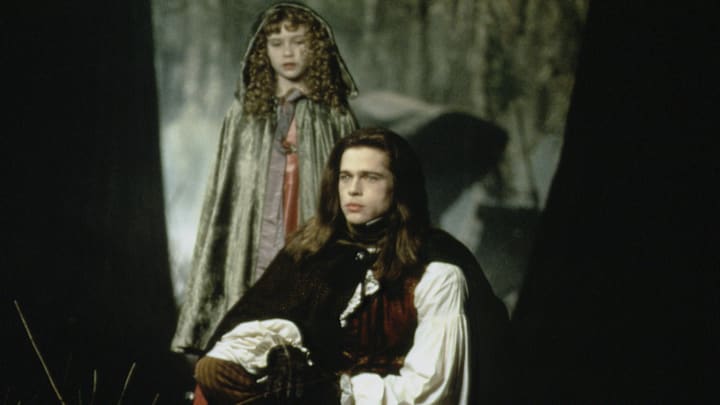
Anne Rice’s Interview with the Vampire turns 50 years old on April 12, 2026. The book helped shape the modern horror genre by popularizing a complex, introspective take on the vampire archetype, and has since been adapted into a successful movie and TV series.
It tells the story of a man named Louis de Pointe du Lac who is turned into a vampire by Lestat de Lioncourt. Louis winds up regretting becoming a vampire and tries to avoid killing humans, but eventually feeds on a young girl named Claudia after her mother dies in a plague outbreak. Lestat then turns her into a vampire, and she becomes Louis’s immortal child of sorts. The book tells the story of the trio’s fraught, often tragic existence.
The main reason Louis allows Lestat to turn him into a vampire is because he is reeling from the death of his brother when the two meet. As it turns out, Rice was dealing with her own tragedy when she began writing the novel.
How Grief Inspired Interview with the Vampire

In 1972, Rice lost her five-year-old daughter Michele to leukemia. The child’s death led to the creation of Interview with the Vampire, which became Rice’s first published novel when it came out in 1976.
“Some time after, in grief, and madness, a dreadful fiction was born to me out of the tragedy—a book that was most certainly allegorical though I never noticed—Interview with the Vampire in which the child vampire Claudia, created by two males clearly married to each other, realizes that though she is immortal like her parents, she will never grow up,” Rice wrote in a 2019 Facebook post.
“The book sprang free of its deep troubled genesis, going on to be read as a story of outcasts, and outsiders, those beings damned by others, yet struggling against all odds to find meaning in life,” she continued. “Sometimes I think all art, high or low, admired or ‘popular’ is a cry to Heaven against the horror of our mortality, against the horror of losing those we love forever, and against the horror that comes when we grasp for certain that we too will die.”
Initially, Rice struggled to cope with the tragedy. “It was a nightmare,” Rice told The New York Times of the immediate aftermath of the loss, saying she and her husband both turned to alcohol. “I was nothing and nobody. I had no prestige. I wasn’t a mother. I was a bad wife—I never cleaned house. I was no good at anything.”
During those months, Rice returned to a short story she had written about a vampire living in New Orleans. That story became her first novel.
“Suddenly, when I was in the skin of Louis, when I was in this cartoon character—he really was a cartoon vampire with a cape and black clothes and bare white skin—when I slipped into this seemingly unreal thing and looked through his eyes, I could make my whole world real,” Rice continued. “He was able to say, ‘Let me tell you about New Orleans, this was our world,’ and I could write about all the beauty. Even the most fictional stuff in there was somehow out of my real world. It fell into place and was coherent.”
Initially, Rice had decided to keep the character Claudia alive at the end of the book, but when her editor requested a different ending, she made the decision to change things. “I felt that Claudia had really been meant to die at the end of 'Interview' the way Michele had died,” Rice told the outlet.
She had struggled greatly after writing a version of the story in which Claudia lived. “I almost died myself and went kind of crazy. I saw germs on everything and washed my hands 50 times and really cracked up,” she said of her mental state during that period. But revising the ending changed things.
“When I went back to it, I felt that I surrendered again to it. And then things that were meant to happen would,” she continued. “I know that sounds all completely insane, but I really believe it's true. If somebody is meant to die and you don't do it, you're really risking your well-being at the end of the book.”
Rice—who died in 2021—has reflected elsewhere on how her daughter was at the heart of the story, and how living through tragedy changed her perspective on life.
“I was a sad, broken and despairing atheist when I wrote 'Interview with the Vampire,'” she told The Independent. “I pitched myself into writing and made up a story about vampires. I didn't know it at the time but it was all about my daughter, the loss of her and the need to go on living when faith is shattered.”
She also elaborated on how tragedy changed her perspective of the world. ”But the lights do come back on, no matter how dark it seems,” she said, ”and I'm sensitive now, more than ever, to the beauty of the world—and more resigned to living with cosmic uncertainty.”