%20%20--%3E%0A%3Csvg%20version%3D%221.1%22%20id%3D%22Layer_1%22%20xmlns%3D%22http%3A%2F%2Fwww.w3.org%2F2000%2Fsvg%22%20xmlns%3Axlink%3D%22http%3A%2F%2Fwww.w3.org%2F1999%2Fxlink%22%20x%3D%220px%22%20y%3D%220px%22%0A%09%20viewBox%3D%220%200%20684.6%2068.1%22%20style%3D%22enable-background%3Anew%200%200%20684.6%2068.1%3B%22%20xml%3Aspace%3D%22preserve%22%3E%0A%3Cg%3E%0A%09%3Cpath%20d%3D%22M444.1%2C29.3h-17.4v14.5h17.4V29.3z%20M36.4%2C68.1l29.3-50.8V0H50.4L32.9%2C36.8L15.5%2C0H0v68.1h16.7V45.8l12.4%2C22.3H36.4z%0A%09%09%20M49.1%2C68.1h16.6V23.4L49.1%2C52.1V68.1z%20M76.6%2C68.1h45V53.8H93.3V41.6h21V27.1h-21V14.8h28.3V0.1h-45V68.1z%20M175.6%2C68.1h17.3v-68%0A%09%09h-16.5v40.3L150%2C0.1h-17.6v68h16.7V27.7L175.6%2C68.1z%20M235.8%2C14.8h15.4V0.1h-47.4v14.7H219v53.2h16.8V14.8z%20M290.3%2C45.9h-17.1%0A%09%09l7.5-15.6h2L290.3%2C45.9z%20M298.7%2C68.1h18l-32.2-68h-5.7l-32%2C68h18l3.3-7.1h27.1L298.7%2C68.1z%20M325.2%2C68.1h46.2V53.8h-29.6V0.1h-16.7%0A%09%09V68.1z%20M423.7%2C14.8h27.2V0.1H407v68h16.7V14.8z%20M462%2C68.1h46.2V53.8h-29.6V0.1H462V68.1z%20M564.8%2C34.1c0%2C10.7-7.2%2C19.2-18.5%2C19.2%0A%09%09c-11.4%2C0-18.5-8.5-18.5-19.2s7.1-19.2%2C18.5-19.2C557.6%2C14.9%2C564.8%2C23.4%2C564.8%2C34.1%20M580.6%2C34.1c0-19-14.2-34-34.3-34%0A%09%09c-20.2%2C0-34.3%2C15-34.3%2C34c0%2C19%2C14.1%2C34%2C34.3%2C34C566.4%2C68.1%2C580.6%2C53.1%2C580.6%2C34.1%20M604.8%2C20.5c0-4.1%2C3.3-6.2%2C6.7-6.2%0A%09%09c4.4%2C0%2C6.6%2C3%2C6.6%2C6.6h14.7C631.8%2C9.1%2C625.1%2C0.1%2C611%2C0.1c-12%2C0-21.7%2C9.3-21.7%2C20.6c0%2C10.9%2C5.9%2C15.9%2C16.7%2C19.8%0A%09%09c5.2%2C1.8%2C11.5%2C3.2%2C11.5%2C8c0%2C3.3-2.4%2C5.5-6.4%2C5.5c-3.6%2C0-6.6-3-6.6-6.7h-15.2c0%2C11.5%2C7.9%2C20.8%2C21.8%2C20.8c12%2C0%2C21.6-9.3%2C21.6-20.6%0A%09%09c0-10-5.3-16.4-16.7-19.8C610.6%2C26.1%2C604.8%2C25.3%2C604.8%2C20.5%20M670%2C20.9h14.7C683.8%2C9.1%2C677.1%2C0.1%2C663%2C0.1c-12%2C0-21.7%2C9.3-21.7%2C20.6%0A%09%09c0%2C10.9%2C5.9%2C15.9%2C16.7%2C19.8c5.2%2C1.8%2C11.5%2C3.2%2C11.5%2C8c0%2C3.3-2.4%2C5.5-6.4%2C5.5c-3.6%2C0-6.6-3-6.6-6.7h-15.2c0%2C11.5%2C7.9%2C20.8%2C21.8%2C20.8%0A%09%09c12%2C0%2C21.6-9.3%2C21.6-20.6c0-10-5.3-16.4-16.7-19.8c-5.4-1.6-11.3-2.4-11.3-7.2c0-4.1%2C3.3-6.2%2C6.7-6.2C667.7%2C14.4%2C670%2C17.3%2C670%2C20.9%0A%09%09%22%2F%3E%0A%3C%2Fg%3E%0A%3C%2Fsvg%3E%0A)

When people think of libraries, they tend to picture rows of shelves packed with books. But not only do regular libraries often loan a multitude of other items—from video games to power tools—there are some libraries that aren’t home to books at all. Here are six unusual libraries that house objects other than books—from puppets to sourdough.
- Puppet Libraries // Boston and New York
- Taxidermy Library // San Diego
- Sourdough Library // Belgium
- The Human Library // Denmark
- The Materials Library // England
- Ice Core Libraries // Various Countries
Puppet Libraries // Boston and New York
Sara Peattie makes and puppeteers giant puppets, but she never intended to start a puppet library. “We were doing pageants and parades and we had all these puppets, and people kept wanting to borrow and lend them out,” she said in a 2024 interview. “We started writing down who had what, and people started calling it a library.”
Based in Boston, the Puppet Library became official around 1995, and less than a decade later, a second location was opened in New York City.
Most of the puppets are massive—there’s a 20-foot-tall Mother Earth puppet and life-size horse puppets—and they’re loaned out for a variety of reasons, including school plays and political demonstrations. Peattie says that sometimes people even check them out, “just take them out for a walk in the park.”
Taxidermy Library // San Diego
Most people don’t go to a museum planning to head home with part of the collection, but the Natural History Museum in San Diego offers just that via their taxidermy library. Known as the Nature to You program, joining grants access to more than 1300 specimens.
You might question why anyone would want to borrow a taxidermied shrimp, skunk, or seal, but they’re useful teaching aids, allowing students to study animals up close without the practical difficulties—such as running away and attacking—posed by live animals.
The Alaska Resources Library and Information Services, in Anchorage, also used to loan out taxidermy, but the collection was pulled from public circulation in 2024 after someone became ill after handling some of the specimens. Testing revealed arsenic, mercury, and lead on the stuffed animals, so the collection remains out of action.
Sourdough Library // Belgium
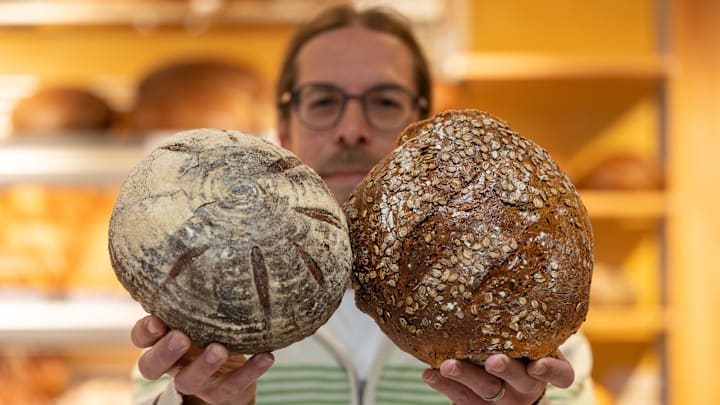
For thousands of years of human history, people have made bread using sourdough starters. That all started to change during the mid-19th century, when commercial yeasts began rising in popularity. But in recent years, there’s been a sourdough resurgence, and as of 2013, there’s even been a Sourdough Library in St. Vith, Belgium, dedicated to keeping examples of the tradition alive (literally!).
Sourdough librarian Karl De Smedt is in charge of regularly feeding flour and water to the fermenting goo. “It’s alive, it’s like a pet,” he told Atlas Obscura. De Smedt also travels the globe on a “quest for sourdough,” with the collection currently holding more than 100 starters from places such as Greece, Mexico, and Japan.
The library serves a few different purposes: it’s a catalogue of notable starters, it acts as a backup in case the original is damaged, and it provides a database for researchers analyzing sourdough.
Although the starters can’t be borrowed by the public, De Smedt is happy to show people around. Bakers are also invited to add their own sourdough recipe to the online database, which currently has around 3000 entries.
The Human Library // Denmark
Another living library is the Human Library, which was established in Copenhagen, Denmark, in 2000. Known as Menneskebiblioteket in Danish, the Human Library was started by brothers Ronni and Dany Abergel, Asma Mouna, and Christoffer Erichsen.
The idea is simple: instead of checking out a traditional book, patrons check out a person to have a conversation with. These people—known as “books” in the organization—are volunteers who, according to the library’s website, “represent a stigmatized group in the community and based on their personal experiences can answer questions from readers to help challenge what is being said/told/understood about a given topic.”
Since starting at the turn of the millennium, Human Library events have been hosted in more than 80 countries around the world.
The Materials Library // England
The Materials Library is a collection of diverse materials that are stored across two locations at University College London. While it’s not a lending library, it is a handling library. “You are encouraged to get hands-on and wobble, smear, scrape and sniff your way around the collection,” the library’s website reads.
The collection was established in 2005 by Zoe Laughlin, Mark Miodownik, and Martin Conreen—a trio of self-described “passionate material addicts.” The objects on the library’s shelves aren’t organized by any system, so visitors may find a jar of freeze-dried ice cream sitting right next to a cube of human hair and resin.
To find specific groupings of materials, the online catalogue is searchable by various eclectic terms, including edible, sticky, and pink.
Ice Core Libraries // Various Countries
Scattered across the world—in countries such as Australia, Russia, and the United States—are a few frozen libraries full of ice cores. The Niels Bohr Institute at the University of Copenhagen, Denmark, is one of the largest repositories, being home to around 40,000 cylinders of ice. Although members of the general public can’t check out the ice, researchers with permission can.
Some of the ice cores are thousands of years old, which allows scientists to study the history of the Earth’s atmosphere and temperature. Jørgen Peder Steffensen, the library’s curator, explains that in a core drilled from somewhere that hasn’t experienced much melting, “all those annual layers of snowfall are just in one undisturbed sequence back in time. The deeper you go, the farther back in time you go.”
However, extracting the historical information requires melting the ice, so the sample can’t then be returned like a regular library book. Power outages are also more of a concern compared to typical libraries. The cores are kept at a temperature of -22°F (-30°C), and there are two separate cooling systems in case one breaks down. Even then, the ice is stored in insulated containers that would keep it frozen for almost a day in the event of both systems failing.