%20%20--%3E%0A%3Csvg%20version%3D%221.1%22%20id%3D%22Layer_1%22%20xmlns%3D%22http%3A%2F%2Fwww.w3.org%2F2000%2Fsvg%22%20xmlns%3Axlink%3D%22http%3A%2F%2Fwww.w3.org%2F1999%2Fxlink%22%20x%3D%220px%22%20y%3D%220px%22%0A%09%20viewBox%3D%220%200%20684.6%2068.1%22%20style%3D%22enable-background%3Anew%200%200%20684.6%2068.1%3B%22%20xml%3Aspace%3D%22preserve%22%3E%0A%3Cg%3E%0A%09%3Cpath%20d%3D%22M444.1%2C29.3h-17.4v14.5h17.4V29.3z%20M36.4%2C68.1l29.3-50.8V0H50.4L32.9%2C36.8L15.5%2C0H0v68.1h16.7V45.8l12.4%2C22.3H36.4z%0A%09%09%20M49.1%2C68.1h16.6V23.4L49.1%2C52.1V68.1z%20M76.6%2C68.1h45V53.8H93.3V41.6h21V27.1h-21V14.8h28.3V0.1h-45V68.1z%20M175.6%2C68.1h17.3v-68%0A%09%09h-16.5v40.3L150%2C0.1h-17.6v68h16.7V27.7L175.6%2C68.1z%20M235.8%2C14.8h15.4V0.1h-47.4v14.7H219v53.2h16.8V14.8z%20M290.3%2C45.9h-17.1%0A%09%09l7.5-15.6h2L290.3%2C45.9z%20M298.7%2C68.1h18l-32.2-68h-5.7l-32%2C68h18l3.3-7.1h27.1L298.7%2C68.1z%20M325.2%2C68.1h46.2V53.8h-29.6V0.1h-16.7%0A%09%09V68.1z%20M423.7%2C14.8h27.2V0.1H407v68h16.7V14.8z%20M462%2C68.1h46.2V53.8h-29.6V0.1H462V68.1z%20M564.8%2C34.1c0%2C10.7-7.2%2C19.2-18.5%2C19.2%0A%09%09c-11.4%2C0-18.5-8.5-18.5-19.2s7.1-19.2%2C18.5-19.2C557.6%2C14.9%2C564.8%2C23.4%2C564.8%2C34.1%20M580.6%2C34.1c0-19-14.2-34-34.3-34%0A%09%09c-20.2%2C0-34.3%2C15-34.3%2C34c0%2C19%2C14.1%2C34%2C34.3%2C34C566.4%2C68.1%2C580.6%2C53.1%2C580.6%2C34.1%20M604.8%2C20.5c0-4.1%2C3.3-6.2%2C6.7-6.2%0A%09%09c4.4%2C0%2C6.6%2C3%2C6.6%2C6.6h14.7C631.8%2C9.1%2C625.1%2C0.1%2C611%2C0.1c-12%2C0-21.7%2C9.3-21.7%2C20.6c0%2C10.9%2C5.9%2C15.9%2C16.7%2C19.8%0A%09%09c5.2%2C1.8%2C11.5%2C3.2%2C11.5%2C8c0%2C3.3-2.4%2C5.5-6.4%2C5.5c-3.6%2C0-6.6-3-6.6-6.7h-15.2c0%2C11.5%2C7.9%2C20.8%2C21.8%2C20.8c12%2C0%2C21.6-9.3%2C21.6-20.6%0A%09%09c0-10-5.3-16.4-16.7-19.8C610.6%2C26.1%2C604.8%2C25.3%2C604.8%2C20.5%20M670%2C20.9h14.7C683.8%2C9.1%2C677.1%2C0.1%2C663%2C0.1c-12%2C0-21.7%2C9.3-21.7%2C20.6%0A%09%09c0%2C10.9%2C5.9%2C15.9%2C16.7%2C19.8c5.2%2C1.8%2C11.5%2C3.2%2C11.5%2C8c0%2C3.3-2.4%2C5.5-6.4%2C5.5c-3.6%2C0-6.6-3-6.6-6.7h-15.2c0%2C11.5%2C7.9%2C20.8%2C21.8%2C20.8%0A%09%09c12%2C0%2C21.6-9.3%2C21.6-20.6c0-10-5.3-16.4-16.7-19.8c-5.4-1.6-11.3-2.4-11.3-7.2c0-4.1%2C3.3-6.2%2C6.7-6.2C667.7%2C14.4%2C670%2C17.3%2C670%2C20.9%0A%09%09%22%2F%3E%0A%3C%2Fg%3E%0A%3C%2Fsvg%3E%0A)

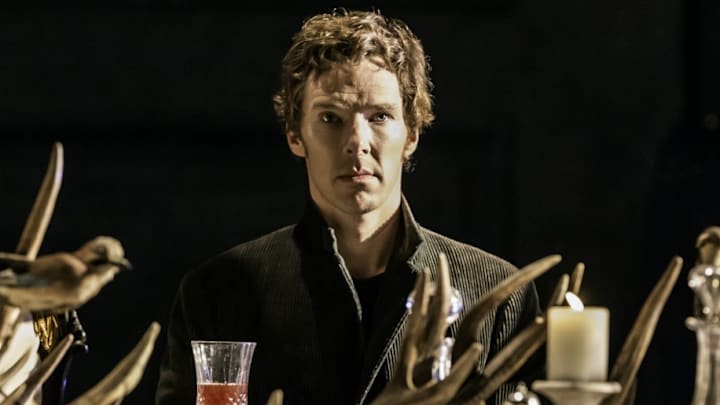
Does art imitate life, or does life imitate art? In Shakespeare’s case, it’s often the former. Star-crossed lovers, back-stabbing senators, and scheming monarchs aren't just creations of the Bard's brain. Some of his most famous characters were inspired by living legends of their time.
While characters like Othello and Prospero are fictional—and their magical or tragic antics even more so—Shakespeare often borrowed from the real world, and several of his leading lads and ladies reflect that. As Shakespeare himself wrote, “The world’s a stage, and all the men and women merely players,” and in this case, history provided the script. Here are five characters inspired by kings, queens, and generals who got a second life on Shakespeare’s stage.
1. Hamlet

Before he was pondering “to be or not to be,” Hamlet was already rooted in history. The Prince of Denmark drew inspiration from a figure whose life was almost as dramatic as the play itself.
That figure was Amleth, a Viking prince from medieval Denmark. According to legend, Amleth’s uncle murdered his father to seize the throne, forcing the young prince to feign madness as he plotted revenge. His story is full of clever tricks, close calls, and deadly family drama—the kind of chaos that would later define Shakespeare’s The Tragedy of Hamlet, Prince of Denmark.
Most of what we know about Amleth comes from Saxo Grammaticus’s Deeds of the Danes, a 13th-century chronicle of Danish history and legend. Saxo’s account includes murder, cunning schemes, and Amleth’s feigned madness, providing the blueprint for Shakespeare’s Prince of Denmark. Variations of the story even appear in myths from many cultures, showing that tales of clever princes and deadly family drama have fascinated audiences for centuries. While historians debate how much is fact versus legend, the seeds of Shakespeare’s tragic hero were clearly already planted in Viking lore.
Shakespeare took Saxo’s Amleth and turned him into a complex, philosophical figure who contemplates life, death, and morality. Many of the other characters in Hamlet also reflect historical archetypes: King Claudius as a scheming ruler, Queen Gertrude as a royal caught in a web of politics, and Polonius as the meddling court advisor.
As for the ending of the story, the real Amleth’s death was a bit less theatrical. While Shakespeare’s Hamlet meets his end with a poisoned sword, the legendary Viking prince reportedly survived long enough to avenge his father and take the throne. History, it seems, didn’t need a dagger in a dramatic duel to be compelling.
2. Macbeth

The namesake character of Shakespeare's The Tragedy of Macbeth was also based on real-life royalty: King Macbeth, who ruled Scotland from 1040 to 1057. Far from the murderous tyrant on stage, he seems to have been a fair and capable ruler, keeping the kingdom in order and encouraging Christianity. The King of Scots led successful campaigns into England and even made a trip to Rome for a papal jubilee.
Shakespeare’s Macbeth is a man driven by prophecy and ambition, but the historical king had a very different path to the throne. In the play, Macbeth’s ambition is fueled by the witches’ prophecy that he will become king. The real Macbeth didn’t need any supernatural nudge: he already had a legitimate claim to the throne through his bloodline, and his marriage to Gruoch, granddaughter of a former king, further strengthened his right to rule.
And while the play dramatizes Duncan’s murder as a secretive, premeditated act carried out by Macbeth and Lady Macbeth in his own bed, the historical king met his end on the battlefield. In August 1040, Macbeth killed King Duncan in battle near Elgin, securing the crown the same year — less theatrical than Shakespeare’s version, but no less consequential.
3. Cleopatra

Cleopatra is one of the most alluring queens in history, and her portrayal in Shakespeare's Antony and Cleopatra only solidified her legend as a brilliant leader—and lover. The last ruler of Egypt’s Ptolemaic dynasty, Cleopatra VII of Egypt forged alliances with Julius Caesar and Marc Antony, navigating Rome’s cutthroat politics while protecting her kingdom. Fluent in multiple languages and a skilled diplomat, she was far more than the seductive figure history often paints her as. Roman historians like Plutarch praised her talents but focused on her romances over her political savvy, a bias that shaped Shakespeare’s version.
In Antony and Cleopatra, Shakespeare turned political maneuvering into gripping theater. Her romance with Antony becomes the heart of the story, and her suicide is cast as a tragic, passionate finale. In real life, Cleopatra and Antony’s partnership balanced romance and politics. The couple had three children and worked to strengthen Egypt’s position against Rome, navigating both love and power in equal measure. Cleopatra’s death, meanwhile, was likely driven as much by the indignities of captivity and the need to protect her honor as by romance.
4. Richard III

Shakespeare’s Richard III may be one of literature’s ultimate villains, but the man himself was far more than a hunchbacked schemer. The last Plantagenet king of England, he ruled from 1483 until his death at the Battle of Bosworth Field in 1485, ending the Wars of the Roses and ushering in Tudor rule.
In the play Richard III, Shakespeare portrays him as a hunchbacked, manipulative schemer willing to murder anyone to claim the throne. In reality, Richard was a shrewd politician and military leader. He seized power after the death of his brother Edward IV and the mysterious disappearance of his nephews, the “Princes in the Tower,” though historians debate his involvement in their deaths. He also enacted legal reforms and sought to stabilize a kingdom torn by civil war.
Shakespeare’s emphasis on Richard’s villainy and physical deformity owes more to Tudor propaganda than fact—the only real abnormality was scoliosis, which left one shoulder slightly higher than the other. Shakespeare amplified Richard’s villainy not just for drama, but to entertain audiences and reinforce Tudor legitimacy, turning a capable, if ambitious, king into one of history’s most infamous stage sinners.
5. Joan La Pucelle

Joan la Pucelle, better known as Joan of Arc, was a peasant girl whose life became legend. Born in Domrémy, France, in the early 15th century, she reported hearing divine voices urging her to lead French forces against the English in the Hundred Years’ War. With courage and keen strategic instincts, she inspired troops, lifted sieges, and helped secure key victories for France.
Our knowledge of Joan largely comes from trial records and contemporary chronicles, including accounts from both supporters and detractors. These sources detail her visions, her campaigns, and her capture and execution at 19. While some miraculous claims remain debated, her extraordinary influence in such a brief period is undeniable.
Shakespeare adapted her story in Henry VI as "Joan la Pucelle," portraying her as a fiery, almost supernatural figure. In the play, Joan initially appears as a skilled and respected warrior, but by the end, she’s flattened into a caricature of English slurs: a witch who conjures fiends and a character whose contradictory claims undermine her credibility. These choices reflect English bias more than historical reality. In truth, Joan did not single-handedly win the war, but her steadfast resolve and inspirational leadership were pivotal in rallying French forces and shaping the course of history.