%20%20--%3E%0A%3Csvg%20version%3D%221.1%22%20id%3D%22Layer_1%22%20xmlns%3D%22http%3A%2F%2Fwww.w3.org%2F2000%2Fsvg%22%20xmlns%3Axlink%3D%22http%3A%2F%2Fwww.w3.org%2F1999%2Fxlink%22%20x%3D%220px%22%20y%3D%220px%22%0A%09%20viewBox%3D%220%200%20684.6%2068.1%22%20style%3D%22enable-background%3Anew%200%200%20684.6%2068.1%3B%22%20xml%3Aspace%3D%22preserve%22%3E%0A%3Cg%3E%0A%09%3Cpath%20d%3D%22M444.1%2C29.3h-17.4v14.5h17.4V29.3z%20M36.4%2C68.1l29.3-50.8V0H50.4L32.9%2C36.8L15.5%2C0H0v68.1h16.7V45.8l12.4%2C22.3H36.4z%0A%09%09%20M49.1%2C68.1h16.6V23.4L49.1%2C52.1V68.1z%20M76.6%2C68.1h45V53.8H93.3V41.6h21V27.1h-21V14.8h28.3V0.1h-45V68.1z%20M175.6%2C68.1h17.3v-68%0A%09%09h-16.5v40.3L150%2C0.1h-17.6v68h16.7V27.7L175.6%2C68.1z%20M235.8%2C14.8h15.4V0.1h-47.4v14.7H219v53.2h16.8V14.8z%20M290.3%2C45.9h-17.1%0A%09%09l7.5-15.6h2L290.3%2C45.9z%20M298.7%2C68.1h18l-32.2-68h-5.7l-32%2C68h18l3.3-7.1h27.1L298.7%2C68.1z%20M325.2%2C68.1h46.2V53.8h-29.6V0.1h-16.7%0A%09%09V68.1z%20M423.7%2C14.8h27.2V0.1H407v68h16.7V14.8z%20M462%2C68.1h46.2V53.8h-29.6V0.1H462V68.1z%20M564.8%2C34.1c0%2C10.7-7.2%2C19.2-18.5%2C19.2%0A%09%09c-11.4%2C0-18.5-8.5-18.5-19.2s7.1-19.2%2C18.5-19.2C557.6%2C14.9%2C564.8%2C23.4%2C564.8%2C34.1%20M580.6%2C34.1c0-19-14.2-34-34.3-34%0A%09%09c-20.2%2C0-34.3%2C15-34.3%2C34c0%2C19%2C14.1%2C34%2C34.3%2C34C566.4%2C68.1%2C580.6%2C53.1%2C580.6%2C34.1%20M604.8%2C20.5c0-4.1%2C3.3-6.2%2C6.7-6.2%0A%09%09c4.4%2C0%2C6.6%2C3%2C6.6%2C6.6h14.7C631.8%2C9.1%2C625.1%2C0.1%2C611%2C0.1c-12%2C0-21.7%2C9.3-21.7%2C20.6c0%2C10.9%2C5.9%2C15.9%2C16.7%2C19.8%0A%09%09c5.2%2C1.8%2C11.5%2C3.2%2C11.5%2C8c0%2C3.3-2.4%2C5.5-6.4%2C5.5c-3.6%2C0-6.6-3-6.6-6.7h-15.2c0%2C11.5%2C7.9%2C20.8%2C21.8%2C20.8c12%2C0%2C21.6-9.3%2C21.6-20.6%0A%09%09c0-10-5.3-16.4-16.7-19.8C610.6%2C26.1%2C604.8%2C25.3%2C604.8%2C20.5%20M670%2C20.9h14.7C683.8%2C9.1%2C677.1%2C0.1%2C663%2C0.1c-12%2C0-21.7%2C9.3-21.7%2C20.6%0A%09%09c0%2C10.9%2C5.9%2C15.9%2C16.7%2C19.8c5.2%2C1.8%2C11.5%2C3.2%2C11.5%2C8c0%2C3.3-2.4%2C5.5-6.4%2C5.5c-3.6%2C0-6.6-3-6.6-6.7h-15.2c0%2C11.5%2C7.9%2C20.8%2C21.8%2C20.8%0A%09%09c12%2C0%2C21.6-9.3%2C21.6-20.6c0-10-5.3-16.4-16.7-19.8c-5.4-1.6-11.3-2.4-11.3-7.2c0-4.1%2C3.3-6.2%2C6.7-6.2C667.7%2C14.4%2C670%2C17.3%2C670%2C20.9%0A%09%09%22%2F%3E%0A%3C%2Fg%3E%0A%3C%2Fsvg%3E%0A)

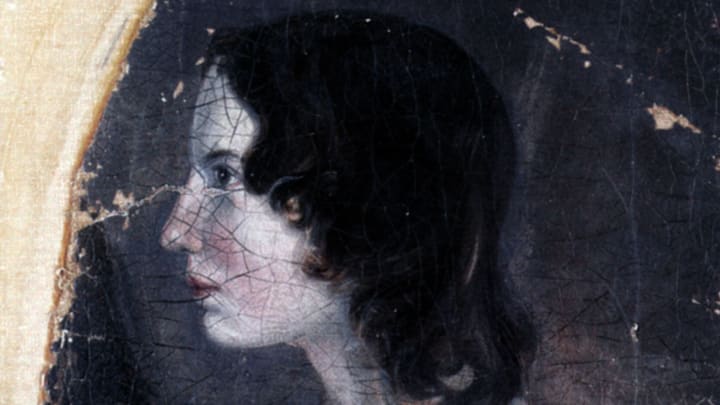
Emily Brontë’s Wuthering Heights is a Gothic epic that digs into the heart of the tortured relationship between Heathcliff and Catherine Earnshaw. Its windswept moors, morally gray characters, and gut-wrenching twists have long captivated the hearts of readers and viewers across generations. The novel has also spawned countless adaptations, including Emerald Fennell’s controversial new take on the story.
Many have wondered what exactly inspired Emily Brontë, a reclusive woman who died at 30 and only published one book in her lifetime, to write such a sweeping tale of infatuation, violence, and angst. We may never know the exact answer to this question, but one thing is clear: her story has had an undeniable impact on millions of readers and viewers, and shows no sign of slowing down.
Who Was Emily Brontë?

Born in 1818, Emily Brontë was a shy child who grew up in Haworth, Yorkshire alongside her siblings Charlotte, Anne, and Branwell. The Brontës’ early lives were marked by tragedy. Their mother died in 1821 and their older sisters, Maria and Elizabeth, died in 1825.
Personality-wise, Emily was fairly private and reserved, opening up only to her siblings. She also disliked leaving home and enjoyed baking, cleaning, reading, writing, and spending time walking her dog outdoors. Some theorists have retroactively diagnosed her with autism, because of her brilliance, reclusiveness, and reported tendency towards frustration and rage, though there’s no way to confirm these diagnoses and some have also called them reductive.
She was primarily educated at home and spent most of her life in Haworth, aside from three months as a pupil at a school Charlotte taught at, six miserable months as a teacher near Halifax, and some time studying in Belgium. She frequently made up fantasy stories with her sister Anne, and was also believed to have been close to her brother Branwell, remaining loyal to him even as he succumbed to an opium addiction and alcoholism. She died only three months after he did, and both of them passed away from tuberculosis.
Windswept Moors: How Landscape Inspired Wuthering Heights

Certainly, one of Emily’s major inspirations for the novel was the landscape she grew up in. The moors are a character of their own in Wuthering Heights, providing a looming sense of wildness that constantly threatens the properness and domesticity of English upper-class life and reflects Cathy and Heathcliff’s inner landscapes.
Though their aunt came to live with them after their mother’s death, the children were often free to wander around their father’s drafty rectory and to explore the moors, a habit Emily was fond of throughout her life. It’s not hard to imagine how a childhood marked by early tragedies and spent exploring the moors could have helped inspire all the death, illness, and isolation in Wuthering Heights.
Wuthering Heights Also May Have Been Inspired By These Buildings

In addition to the moors and the rectory she lived in, Emily may have been inspired by some specific English buildings. Ponden Hall, a house in West Yorkshire that has been linked to the Lintons’ house Thrushcross Grange from Wuthering Heights, was discovered by Emily and Anne while the girls were looking for shelter during a mudslide following a severe rainstorm. The house contains a guest bedroom that has a box bed with a single-paned window, which is similar to the room where a lot of Wuthering Heights’s most ghostly action takes place.
Emily may also have been inspired by High Sunderland Hall, a gothic mansion that has since been demolished. Photos of the imposing structure show strange winged creatures standing atop the doorway, and remnants from the building are studded with strange inscriptions, pagan symbols, and much more.
All this could have easily been a blueprint for the haunting, prison-like fortress that is the house called Wuthering Heights in Emily’s novel. “Before passing the threshold,” narrator Lockwood says in the book of seeing the house for the first time, “I paused to admire a quantity of grotesque carving lavished over the front and especially about the principal door, above which, among a wilderness of crumbling griffins and shameless little boys, I detected the date 1500 and the name Hareton Earnshaw.”
High Sunderland Hall was also located a short distance from the Law Hill School, where Emily briefly taught—and apparently often told her students how miserable she was there. She found solace in walking through the nearby landscapes, and it’s easy to imagine her returning to High Sunderland Hall again and again.
The building also happens to have a number of ghost stories associated with it. One such tale describes the owner of the house chopping his wife’s hand off, only for guests to spot disembodied hands wandering around for years after—which could have inspired images of ghostly hands forever tapping on the windows of Wuthering Heights.
Did Emily Brontë Have Any Romances?

While it’s clear that the desolate English landscape was a major inspiration for the aesthetics of Wuthering Heights, what’s less clear is where Emily took the inspiration for Heathcliff and Cathy’s passionate and destructive romance. Emily left behind very few writings about her life other than Wuthering Heights and some poems, and it’s unclear whether she ever had a romance of any kind, though speculation abounds.
Frances O’Connor’s biopic Emily links its protagonist to William Weightman, who was the Brontës’ father’s curate in the Haworth parish. Weightman really did share a slightly flirtatious relationship with the sisters, even walking nine miles to mail them Valentine’s Day cards after learning they’d never received any. But there is no proof that he and Emily ever shared any kind of relationship; if anything, anecdotal evidence suggests that he and Anne may have had some kind of flirtation or romance.
Despite speculation about her sexuality and romantic endeavors, in truth, Emily remains a starkly mysterious figure. Clearly unconventional, she refused to wear corsets and possessed a kind of intensity that even caused her sister Charlotte to meddle in her work in order to make it more palatable.
In one introduction to Wuthering Heights, Charlotte somewhat apologetically calls her sister “strange” and “fiery”—an apt description for someone whose singular contribution to literature has continued to generate emotion and controversy centuries after its publication.