%20%20--%3E%0A%3Csvg%20version%3D%221.1%22%20id%3D%22Layer_1%22%20xmlns%3D%22http%3A%2F%2Fwww.w3.org%2F2000%2Fsvg%22%20xmlns%3Axlink%3D%22http%3A%2F%2Fwww.w3.org%2F1999%2Fxlink%22%20x%3D%220px%22%20y%3D%220px%22%0A%09%20viewBox%3D%220%200%20684.6%2068.1%22%20style%3D%22enable-background%3Anew%200%200%20684.6%2068.1%3B%22%20xml%3Aspace%3D%22preserve%22%3E%0A%3Cg%3E%0A%09%3Cpath%20d%3D%22M444.1%2C29.3h-17.4v14.5h17.4V29.3z%20M36.4%2C68.1l29.3-50.8V0H50.4L32.9%2C36.8L15.5%2C0H0v68.1h16.7V45.8l12.4%2C22.3H36.4z%0A%09%09%20M49.1%2C68.1h16.6V23.4L49.1%2C52.1V68.1z%20M76.6%2C68.1h45V53.8H93.3V41.6h21V27.1h-21V14.8h28.3V0.1h-45V68.1z%20M175.6%2C68.1h17.3v-68%0A%09%09h-16.5v40.3L150%2C0.1h-17.6v68h16.7V27.7L175.6%2C68.1z%20M235.8%2C14.8h15.4V0.1h-47.4v14.7H219v53.2h16.8V14.8z%20M290.3%2C45.9h-17.1%0A%09%09l7.5-15.6h2L290.3%2C45.9z%20M298.7%2C68.1h18l-32.2-68h-5.7l-32%2C68h18l3.3-7.1h27.1L298.7%2C68.1z%20M325.2%2C68.1h46.2V53.8h-29.6V0.1h-16.7%0A%09%09V68.1z%20M423.7%2C14.8h27.2V0.1H407v68h16.7V14.8z%20M462%2C68.1h46.2V53.8h-29.6V0.1H462V68.1z%20M564.8%2C34.1c0%2C10.7-7.2%2C19.2-18.5%2C19.2%0A%09%09c-11.4%2C0-18.5-8.5-18.5-19.2s7.1-19.2%2C18.5-19.2C557.6%2C14.9%2C564.8%2C23.4%2C564.8%2C34.1%20M580.6%2C34.1c0-19-14.2-34-34.3-34%0A%09%09c-20.2%2C0-34.3%2C15-34.3%2C34c0%2C19%2C14.1%2C34%2C34.3%2C34C566.4%2C68.1%2C580.6%2C53.1%2C580.6%2C34.1%20M604.8%2C20.5c0-4.1%2C3.3-6.2%2C6.7-6.2%0A%09%09c4.4%2C0%2C6.6%2C3%2C6.6%2C6.6h14.7C631.8%2C9.1%2C625.1%2C0.1%2C611%2C0.1c-12%2C0-21.7%2C9.3-21.7%2C20.6c0%2C10.9%2C5.9%2C15.9%2C16.7%2C19.8%0A%09%09c5.2%2C1.8%2C11.5%2C3.2%2C11.5%2C8c0%2C3.3-2.4%2C5.5-6.4%2C5.5c-3.6%2C0-6.6-3-6.6-6.7h-15.2c0%2C11.5%2C7.9%2C20.8%2C21.8%2C20.8c12%2C0%2C21.6-9.3%2C21.6-20.6%0A%09%09c0-10-5.3-16.4-16.7-19.8C610.6%2C26.1%2C604.8%2C25.3%2C604.8%2C20.5%20M670%2C20.9h14.7C683.8%2C9.1%2C677.1%2C0.1%2C663%2C0.1c-12%2C0-21.7%2C9.3-21.7%2C20.6%0A%09%09c0%2C10.9%2C5.9%2C15.9%2C16.7%2C19.8c5.2%2C1.8%2C11.5%2C3.2%2C11.5%2C8c0%2C3.3-2.4%2C5.5-6.4%2C5.5c-3.6%2C0-6.6-3-6.6-6.7h-15.2c0%2C11.5%2C7.9%2C20.8%2C21.8%2C20.8%0A%09%09c12%2C0%2C21.6-9.3%2C21.6-20.6c0-10-5.3-16.4-16.7-19.8c-5.4-1.6-11.3-2.4-11.3-7.2c0-4.1%2C3.3-6.2%2C6.7-6.2C667.7%2C14.4%2C670%2C17.3%2C670%2C20.9%0A%09%09%22%2F%3E%0A%3C%2Fg%3E%0A%3C%2Fsvg%3E%0A)

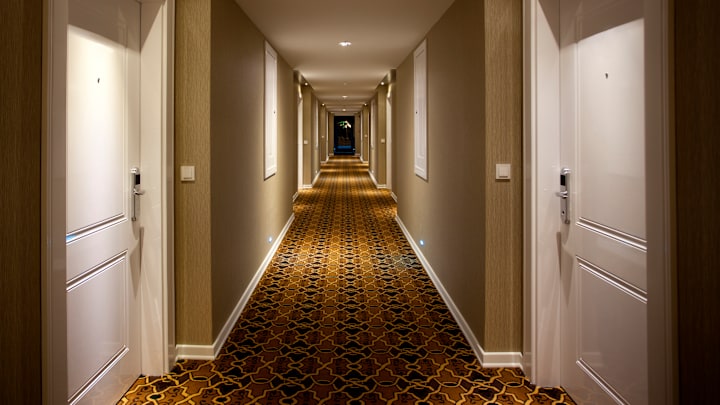
Whether you’re staying in a five-star resort or a last-minute roadside motel, take a look down at your feet as you check in to your room for the night, and chances are you’ll see that you’re standing on a decidedly busy, dazzling, or intricately patterned carpet. So what is it about hotels that apparently makes them so determined to break the rules of interior design in such a garishly noticeable way?
Aside from more obvious reasons (such as the fact that such carpets often incorporate the hotel’s logo or branding in repeating designs), curiously, hotel carpets often look this way for a number of reasons, both practical and aesthetic.
On the one hand, hotel lobbies and corridors are often vast, open, or long, stretching spaces. Having a simple, plain, solid-colored carpet in such a large space could prove repetitively bland at one extreme, or overwhelming at the other, as the eye has nothing to latch onto and read the space around you. Patterned carpets, ultimately, can be used to manipulate the space—giving the eye a structure and a repetitive frame of reference to better judge distance, or else to break up an otherwise overwhelming expanse of solid color. Stripes, swirls, and checks, meanwhile, can be used to make narrow corridors seem broader, or extensive corridors not quite as dauntingly long.

On the more practical side, however, hotels are understandably places of high footfall and traffic. Carpeted floors, unlike harder-wearing options, like solid wood or tile, have the advantage of deadening the sound of guests’ footsteps—but unlike harder-wearing alternatives, carpets are also far less durable and, as a result, can quickly wear through. This unavoidable wear and tear would obviously be much more visible in a plain carpet, and so noisier, more garishly patterned carpets also work to disguise how worn a carpet might be.
That huge amount of footfall, of course, comes with the somewhat less pleasant bonus of an increase in staining. Hotel guests walking in from the rain and the snow, spilling drinks and snacks at the bar, or being clumsy with their room service or in-room breakfast can all cause hotel carpets to become extremely dirty extremely quickly. Just as with natural wear and tear, patterned carpets are far better equipped to hide these stains and marks than plainer carpets, making them a more advisable choice here too. Essentially, as gross as it might sound, the more garish the design, the less likely you are to see what’s actually on the floor.
All told, ultimately, patterned carpets work both to subconsciously break up the open spaces of a hotel, giving our eyes a means of working out distances and spatial flow, and obscure a multitude of sins that would otherwise be much more noticeable.