%20%20--%3E%0A%3Csvg%20version%3D%221.1%22%20id%3D%22Layer_1%22%20xmlns%3D%22http%3A%2F%2Fwww.w3.org%2F2000%2Fsvg%22%20xmlns%3Axlink%3D%22http%3A%2F%2Fwww.w3.org%2F1999%2Fxlink%22%20x%3D%220px%22%20y%3D%220px%22%0A%09%20viewBox%3D%220%200%20684.6%2068.1%22%20style%3D%22enable-background%3Anew%200%200%20684.6%2068.1%3B%22%20xml%3Aspace%3D%22preserve%22%3E%0A%3Cg%3E%0A%09%3Cpath%20d%3D%22M444.1%2C29.3h-17.4v14.5h17.4V29.3z%20M36.4%2C68.1l29.3-50.8V0H50.4L32.9%2C36.8L15.5%2C0H0v68.1h16.7V45.8l12.4%2C22.3H36.4z%0A%09%09%20M49.1%2C68.1h16.6V23.4L49.1%2C52.1V68.1z%20M76.6%2C68.1h45V53.8H93.3V41.6h21V27.1h-21V14.8h28.3V0.1h-45V68.1z%20M175.6%2C68.1h17.3v-68%0A%09%09h-16.5v40.3L150%2C0.1h-17.6v68h16.7V27.7L175.6%2C68.1z%20M235.8%2C14.8h15.4V0.1h-47.4v14.7H219v53.2h16.8V14.8z%20M290.3%2C45.9h-17.1%0A%09%09l7.5-15.6h2L290.3%2C45.9z%20M298.7%2C68.1h18l-32.2-68h-5.7l-32%2C68h18l3.3-7.1h27.1L298.7%2C68.1z%20M325.2%2C68.1h46.2V53.8h-29.6V0.1h-16.7%0A%09%09V68.1z%20M423.7%2C14.8h27.2V0.1H407v68h16.7V14.8z%20M462%2C68.1h46.2V53.8h-29.6V0.1H462V68.1z%20M564.8%2C34.1c0%2C10.7-7.2%2C19.2-18.5%2C19.2%0A%09%09c-11.4%2C0-18.5-8.5-18.5-19.2s7.1-19.2%2C18.5-19.2C557.6%2C14.9%2C564.8%2C23.4%2C564.8%2C34.1%20M580.6%2C34.1c0-19-14.2-34-34.3-34%0A%09%09c-20.2%2C0-34.3%2C15-34.3%2C34c0%2C19%2C14.1%2C34%2C34.3%2C34C566.4%2C68.1%2C580.6%2C53.1%2C580.6%2C34.1%20M604.8%2C20.5c0-4.1%2C3.3-6.2%2C6.7-6.2%0A%09%09c4.4%2C0%2C6.6%2C3%2C6.6%2C6.6h14.7C631.8%2C9.1%2C625.1%2C0.1%2C611%2C0.1c-12%2C0-21.7%2C9.3-21.7%2C20.6c0%2C10.9%2C5.9%2C15.9%2C16.7%2C19.8%0A%09%09c5.2%2C1.8%2C11.5%2C3.2%2C11.5%2C8c0%2C3.3-2.4%2C5.5-6.4%2C5.5c-3.6%2C0-6.6-3-6.6-6.7h-15.2c0%2C11.5%2C7.9%2C20.8%2C21.8%2C20.8c12%2C0%2C21.6-9.3%2C21.6-20.6%0A%09%09c0-10-5.3-16.4-16.7-19.8C610.6%2C26.1%2C604.8%2C25.3%2C604.8%2C20.5%20M670%2C20.9h14.7C683.8%2C9.1%2C677.1%2C0.1%2C663%2C0.1c-12%2C0-21.7%2C9.3-21.7%2C20.6%0A%09%09c0%2C10.9%2C5.9%2C15.9%2C16.7%2C19.8c5.2%2C1.8%2C11.5%2C3.2%2C11.5%2C8c0%2C3.3-2.4%2C5.5-6.4%2C5.5c-3.6%2C0-6.6-3-6.6-6.7h-15.2c0%2C11.5%2C7.9%2C20.8%2C21.8%2C20.8%0A%09%09c12%2C0%2C21.6-9.3%2C21.6-20.6c0-10-5.3-16.4-16.7-19.8c-5.4-1.6-11.3-2.4-11.3-7.2c0-4.1%2C3.3-6.2%2C6.7-6.2C667.7%2C14.4%2C670%2C17.3%2C670%2C20.9%0A%09%09%22%2F%3E%0A%3C%2Fg%3E%0A%3C%2Fsvg%3E%0A)

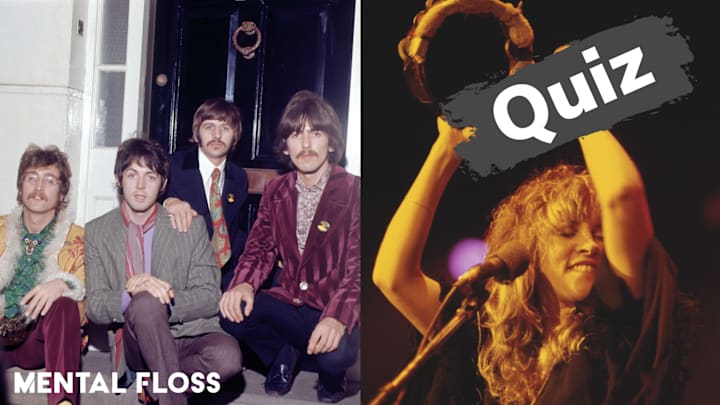
When you hear the term “classic rock,” you might think of a breezy Fleetwood Mac riff, a catchy Beatles chorus, a Led Zeppelin guitar solo, or something completely different. Classic rock is a broad term that originated in radio and generally describes popular rock music released between the 1960s and 1980s. As a genre, it remains extremely popular today, with bands like Pink Floyd and the Rolling Stones still in heavy rotation on many radio stations—and of course, maintaining special places in devoted fans’ hearts, including this writer’s. Test your knowledge of classic rock trivia with the quiz below.
HISTORY OF THE TERM CLASSIC ROCK

The songs we call “classic rock” today were not called classic rock when they first came out. They hadn’t had time to become classics yet, after all! Instead, the term originated on radio stations in the 1980s and referred to successful rock music from the decades prior.
In this original context, classic rock tended to refer to recognizable and catchy music that was generally created by white British or American men, though the genre also includes significant contributions from and owes a great deal to Black artists. Songs were usually shorter and guitar-driven and contained memorable choruses and riffs, but of course, there were always exceptions, from the female-fronted band Heart to more experimental and orchestral variations on the genre.
Typically, classic rock is associated with popular music’s album era, which lasted from around 1960s to the 2000s and refers to a period when most mainstream music was released on albums. Today, some people have expanded the definition of classic rock to include more contemporary acts like Green Day and blink-182, and rock acts born in more recent eras often appear on classic rock radio stations nowadays.
Rock and roll originated in the 1940s and 1950s, arising from a fusion of African American-created rhythm and blues and country music that spanned decades. The genre coalesced around Elvis Presley, who burst onto the scene with a blend of blues and charisma that scandalized many and inspired even more. This sense of atmosphere and rebelliousness has continued to define rock and roll, even as the genre has splintered into countless subgenres.
Still, out of all the genres of rock and roll, songs and albums that fit under the umbrella of classic rock seem to have a certain staying power, at least in terms of widespread popularity. Major rock acts, from AC/DC to Bob Dylan, continue to fill arenas and provide fodder for many a biopic. And lists like Rolling Stone’s 2023 ranking of the 500 Greatest Albums of All Time are packed with classic rock contributions, with the Beatles’ Abbey Road and Bob Dylan’s Blood on the Tracks both ranking in the top 10.
Maybe there’s a reason why we call these songs “classic,” as many seem to have a kind of timelessness about them—at least to fans. I know, at least, that my love for contemporary artists tends to wax and wane quite dramatically over the years, but I have always loved Pink Floyd the same and probably always will.